Koraput Grows Coffee Inside a Forest — and Europe's EUDR Could Still Lock It Out
In Odisha's Koraput, tribal smallholders grow coffee inside a standing forest — the canopy is the farm. Now the EU's Deforestation Regulation asks them to map and prove plots that were never cleared, at a cost their thin margins cannot absorb.
From the field
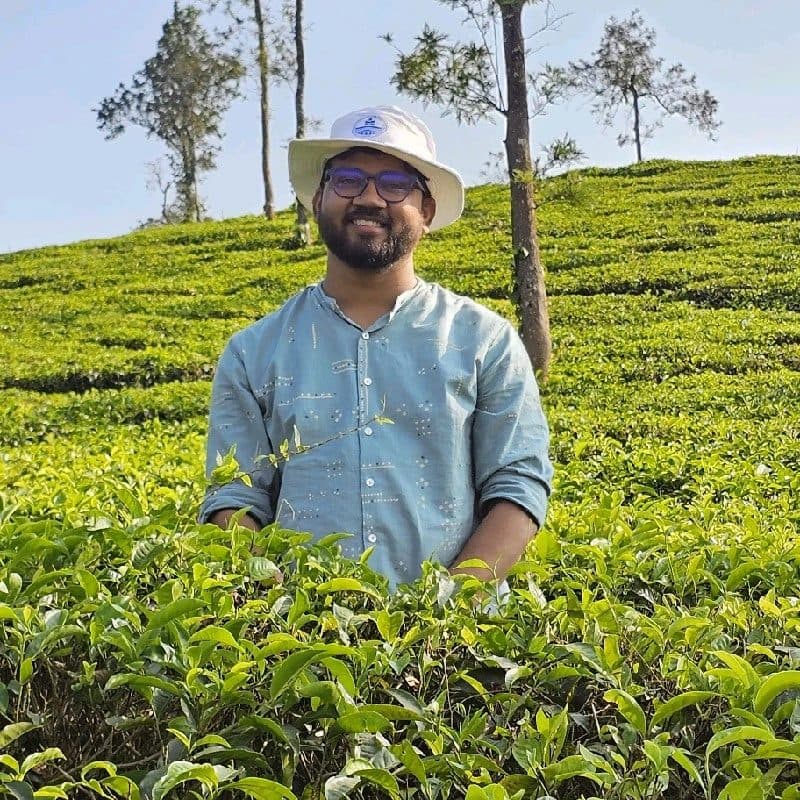
Niladri Giri · Agriculture Officer, Odisha Tribal Districts
Niladri Giri is an agriculture officer with over a decade of field experience in Odisha's tribal districts, working on agri-tech and farmer welfare.
The short answer
In Odisha's Koraput district, tribal smallholders grow coffee beneath an intact forest canopy — they never cleared land to plant it, so their 'plots' are marked by where the bamboo begins, not by GPS. The EU's new Deforestation Regulation (EUDR) now requires every kilogram of coffee sold into Europe to be traced to a mapped plot with proof no trees were felled after 2020 — verification that costs roughly fifty euro-cents per kilogram against a price of around three dollars. The farmers whose forest-integrated practice embodies exactly what the law is meant to protect are the ones most at risk of being cut off from European buyers.
The ground truth
In Koraput, the Forest Is the Farm
In Koraput — one of Odisha's tribal districts — coffee cultivation looks nothing like a plantation. Farmers here did not clear trees to make room for coffee; the coffee grows beneath them. The forest canopy is, in effect, the farm. There are no straight rows, no cleared hillsides, no fenced perimeter — a plot's boundary is where the bamboo begins or where the slope changes, natural landmarks rather than cadastral surveys or GPS coordinates.
These growers have never registered a plot number, and many farm in pockets with negligible mobile connectivity. Their way of cultivating is, by definition, forest-positive: it keeps the canopy standing rather than replacing it. That is the ground truth on which an incoming European regulation is now about to land.
The rule arrives
What EUDR Demands of a Farm With No Map
The pressure comes from Brussels. The European Union Deforestation Regulation — widely known by its initials, EUDR — requires that every kilogram of a regulated commodity, coffee included, sold into European markets be traceable to a specific plot of land, with verified evidence that no forest was cleared on it after 2020.
The intent is defensible: global commodity demand has driven large-scale tropical deforestation, and European buyers want assurance their purchases are not complicit. But the rule was architected around large plantation operators — those with surveyed land titles, GIS teams, and dedicated compliance departments who can absorb both the cost and the process. For a Koraput smallholder whose plot boundary is a stand of bamboo, there is simply no map to hand over. The compliance cost alone — estimated at roughly fifty euro-cents per kilogram — is a heavy share of the roughly three-dollar-per-kilogram price these growers actually receive.
The asymmetry
A Rule Written for the Worst Actor, Paid for by the Smallest
The structural problem with one-size deforestation frameworks is that the burden falls inversely to culpability. The large-scale clearing the regulation targets happens on surveyed plantations that already have the administrative capacity to navigate certification. Koraput's agroforestry smallholders — whose land use is, by definition, forest-positive — lack both the documentation and the infrastructure to prove what they have always done.
The pattern is not new. Privacy and data-protection rules similarly placed disproportionate compliance costs on small actors who posed little of the risk those laws were designed to address. EUDR risks repeating that dynamic at the expense of India's most marginalised coffee growers.
Key asymmetries:
- Large roasters built dedicated EUDR compliance teams ahead of the regulation's enforcement.
- Koraput smallholders hold no formal plot numbers, fenced boundaries, or signal-capable devices.
- The deforestation the rule targets is occurring on plantations, not on these forested hillsides.
The stakes for India
Millions of Smallholders the Framework Can Neither Reach nor Protect
Koraput is not an isolated edge case. Across India's tribal and forested coffee-growing regions, agroforestry smallholders farm under customary land arrangements that predate and sit outside formal cadastral systems. EUDR's plot-level geolocation requirement cannot accommodate land whose boundary is where the bamboo starts.
The irony is sharp: these are precisely the communities whose practices the regulation's conservation goals should celebrate. They did not cause the problem the law addresses — yet, without a specific compliance pathway (group certification, community-level mapping, or a formal agroforestry exemption negotiated between Indian trade authorities and the EU) they face exclusion from European markets. India's coffee exporters, the Agricultural and Processed Food Products Export Development Authority (APEDA), and trade negotiators have a narrow window to make this case before enforcement tightens.
Why it matters
India's agroforestry smallholders — millions of them, holding no formal plot boundaries and often farming in low-connectivity tribal districts — were never who EUDR's compliance machinery was built for; it was designed around large, surveyed commodity plantations. If Indian exporters and policymakers do not secure a carve-out or a simplified verification pathway for forest-integrated cultivation, Koraput's growers stand to lose European market access at precisely the moment specialty demand is rising. Policymakers should treat this as an urgent trade and equity issue, not merely a paperwork problem.
Frequently asked
Why are Koraput's tribal coffee growers particularly vulnerable to the EU's deforestation rule?
Their farms have no fenced perimeters or registered plot numbers; plot boundaries are defined by natural features such as bamboo stands and slope changes. Many operate in areas with no mobile signal, and they lack the resources to build the compliance infrastructure that large plantation operators or roasters can afford — even though their coffee grows beneath a standing forest canopy they have never cleared.
What is the EUDR, and why does it affect Indian coffee farmers?
The EU Deforestation Regulation requires that all coffee sold into Europe be traceable to a specific, mapped plot and carry proof that no forest was cleared there after 2020. Indian smallholders in agroforestry systems — where coffee grows beneath a standing forest canopy — often have no formal plot numbers or GPS boundaries, making compliance extremely difficult.
How much does EUDR compliance cost relative to what smallholders earn?
Proving a kilogram of coffee meets EUDR standards can cost roughly fifty euro-cents per kilogram, against an approximate selling price of three dollars per kilogram for smallholders in areas such as Koraput, Odisha — a significant share of their total revenue.
What could Indian policymakers do to protect these farmers?
Options include negotiating a formal agroforestry exemption or a simplified group-certification pathway with the EU, working through bodies such as APEDA to pursue community-level mapping solutions, and making the case that forest-integrated cultivation is the opposite of what EUDR is designed to prevent.
This is an original IndianAgri report. The analysis and India context are IndianAgri's own.
Edited by Devendra Kumar Jha. How we report, source and correct: editorial policy. Spotted an error? Tell us.