ICAR Cracks the Pigeonpea Code: India's First T2T Genome of Variety 'Asha' Decoded
The Indian Council of Agricultural Research has completed a telomere-to-telomere reference genome of pigeonpea variety 'Asha' — mapping all 11 chromosomes, 36,557 genes, and 752.65 million base pairs — in a landmark step for pulse self-suff
The short answer
ICAR has developed India's first fully annotated telomere-to-telomere (T2T) reference genome of pigeonpea variety 'Asha', covering all 11 chromosomes across 752.65 million base pairs and identifying 36,557 genes. The genome assembly, designated NIPB_CcT2T_4, has been deposited in the global NCBI database. The breakthrough is expected to accelerate breeding of climate-resilient, high-yielding, and nutritionally enriched pigeonpea varieties under India's ongoing Mission for Aatmanirbharta in Pulses.
The Breakthrough
A Complete Blueprint: Every Chromosome, Every Telomere
India's apex agricultural research body, ICAR, announced on Tuesday the development of the country's first fully annotated telomere-to-telomere (T2T) reference genome of pigeonpea (Cajanus cajan L. Millsp.) variety 'Asha'. Unlike earlier draft sequences, a T2T assembly leaves no chromosomal gaps — capturing all 11 chromosomes of the crop, including their centromeres and telomeres, in one contiguous representation.
The assembly, designated NIPB_CcT2T_4, spans 752.65 million base pairs organised into 92 contigs. A comprehensive annotation exercise identified 36,557 genes generating 48,008 mRNAs (coding sequences). Transcriptome mapping recorded over 99.9 per cent read alignment, independently confirming the sequence's high accuracy. The assembly has been deposited with the National Center for Biotechnology Information (NCBI), making it accessible to researchers globally.
Historical Context
From First Draft to Gold Standard: Fifteen Years of Pigeonpea Genomics
This is not the first time India has led the world in pigeonpea genomics. In 2011, ICAR's National Institute for Plant Biotechnology (NIPB) in New Delhi published what was then the world's first draft genome of the same variety 'Asha' — notably, the first crop genome sequenced entirely in India. A significantly improved draft followed in 2017.
The T2T assembly announced this week represents the third and most complete iteration of this genomic journey, moving from fragmentary drafts to a fully resolved chromosomal blueprint. The progression underscores India's growing computational and sequencing capability in agricultural genomics, and positions NIPB as a global centre of excellence for pulse crop science.
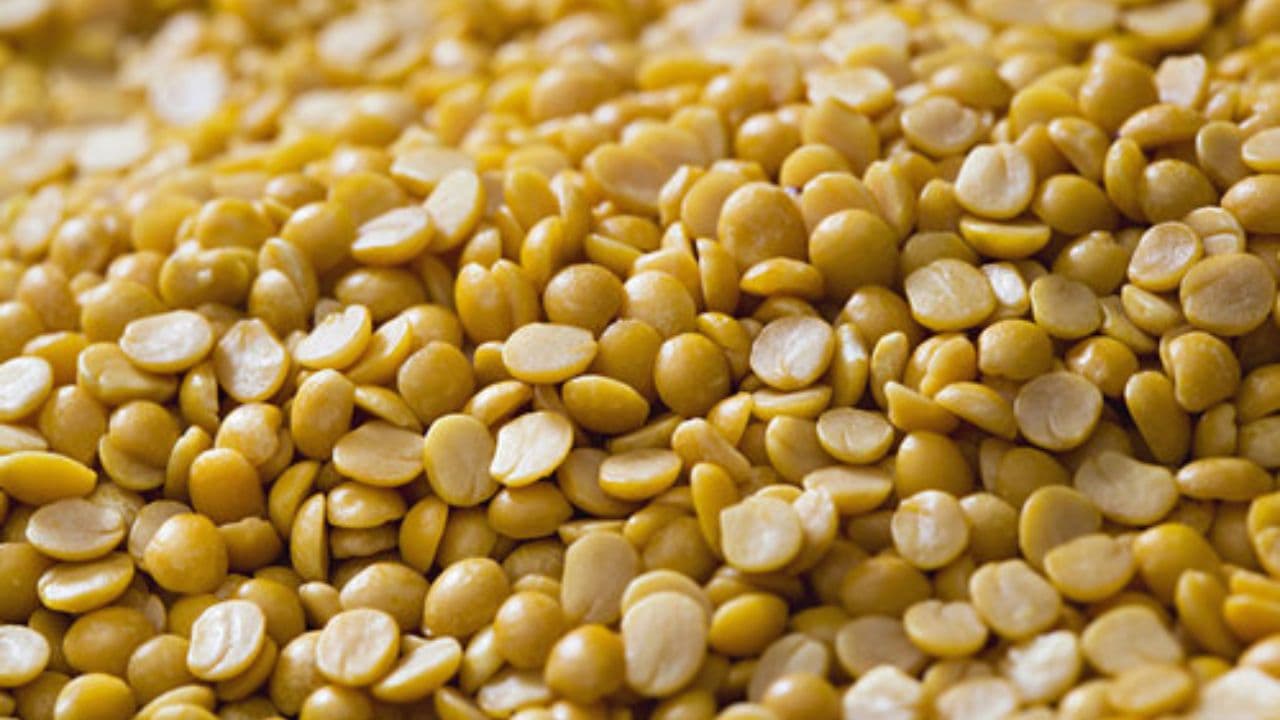
Popularly known as arhar or tur, pigeonpea is one of India's most important pulse crops and a primary source of dietary protein, playing a central role in household nutrition and national food security.
If countries without access to GM seeds can get better yields in pulses, why can't India?
Scientific Significance
What the Genome Unlocks for Breeders and Researchers
The fully annotated T2T genome is designed to function as a national genomic resource with multiple downstream applications:
- Gene and pangenome analysis: Researchers can now compare the 'Asha' genome against diverse pigeonpea accessions to identify variation across the species.
- Trait discovery: The annotated gene catalogue facilitates identification of genes governing key agronomic attributes — yield, drought tolerance, disease resistance — as well as nutritional traits such as protein content.
- Molecular breeding and genome editing: A complete reference genome dramatically improves the precision of marker-assisted selection and CRISPR-based editing, enabling targeted improvement without relying on GMO approaches.
ICАR noted that the resource will benefit scientists, breeders, and farmers alike, with the ultimate goal of developing climate-resilient, high-yielding, and nutritionally enriched pigeonpea varieties.
Policy Link
Pulse Self-Sufficiency Mission Gets a Scientific Tailwind
The genome development arrives at a strategically significant moment. The Government of India has launched the Mission for Aatmanirbharta in Pulses covering the period 2025-26 to 2030-31, with the explicit objective of achieving self-sufficiency in domestic pulse production.
Union Agriculture Minister Shivraj Singh Chouhan had set the tone at ICAR's 98th Foundation Day in July, urging scientists to pursue non-GMO solutions to raise pulse productivity. "If countries without access to GM seeds can get better yields in pulses, why can't India?" Chouhan had asked.
The T2T genome directly addresses that challenge — providing breeders a high-resolution molecular toolkit to develop superior varieties through conventional and marker-assisted breeding, without recourse to genetic modification. ICAR stated the achievement would contribute to enhanced productivity, improved farmer livelihoods, and strengthened food and nutritional security.
Why it matters
Pigeonpea, or arhar, is one of India's most critical pulse crops and a key dietary protein source — making genomic advances in the crop directly consequential for food security. With the Mission for Aatmanirbharta in Pulses running from 2025-26 to 2030-31, breeders now have a high-resolution genomic map to accelerate non-GMO trait discovery and molecular breeding. The deposition of the assembly in NCBI also makes this a shared global resource, strengthening India's standing in international pulse science. Traders and agri-businesses should watch whether faster variety development translates into meaningful domestic production gains over the mission period.
Frequently asked
What is a telomere-to-telomere (T2T) genome and why does it matter for pigeonpea?
A T2T genome is a complete, gap-free chromosomal sequence that captures every region from one end of a chromosome (the telomere) to the other — including the centromere in the middle. For pigeonpea, this means all 11 chromosomes are fully resolved across 752.65 million base pairs, giving breeders and researchers a far more accurate reference than earlier draft assemblies from 2011 and 2017.
How many genes were identified in the ICAR pigeonpea T2T genome?
The comprehensive genome annotation identified 36,557 genes, which produce 48,008 mRNAs or coding sequences. Transcriptome mapping confirmed over 99.9 per cent read alignment, validating the accuracy and completeness of the assembly.
Where is the pigeonpea T2T genome assembly publicly available?
The genome assembly, designated NIPB_CcT2T_4, has been deposited in the NCBI — the global bioinformatics database — making it accessible to researchers worldwide.
How does this genome connect to India's pulse self-sufficiency goals?
The T2T genome is a key scientific tool under India's Mission for Aatmanirbharta in Pulses (2025-26 to 2030-31). It enables breeders to identify and select genes for higher yield, climate resilience, and better nutrition without relying on GMO approaches — a direction explicitly called for by Agriculture Minister Shivraj Singh Chouhan.
Source
This report summarises and analyses coverage from The Hindu BusinessLine — Agri Business. The analysis and India context are IndianAgri's own.