India's Irrigation Gap: 30% of Pumps Still Run on Diesel, Only 7% of Land Under Micro-Irrigation
Ground-level realities exposed at the Agriculture Today Conclave 2026: erratic power supply, diesel-dependent pumps, and a micro-irrigation footprint covering just 7% of irrigable land underscore a massive transformation opportunity.

Expert insights
Sharad R. Kale · Founder, Shoption
Sharad R. Kale is a gold-medalist software engineer and founder of Shoption, a B2B irrigation e-commerce platform, with prior experience co-founding ieyze and building IoT irrigation products.
The short answer
India has roughly 40 million irrigation pumps, yet nearly 30% still run on diesel or petrol and only around 3% are solar-powered. Of the country's nearly 33 million hectares of irrigable land, effective micro-irrigation covers barely 2 million hectares — approximately 7%. Speakers at the Agriculture Today Conclave 2026 argued that smart irrigation technologies, IoT, and renewable energy can close this gap while restoring farmer dignity and quality of life.
Ground reality
Nights Without Sleep: The Hidden Cost of Erratic Power Supply
For millions of Indian farmers, the workday does not end at sunset. Electricity for irrigation is frequently scheduled between 11 PM and 7 AM, compelling farmers to stay awake through the night after an already exhausting day in the field. This is not an isolated complaint — it is a structural feature of India's agricultural power supply that erodes both productivity and well-being.
This reality, difficult to appreciate from boardrooms or policy documents, was highlighted at the Agriculture Today Conclave 2026. The insight is drawn from lived experience rather than surveys alone, and it reframes the irrigation debate: the problem is not just about water or energy infrastructure, but about the human cost borne daily by farm families across the country.
Energy mix
A Pump Fleet Stuck in the Past: Diesel Dominates, Solar Barely Registers
India's irrigation infrastructure is anchored by roughly 40 million pumps — a substantial base, yet one whose energy profile tells a troubling story. Approximately 30% of these pumps continue to run on diesel or petrol, exposing farmers to volatile fuel prices and significant operating costs. At the other end of the spectrum, only around 3% are solar-powered, despite years of policy push and subsidy schemes aimed at renewable adoption.
What This Means in Practice
- Diesel pumps inflate the cost of every irrigation cycle, squeezing already thin margins.
- Farmers reliant on grid power face the night-shift electricity problem described above.
- Solar adoption, though growing, remains marginal relative to the scale of the challenge.
The gap between the 3% solar penetration today and what is technically and economically achievable represents one of the largest addressable opportunities in Indian agri-infrastructure.
The future of Indian agriculture is not just about growing more food; it's about helping every farmer live a better life.
Water efficiency
Micro-Irrigation Covers Just 7% of Irrigable Land — a Crisis and an Opportunity
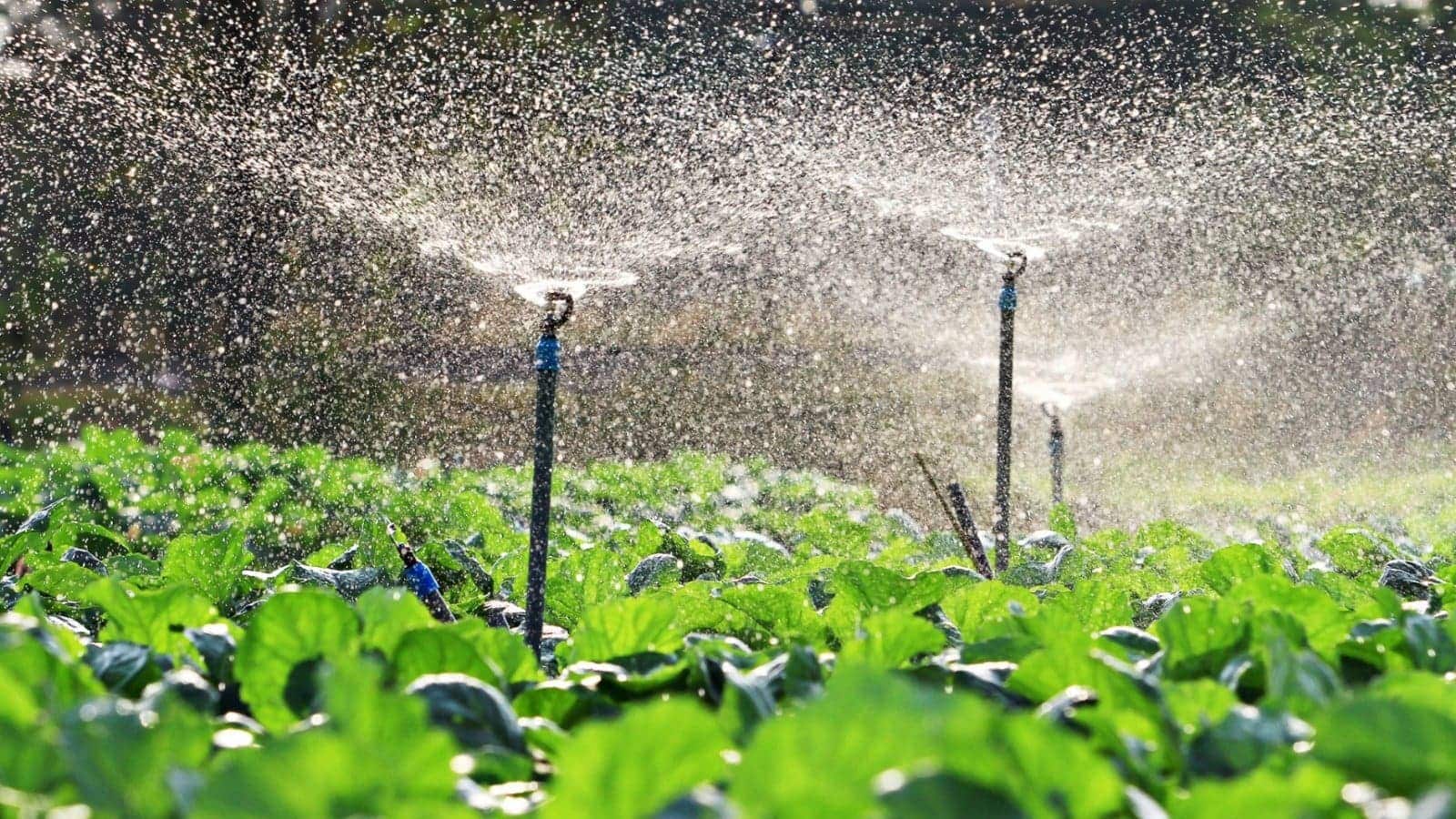
Of India's nearly 33 million hectares of land that could be brought under irrigation, effective micro-irrigation systems — drip and sprinkler technologies that dramatically reduce water consumption — cover only around 2 million hectares, equating to roughly 7% of the total. This is a stark measure of how far water-use efficiency in Indian farming lags behind its potential.
The consequences extend beyond the farm gate. Groundwater depletion, energy waste, and crop stress during dry spells are all amplified when flood irrigation remains the default. Closing this gap would require not just hardware deployment but also credit access, technical training, and last-mile supply chain development — areas where agri-businesses and government programmes must work in concert.
The figures make clear that micro-irrigation is simultaneously India's most pressing water-management challenge and one of its most significant investment frontiers.
The path forward
Smart Irrigation and Technology as the Route to Farmer Dignity
The data points to a concrete agenda: deploying smart irrigation, IoT-based automation, AI-driven water management, and renewable energy at scale. The argument made at the Agriculture Today Conclave 2026 is that technology adoption in irrigation is not merely an efficiency play — it is a quality-of-life intervention.
Automation can eliminate the need for nocturnal pump-watching. Solar energy can cut the cost and drudgery of diesel logistics. Precision micro-irrigation can reduce water consumption while improving yields. Taken together, these shifts offer farmers reduced input costs, conserved water resources, and — critically — time and dignity.
The ambition articulated at the Conclave is clear: the future of Indian agriculture must be measured not only by output volumes but by whether every farmer is able to live a better life. Achieving that will require aligning technology developers, input suppliers, financial institutions, and policymakers around the irrigation modernisation agenda.
Why it matters
These figures reveal that India's irrigation modernisation agenda remains far from complete — the dependence on diesel pumps drives up input costs, while the near-absence of micro-irrigation accelerates water depletion on a vast scale. For policymakers, the data make a strong case for accelerating solar pump adoption and expanding schemes such as PM-KUSUM and PMKSY. Agri-businesses and investors should watch the convergence of IoT automation, renewable energy, and precision irrigation as the next high-growth frontier in Indian agriculture.
Frequently asked
How many irrigation pumps does India have, and what share still runs on diesel?
India has around 40 million irrigation pumps. Approximately 30% of these continue to run on diesel or petrol, while only around 3% are solar-powered, according to data shared at the Agriculture Today Conclave 2026.
What share of India's irrigable land is covered by micro-irrigation?
Of nearly 33 million hectares of irrigable land in India, only about 2 million hectares — roughly 7% — are covered under effective micro-irrigation systems such as drip and sprinkler technology.
Why do Indian farmers have to irrigate at night?
In many parts of India, agricultural electricity is supplied only during fixed windows — often between 11 PM and 7 AM — forcing farmers to operate their pumps through the night after a full day of field work.
What technologies are being proposed to modernise Indian irrigation?
At the Agriculture Today Conclave 2026, smart irrigation, IoT-based automation, AI, renewable energy, and water-efficient micro-irrigation technologies were identified as key tools to reduce costs, conserve water, and improve farmers' quality of life.
This is an original IndianAgri report. The analysis and India context are IndianAgri's own.