Climate-Resilient Dairy: Why India's Indigenous Cattle Are the Future of Sustainable Farming
For decades, the standard metric for a dairy cow's worth has been straightforward: How much milk can she produce?

Written by
Swati Sharma Omanwar · Managing Director, Zebu Research
Dr. Swati Sharma Omanwar is a veterinarian and PhD in Medical Physiology. She leads Zebu Research Pvt. Ltd., Delhi, focusing on indigenous cattle genomics, sustainable livestock systems, and rural entrepreneurship.
The short answer
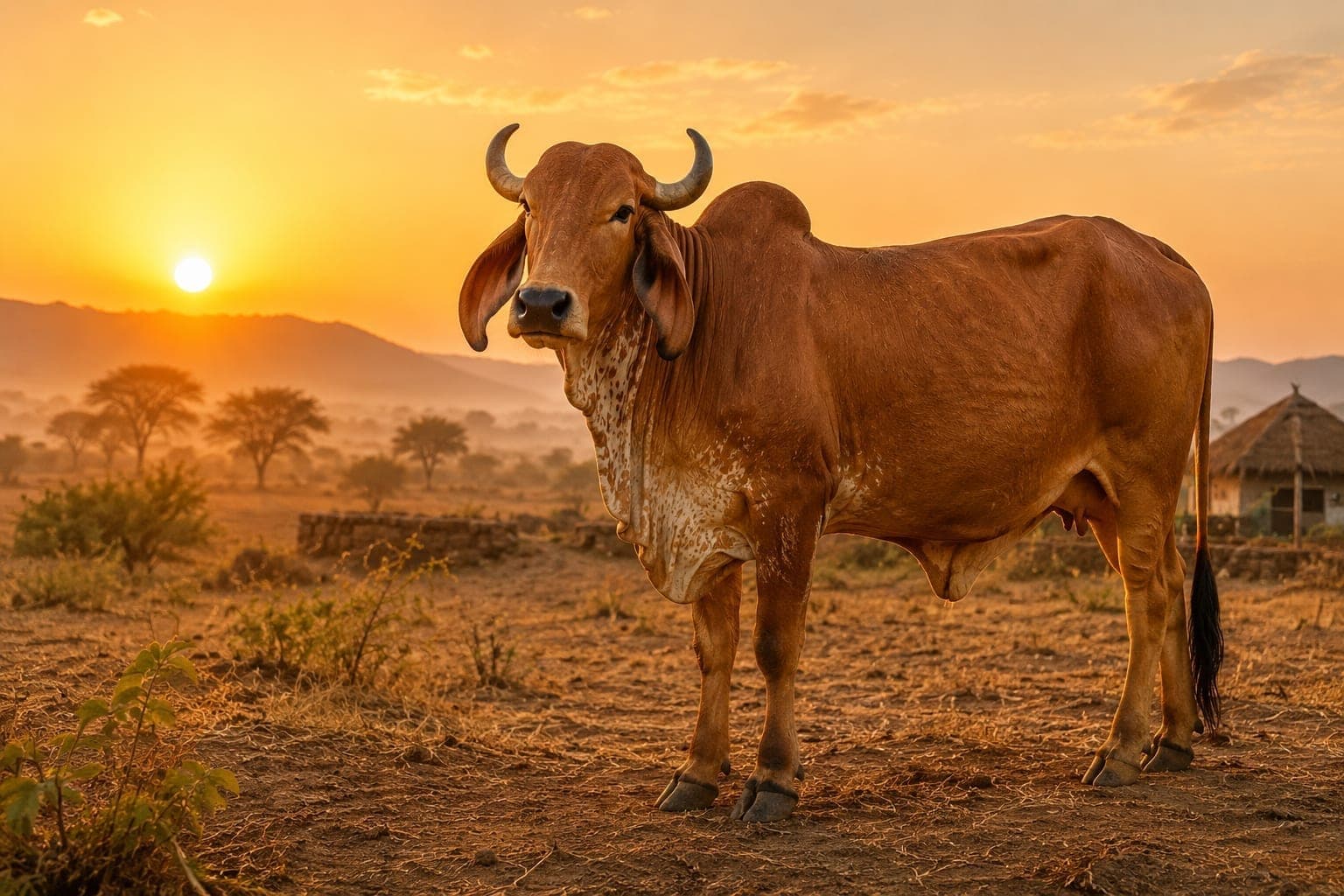
India's indigenous cattle breeds carry evolved heat tolerance, immune resilience and feed efficiency that high-yield crossbreds do not, and genomic evidence now measures it — including upregulated innate-immunity genes in Sahiwal, Tharparkar and Gir against crossbred Karan Fries. With over 55 breeds registered by ICAR–NBAGR, valuing them on resilience and multi-stream economics rather than milk yield alone is what makes Indian dairy climate-resilient.
- Yield alone is the wrong metric. It overlooks heat tolerance, disease resistance, reproductive efficiency and feed adaptability.
- The genomics is in. Immune gene expression, copy number variations and selection signatures all separate native breeds from crossbred and exotic lines.
- Conservation needs data, not sentiment. Over 55 registered breeds require active recording, not passive preservation.
- Gaushalas can pay for themselves. Six revenue streams turn shelters into rural enterprises.
The question
Moving Beyond Yield: The Power of Biological Resilience
While milk yield drives farm income, livestock economics, and immediate food security, focusing solely on high-volume production overlooks key biological traits that determine a herd's long-term survival: heat tolerance, disease resistance, reproductive efficiency, and feed adaptability.
As climate pressures mount, Indian dairy science faces a pivotal shift: Should an animal be valued only by its peak milk output, or by how efficiently, healthily, and sustainably it produces within its local environment?
Recent breakthroughs in cattle genomics and climate research suggest it's time to re-evaluate what makes a dairy cow truly productive.
Selecting purely for production volume requires heavy operational trade-offs. High-yielding crossbred animals often demand high-input nutritional diets, intensive veterinary intervention, and climate-controlled housing to thrive.
Conversely, native cattle adapted over centuries to local stress factors offer built-in environmental resilience:
- Thermal Tolerance: Efficient sweating mechanisms, specialized skin properties, and prominent dewlaps facilitate superior heat dissipation.
- Feed Efficiency: Ability to convert low-quality, locally available roughage into energy during dry seasons.
- Disease & Parasite Resistance: Evolutionary adaptation to region-specific pathogens and environmental stresses.
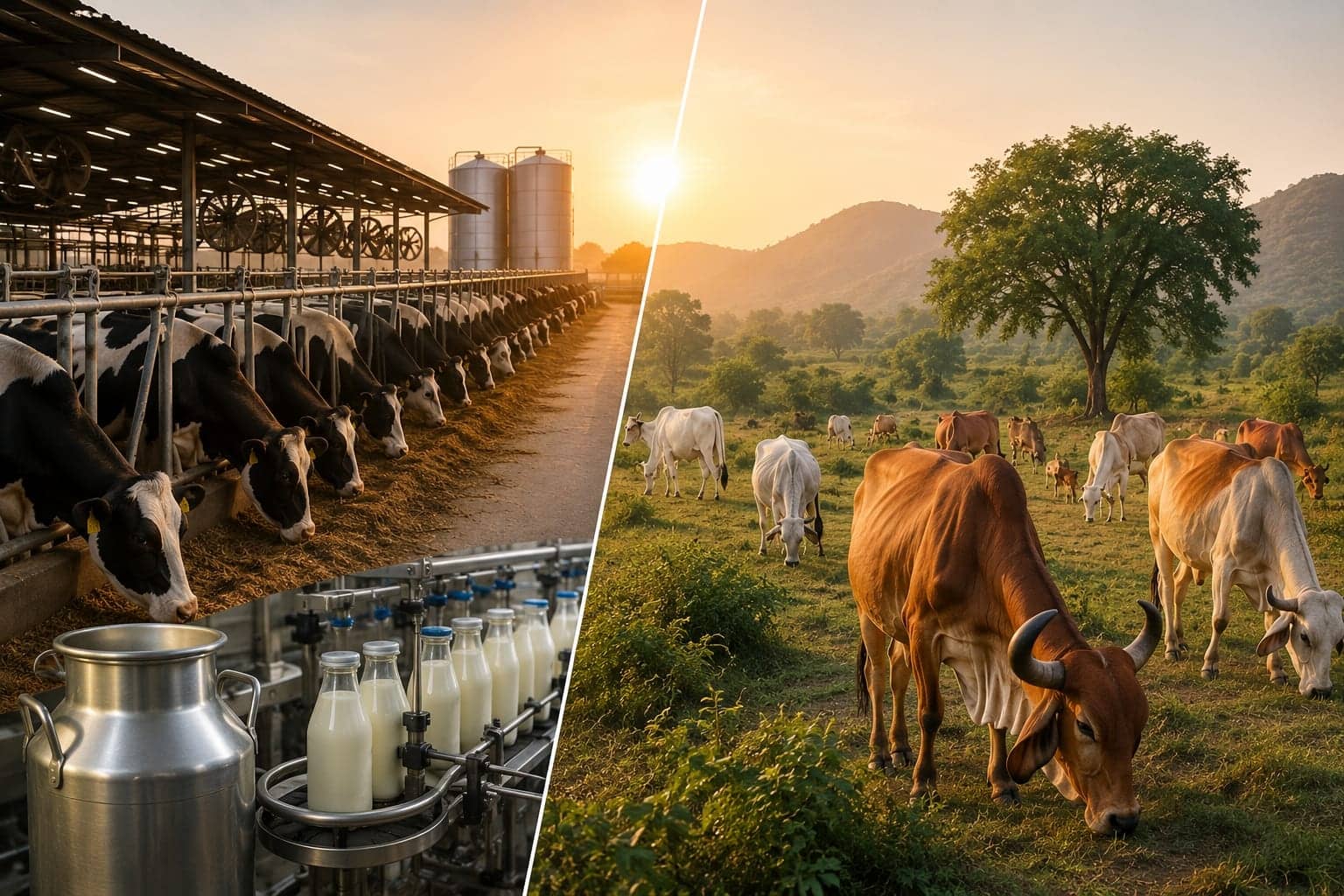
This highlights that yield and resilience must function as complementary goals in modern livestock management.
The evidence
What the Genomic Evidence Shows
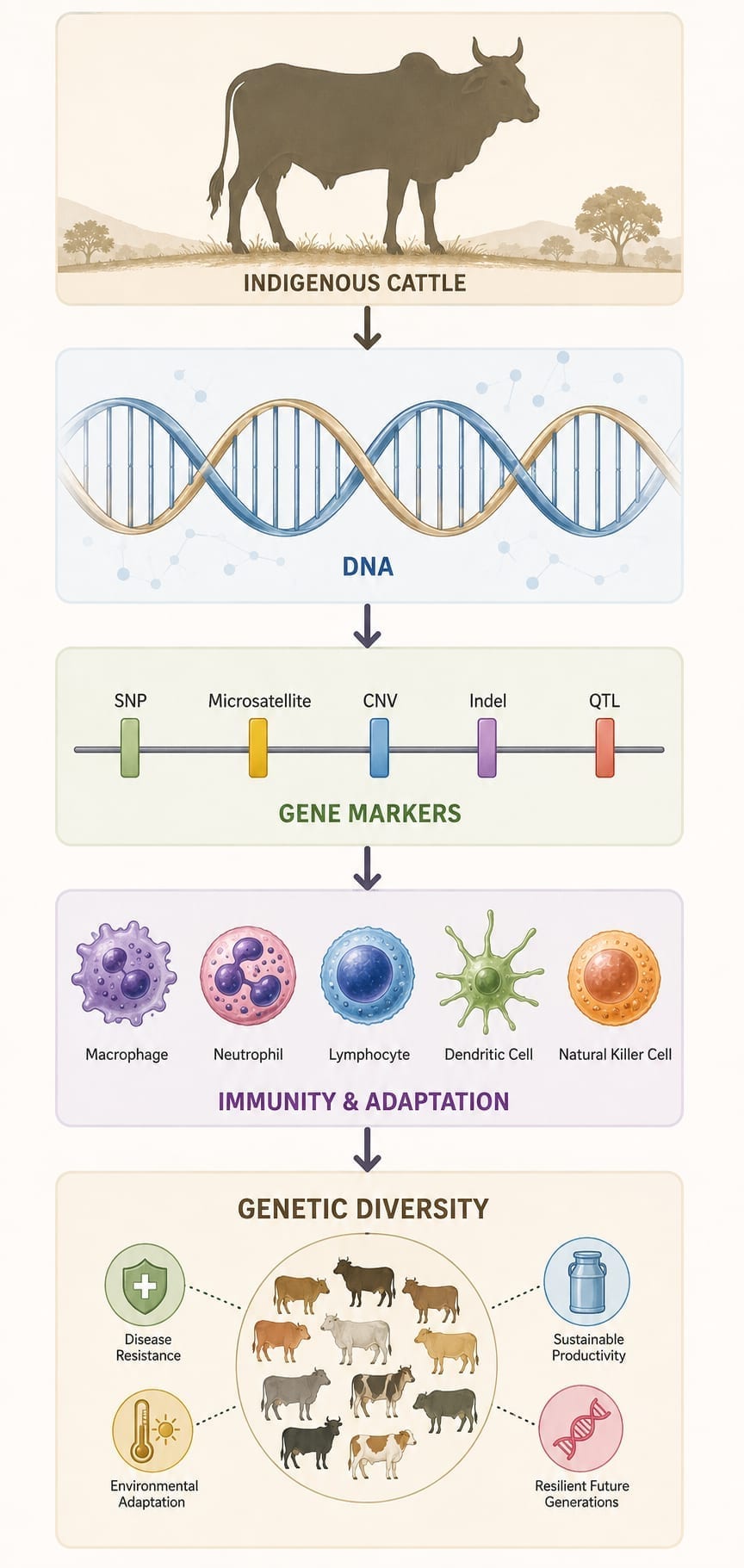
Recent molecular investigations have begun mapping the genetic foundations of native cattle adaptation:
- Immune Gene Expression: A study by ICAR–National Dairy Research Institute (NDRI) and SASTRA Deemed University compared peripheral blood mononuclear cells of Sahiwal, Tharparkar, and Gir cattle with crossbred Karan Fries. Researchers identified significant upregulation of key innate-immunity genes (such as PCDH1, LRP1B, CCL8, and WNT4) in indigenous breeds.
- Copy Number Variations: Genomic analyses comparing native breeds (Kangayam, Tharparkar, Sahiwal, Gir) against crossbred and exotic lines (Karan Fries, Holstein Friesian) revealed distinct breed-specific gene copy numbers linked to immune defense and environmental adaptation.
- Selection Signatures: Genome-wide scans in Gir, Tharparkar, and Sahiwal have pinpointed specific regions associated with reproduction, heat adaptation, and longevity in arid zones.
The map
Regional Diversity of India's Native Breeds
India's indigenous breeds are not a monolith; each represents a specialized genetic response to distinct agro-climatic conditions. Some examples:
| Breed | Primary Origin | Evolutionary Adaptation | Characteristic Strength |
|---|---|---|---|
| Sahiwal | Northwestern Indian subcontinent, particularly the Punjab region | Hot, semi-arid and tropical conditions | Heat tolerance, adaptability and disease/tick resilience |
| Gir | Gujarat, India | Hot, dry and semi-arid environment | Thermotolerance, adaptability, longevity and disease resilience |
| Tharparkar | Thar Desert Region | Extreme water/feed scarcity | Drought and heat adaptation; ability to maintain productivity under harsh conditions |
| Ongole | Andhra Pradesh | Tropical heat & humidity | Disease resistance & muscular strength |
| Kangayam | Tamil Nadu | Hard, dry agro-climatic zones | High draft capability & low-input survival |
With over 55 registered indigenous cattle breeds recognized by ICAR–NBAGR, genetic conservation must shift from passive preservation to active data collection.
The institution
Transforming Gaushalas into Scientific Conservation Hubs
India's traditional animal shelters (Gaushalas) present an untapped opportunity to serve as living conservation centers through digital record-keeping.
- Shelter
- Conservation
- Data Integration
- Research Hub
- Skill Building
- Rural Enterprise
For generations, many Indian animal shelters (Gaushalas) have relied almost entirely on philanthropic donations to care for indigenous cattle. While sentiment and tradition have kept these institutions alive, long-term sustainability demands a fundamental shift: moving from a donation-dependent model to a value-based, science-driven rural enterprise.
By looking beyond milk yield alone, a well-managed livestock ecosystem can transform native cattle conservation into an economic engine that generates viable livelihoods, restores soil health, and drives rural development.
The economic potential of indigenous cattle extends far beyond traditional dairy. When integrated into a circular economy, every byproduct and service creates a revenue stream that supports both animal welfare and rural communities:
- High-Value Dairy Products: Specialty A2 milk, traditional ghee, paneer, and fermented dairy products with verified quality standards.
- Bio-Inputs & Soil Restoration: Commercial-scale production of bio-fertilizers, vermicompost, and liquid soil-enrichers for natural farming.
- Renewable Bio-Energy: Compressed Biogas (CBG) and electricity generation from manure to power local processing units.
- Genetic Conservation & Breeding Services: Controlled breeding programs supplying certified, high-resilience genetics and pedigree bulls.
- Veterinary & Extension Services: Local healthcare, artificial insemination, and herd management assistance.
- Skill Development & Rural Employment: Vocational training centers for young entrepreneurs, technicians, and artisans.
The synthesis
Merging Modern Technology with Traditional Knowledge
Building a climate-resilient livestock sector doesn't mean choosing between ancient practices and modern science. Technology acts as the tool to validate and scale indigenous biological assets:
- Genomics: Pinpointing specific genetic markers tied to heat and parasite resistance.
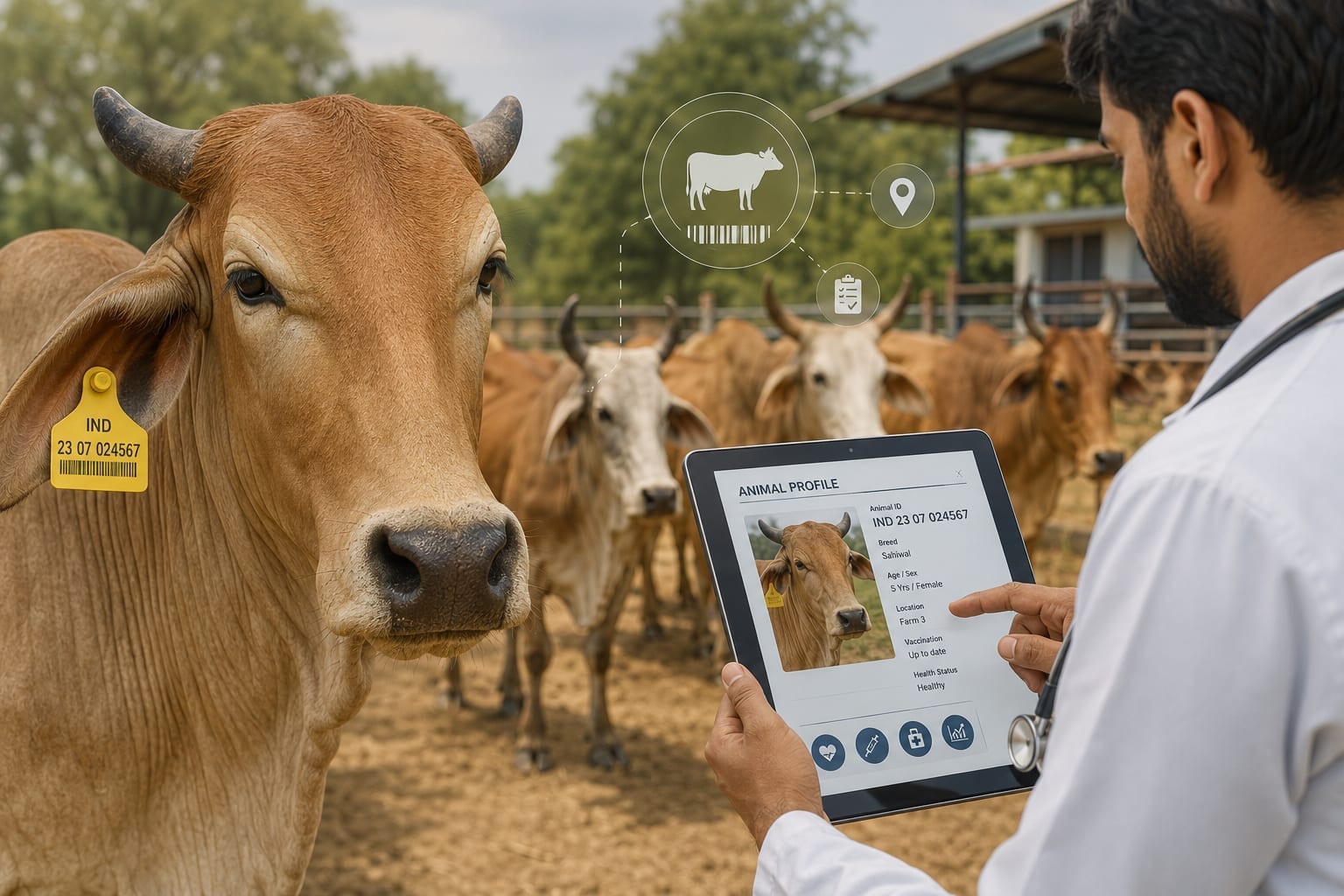
- AI & Data Analytics: Monitoring individual animal health, estrus cycles, and environmental stress in real time.
- Traceable Supply Chains: Utilizing digital commerce platforms to connect sustainable, cow-based rural enterprises with broader markets for organic inputs, traditional dairy products, and bio-energy.
Valuing India's indigenous cattle for their evolutionary heat tolerance, immune resilience, and multi-stream economic potential marks a necessary shift from single-trait yield to holistic sustainability. By integrating genomic science with modern enterprise models, Gaushalas can transform from charitable shelters into vibrant, data-driven hubs of conservation and rural prosperity. Ultimately, safeguarding this genetic diversity ensures that Indian dairy farming remains climate-resilient, economically viable, and ecologically balanced for generations to come.
Why it matters
Indian dairy has been selected on a single trait for decades, and the climate the herd has to survive is changing faster than that trait can carry it. Heat tolerance, disease resistance and the ability to convert poor roughage are not sentimental attachments to native breeds — they are measurable, increasingly genomically mapped, and they decide which animals are still productive in a hotter, drier decade. The same shift turns gaushalas from charitable overheads into rural enterprises.
Frequently asked
Why is milk yield alone an inadequate measure of a dairy cow's value?
Because it overlooks the biological traits that determine a herd's long-term survival — heat tolerance, disease resistance, reproductive efficiency and feed adaptability. Selecting purely for production volume also carries operational trade-offs: high-yielding crossbred animals often demand high-input nutritional diets, intensive veterinary intervention and climate-controlled housing to thrive. Yield and resilience are better treated as complementary goals.
What makes India's indigenous cattle heat tolerant?
Efficient sweating mechanisms, specialized skin properties and prominent dewlaps, which together facilitate superior heat dissipation. Alongside thermal tolerance, native breeds also convert low-quality, locally available roughage into energy during dry seasons, and carry evolutionary adaptation to region-specific pathogens and environmental stresses.
What does genomic research show about indigenous cattle immunity?
A study by ICAR–National Dairy Research Institute (NDRI) and SASTRA Deemed University compared peripheral blood mononuclear cells of Sahiwal, Tharparkar and Gir cattle with crossbred Karan Fries, and identified significant upregulation of key innate-immunity genes including PCDH1, LRP1B, CCL8 and WNT4 in the indigenous breeds. Copy number analyses and genome-wide selection scans point the same way, linking native breeds to immune defense, heat adaptation, reproduction and longevity.
Which Indian cattle breeds are suited to drought and arid conditions?
Tharparkar, from the Thar Desert region, evolved under extreme water and feed scarcity and maintains productivity under harsh conditions. Sahiwal, from the northwestern Indian subcontinent, is adapted to hot, semi-arid and tropical conditions with disease and tick resilience, while Gir, from Gujarat, offers thermotolerance and longevity in hot, dry environments. Ongole suits tropical heat and humidity, and Kangayam is bred for hard, dry zones and low-input survival.
How many indigenous cattle breeds are registered in India?
Over 55 indigenous cattle breeds are recognized by ICAR–NBAGR. Each represents a specialized genetic response to distinct agro-climatic conditions rather than a single uniform type, which is why conservation must shift from passive preservation to active data collection.
How can Gaushalas become financially self-sustaining?
By moving from a donation-dependent model to a value-based, science-driven rural enterprise built on a circular economy. Six revenue streams are available beyond traditional dairy: high-value dairy products such as specialty A2 milk and ghee; bio-inputs and soil restoration products; renewable bio-energy including Compressed Biogas; genetic conservation and breeding services; veterinary and extension services; and skill development and rural employment.
About the author
Swati Sharma Omanwar
Managing Director, Zebu Research
Dr. Swati Sharma Omanwar is a veterinarian and PhD in Medical Physiology. She leads Zebu Research Pvt. Ltd., Delhi, focusing on indigenous cattle genomics, sustainable livestock systems, and rural entrepreneurship.
The article text is reproduced as submitted by the author. Section structure, the breed table, the conservation pathway and figure placement are IndianAgri's presentation of that text. The frequently asked questions were compiled by IndianAgri from facts stated in the article itself and introduce no new claims.