Kashmir's Saffron Corm Smuggling Crisis Threatens the Future of 'Red Gold'
Illegal outflow of saffron planting material to Haryana and Himachal Pradesh, driven by premium prices and falling yields, is straining Kashmir's already stressed saffron belt — and forcing regulators to act.
The short answer
Kashmir's saffron industry is under mounting pressure from the illegal movement of saffron corms out of the Valley, with planting material being sold to buyers in states such as Haryana and Himachal Pradesh at prices ranging from ₹1.5 lakh to ₹1.7 lakh per 100 kg. Declining yields — which fell to roughly 10% of normal levels last year — and a 35% contraction in cultivated area since 1996-97 are pushing farmers to cash out their corms rather than replant. Authorities have invoked the Saffron Act, 2007 and the Seeds Act, 1966 to restrict outflows, and the Agriculture Department is now proposing dedicated Saffron Seed Multiplication Nurseries in Pampore to stabilise local supply.
The crisis
Corms Walking Out of the Valley
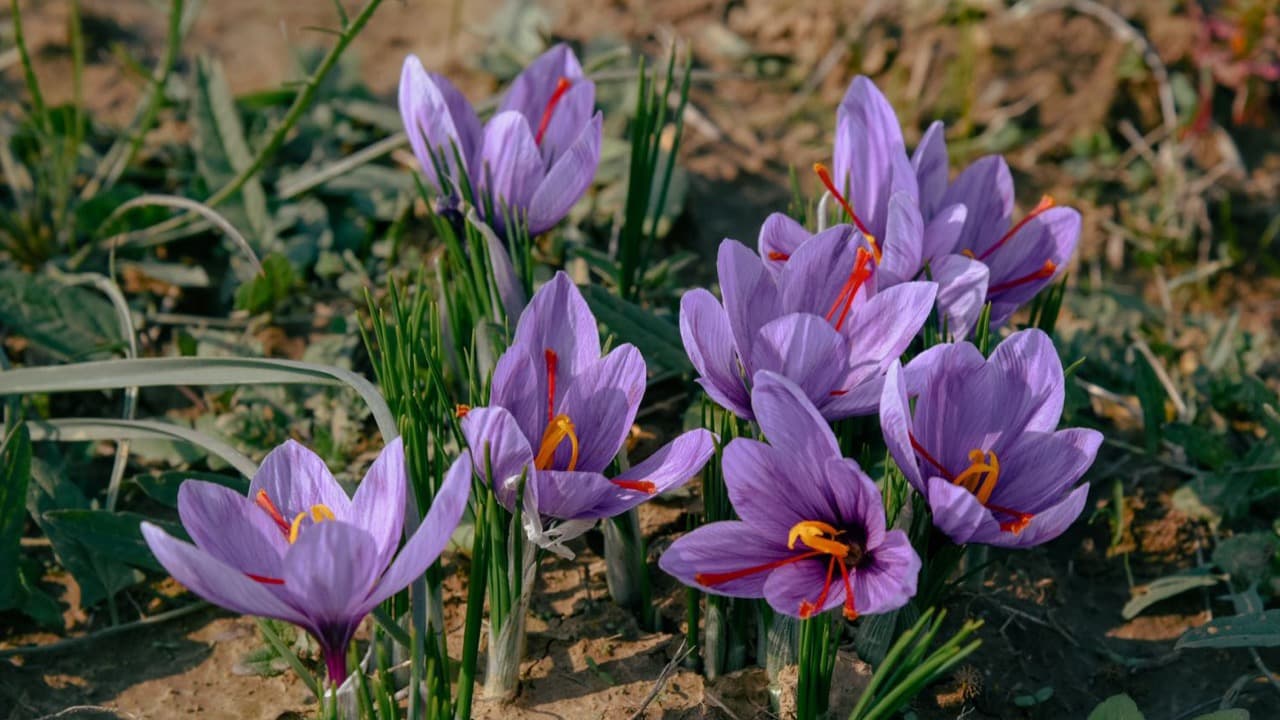
Kashmir's saffron belt is losing more than just its harvest — it is losing its seed stock. Saffron corms, the underground bulb-like structures from which the crop regenerates, are being illegally transported to states including Haryana and Himachal Pradesh, depriving local farmers of the planting material they need for the next season.
The scale of the problem came into sharp focus in August 2025, when police intercepted a vehicle near Awantipora — roughly 18 km from the famed saffron fields of Pampore — and seized around 150 kg of corms, arresting four individuals in the process. Growers and officials say this is far from an isolated incident, with multiple cases surfacing in recent years.
The movement of corms outside Jammu and Kashmir is prohibited under the Saffron Act, 2007 and the Seeds Act, 1966, yet enforcement has not kept pace with the financial incentives drawing farmers toward outside buyers.
The economics
Premium Prices and Plummeting Yields Fuel the Trade
The arithmetic tempting farmers is straightforward. Abdul Majeed, a saffron grower, told The Hindu BusinessLine that 100 kg of corms can fetch between ₹1.5 lakh and ₹1.7 lakh from buyers outside the Valley — a rate that comfortably exceeds what local markets offer.
"Lured by the good prices and declining yields, some farmers choose to sell the corms," Majeed said.
The yield situation has deteriorated sharply. Growers report that saffron production last year amounted to only about 10% of normal levels, a collapse driven by multiple pressures including moisture stress and labour shortages. Faced with such returns, a growing number of cultivators are switching to high-density apple orchards or other less labour-intensive crops altogether.
Adding to corm demand from outside: farmers in other states are experimenting with controlled-environment or indoor saffron cultivation and are actively sourcing Kashmiri planting material, which is regarded as superior in quality.
Lured by the good prices and declining yields, some farmers choose to sell the corms.
The long decline
Three Decades of Shrinking Saffron Fields
The corm crisis does not exist in isolation — it is the latest pressure point in a multi-decade contraction of Kashmir's saffron landscape. Official data shows cultivated area has fallen from 5,707 hectares in 1996-97 to approximately 3,715 hectares in recent years, a reduction of nearly 35%.
The government maintains that the cultivated area has stabilised in the recent period, but growers remain sceptical, citing the twin pressures of dwindling yields and a worsening shortage of quality planting material. When corms leave the Valley illegally, the problem compounds itself: less seed stock means fewer plants, which means lower future harvests, which in turn pushes more farmers to monetise their remaining corms rather than replant — a cycle that is difficult to break without structural intervention.
The response
Nurseries, Enforcement, and the Road Ahead
Authorities are pursuing a two-track response: tighter enforcement to stem illegal outflows, and investment in domestic seed multiplication to remove the underlying scarcity that makes the trade attractive in the first place.
The Agriculture Department has proposed setting up Saffron Seed Multiplication Nurseries to generate a consistent, certified supply of healthy corms for local farmers. Ashiq Hussain, Zonal Agriculture Officer for Pampore, confirmed to The Hindu BusinessLine that land had already been identified in the saffron-growing town for a public-sector nursery.
"This will ensure the availability of quality corms to farmers," Hussain said, adding that simultaneous steps were being taken to prevent illegal transportation of planting material out of the Valley.
Whether these measures arrive in time to prevent further attrition of Kashmir's saffron base will depend on the speed of implementation — a question that growers, traders, and policymakers will be watching closely.
Why it matters
The illegal corm trade strikes at the reproductive capital of India's most iconic spice crop: without adequate planting material, recovering saffron yields becomes structurally impossible, not merely difficult. A further shrinkage of the cultivated base would deepen supply deficits, push up domestic saffron prices, and erode the geographic exclusivity that underpins Kashmiri saffron's premium positioning in global markets. Policymakers and agri-businesses should watch whether the proposed Saffron Seed Multiplication Nurseries in Pampore move from proposal to operation — that single intervention could determine whether the Valley's 3,715-hectare saffron belt stabilises or continues its decades-long retreat.
Frequently asked
Why are saffron corms being smuggled out of Kashmir?
Farmers are selling corms to buyers in states like Haryana and Himachal Pradesh because prices outside the Valley are significantly higher — 100 kg of corms can fetch between ₹1.5 lakh and ₹1.7 lakh. Sharply declining yields have also made corm sales more financially attractive than cultivating the crop locally.
What laws restrict the movement of saffron corms outside Jammu and Kashmir?
The Saffron Act, 2007 and the Seeds Act, 1966 both restrict the movement of saffron planting material outside Jammu and Kashmir. Despite these legal prohibitions, illegal transportation has continued, with police seizing around 150 kg of corms near Awantipora in August 2025.
How much has Kashmir's saffron cultivation area declined?
According to official data, the area under saffron cultivation has fallen from 5,707 hectares in 1996-97 to approximately 3,715 hectares in recent years — a decline of nearly 35%. The government says the area has stabilised recently, but growers remain concerned about yields and planting material availability.
What is the government doing to protect Kashmir's saffron seed stock?
The Agriculture Department has proposed establishing Saffron Seed Multiplication Nurseries to provide farmers with a reliable supply of quality corms. The Zonal Agriculture Officer for Pampore has confirmed that land has been identified for a public-sector nursery in the saffron-growing town, alongside enforcement measures to curb illegal corm movement.
Source
This report summarises and analyses coverage from The Hindu BusinessLine — Agri Business. The analysis and India context are IndianAgri's own.