ICAR-CIFRI Takes Biodiversity Conservation Drive to Pulicat Lake Fishing Communities
A five-day field campaign at Pulicat Lake brought together scientists, fisheries officials, and over 115 stakeholders to protect indigenous fish species under threat from climate change and habitat degradation.

Leader's perspective
Dr. Pradip Dey · Director, ICAR-ATARI Kolkata
Dr. Pradip Dey is Director of ICAR-ATARI Kolkata, a soil scientist who pioneered GPS/GIS-based fertility mapping and developed the Mridaparikshak soil-testing technology used across India.
The short answer
ICAR–Central Inland Fisheries Research Institute, Barrackpore, conducted a five-day community awareness and field demonstration programme at Pulicat Lake from 23–27 July 2026, focusing on the conservation of indigenous fish species. The initiative, run under a formal research project on climate change and fish diversity shifts in the lake, drew more than 115 participants including fishers, cooperative society representatives, and fisheries department officials. The campaign promoted participatory governance, sustainable fishing practices, and community-led stewardship of the lake's brackishwater ecosystem.
The setting
Why Pulicat Lake Is a Fisheries Flashpoint
Pulicat Lake ranks among India's largest brackishwater lagoons and hosts a diverse array of indigenous fish species whose ecological relationships have evolved over centuries. The lake also forms the economic backbone for thousands of traditional fishing families who depend on it for their livelihoods.
Yet the ecosystem faces mounting pressure. Climate change, habitat degradation, and unsustainable fishing practices are eroding both fish diversity and the productive capacity of the lagoon. Recognising this convergence of threats, ICAR–Central Inland Fisheries Research Institute (ICAR-CIFRI), Barrackpore, has been running a dedicated research project — "Assessing Shifts in Fish Diversity, Environment, and Fish Stocks in Relation to Climate Change in Pulicat Lake" — to generate the evidence base needed for informed, timely intervention.
The initiative
Five Days, Five Programmes, One Conservation Goal
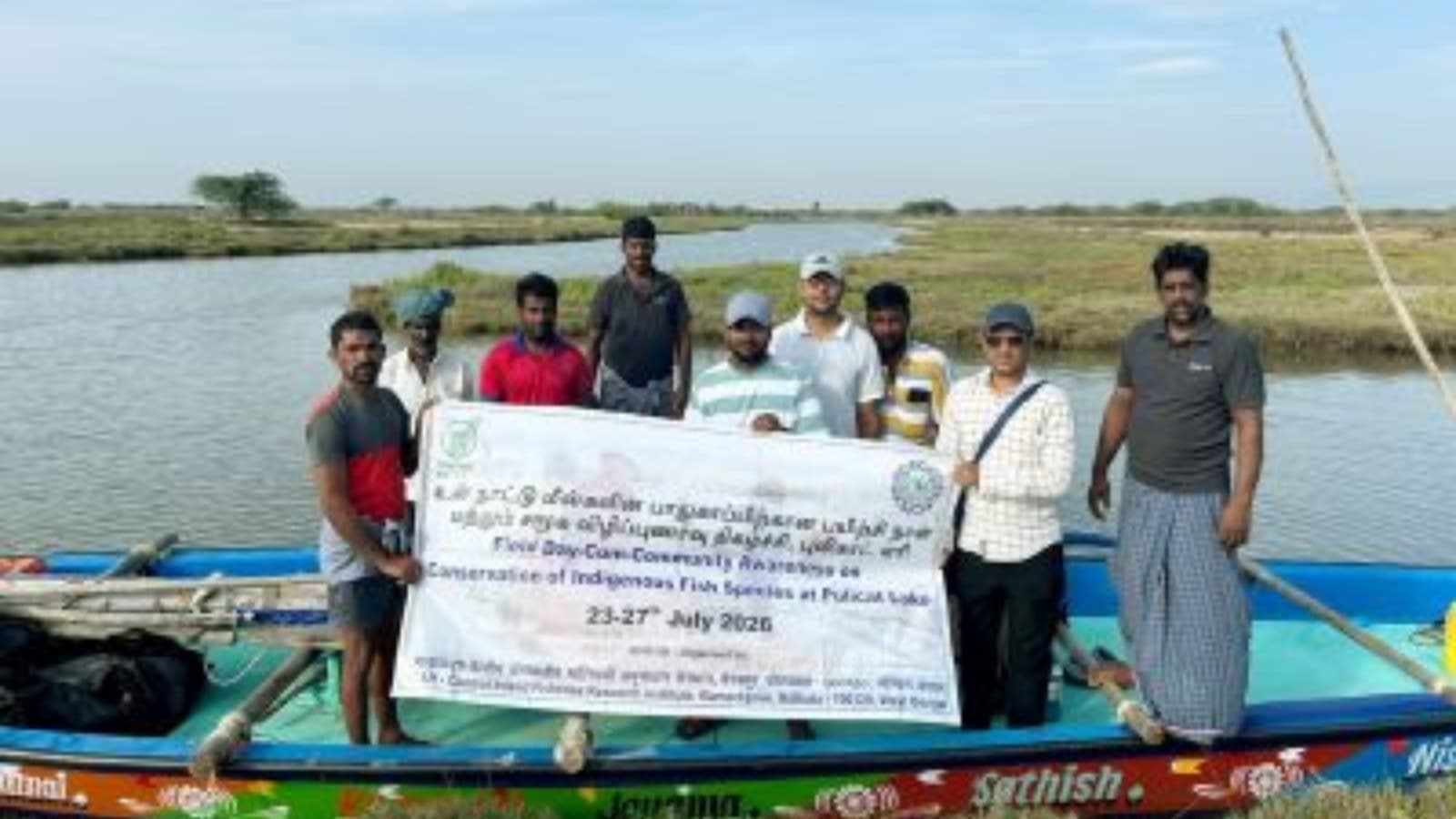
From 23 to 27 July 2026, ICAR-CIFRI organised five consecutive Field Day-cum-Community Awareness Programmes along the shores of Pulicat Lake. The format combined interactive discussions, field demonstrations, and hands-on guidance, giving participants direct exposure to both the science and the practice of sustainable fisheries management.
Sessions covered:
- The ecological role and conservation status of indigenous fish species in the lake
- Sustainable and responsible fishing practices
- Biodiversity conservation principles applicable to brackishwater ecosystems
- The specific impacts of climate change on Pulicat Lake's fish stocks and habitat
Participants were actively encouraged to adopt community-driven conservation measures — a deliberate strategy to move beyond awareness and into action. The programme provided a structured dialogue platform between ICAR-CIFRI researchers and the fishing communities who have the greatest stake in the lake's future.
Conservation of indigenous fish biodiversity is a strategic imperative for safeguarding aquatic ecosystem health, enhancing climate resilience, and ensuring sustainable fisheries-based livelihoods.
Who showed up
Broad Stakeholder Turnout Signals Sector Alignment
More than 115 stakeholders participated in the five-day campaign, reflecting a cross-section of those with a direct interest in Pulicat Lake's fisheries. The turnout included:
- ICAR-CIFRI scientists and technical personnel
- Officials from the Department of Fisheries
- Representatives of fishermen's Cooperative Societies
- Community leaders and local fishers
The diversity of participants is significant. Bringing government fisheries officials, cooperative society representatives, and grassroots fishing communities into the same space as scientific researchers is precisely the kind of multi-stakeholder engagement that evidence-based conservation policy requires. The programme, implemented under the overall guidance of the ICAR-CIFRI Director, reinforces the institute's positioning as a bridge between scientific research and community-level fisheries governance.
The policy read
Integrated Management, Not Isolated Interventions
The Pulicat Lake programme reflects a broader institutional conviction at ICAR-CIFRI: that the long-term ecological security and productive potential of India's inland and estuarine water bodies cannot be secured through scientific research alone.
The institute's position, as articulated through this initiative, advocates for participatory governance, ecosystem-based resource management, and community stewardship — all underpinned by evidence-based policy. The call for convergence among scientific institutions, government agencies, and local fishing communities points to an integrated management framework as the necessary model going forward.
For India's broader inland fisheries sector — which encompasses ecologically sensitive lagoons, rivers, and estuaries — the Pulicat initiative offers a template: ground scientific knowledge in local realities, empower communities as conservation partners, and align institutional mandates with on-the-water outcomes.
Why it matters
Pulicat Lake's fisheries underpin the livelihoods of thousands of traditional fishing families, making its ecological health a direct food-security and income concern. As climate change accelerates habitat stress in brackishwater lagoons across India, community-anchored conservation programmes of this kind offer a replicable model for integrating scientific research with grassroots governance. Policymakers and state fisheries departments should take note: sustaining inland and estuarine fishery productivity will require exactly the kind of convergence between research institutions, government agencies, and fishing cooperatives that this initiative demonstrates.
Frequently asked
What was the purpose of ICAR-CIFRI's programme at Pulicat Lake?
The programme aimed to conserve indigenous fish species in Pulicat Lake by building community awareness of sustainable fishing practices, biodiversity conservation, and the impacts of climate change on the lake's ecosystem. It was conducted under a formal ICAR-CIFRI research project assessing shifts in fish diversity and fish stocks in relation to climate change.
How many people participated in the Pulicat Lake conservation campaign?
More than 115 stakeholders participated, including ICAR-CIFRI scientists, technical staff, Department of Fisheries officials, fishermen's Cooperative Society representatives, community leaders, and local fishers.
When and where did the five-day programme take place?
The five Field Day-cum-Community Awareness Programmes were held at Pulicat Lake from 23 to 27 July 2026.
Why is Pulicat Lake ecologically significant for India's fisheries?
Pulicat Lake is one of India's largest brackishwater lagoons. It supports a diverse range of indigenous fish species and sustains the livelihoods of thousands of traditional fishing families, making its ecological health a critical concern for both biodiversity conservation and rural income security.
This is an original IndianAgri report. The analysis and India context are IndianAgri's own.