How AI Can Make Agriculture Smarter and More Farmer-Friendly
“For me, the real opportunity is not simply to bring AI into agriculture. It is to make AI useful for agriculture.” A founder's case for disease detection, irrigation, weather and market advice that a farmer can actually use — right information, right time, right action.

Written by
GAURAV SINGH RAJPUT · Founder, AgroSense AI
Founder of AgroSense AI, an agritech startup working on AI-based crop disease detection and precision advisory for smallholder farmers, aligned with India's Digital Agriculture Mission and AgriStack. A Google Gemini Certified Educator and Google Student Ambassador, with a Bachelor of Computer Applications from B.S.S. College, Supaul and five years of freelance writing on technology and agriculture. Based in Patna, Bihar.
The short answer
AI in agriculture should not be about complicated apps, big dashboards, or difficult technology. It should be about solving simple and real problems faced by farmers.
- Farmers do not only need to know whether it will rain. They need to know what that weather means for their farm.
- AI can make farming support available through local languages and even voice.
- AI should support that knowledge, not replace it.
- The best technology is not always the most advanced one.
- AI should come after understanding the problem, not before it.
The right decision at the right time
India feeds millions of people, and behind that food is the hard work of millions of farmers. But farming is not only about hard work. It is also about making the right decision at the right time.
- When should a farmer water the crop?
- Is the crop showing signs of disease?
- Will it rain in the next few days?
- Which fertilizer is actually needed?
- Where can the farmer get a better market price?
Many farmers still do not get this information at the right time. And sometimes, one wrong decision can lead to a big loss.
This is where AI can help.
Disease, water, weather and markets
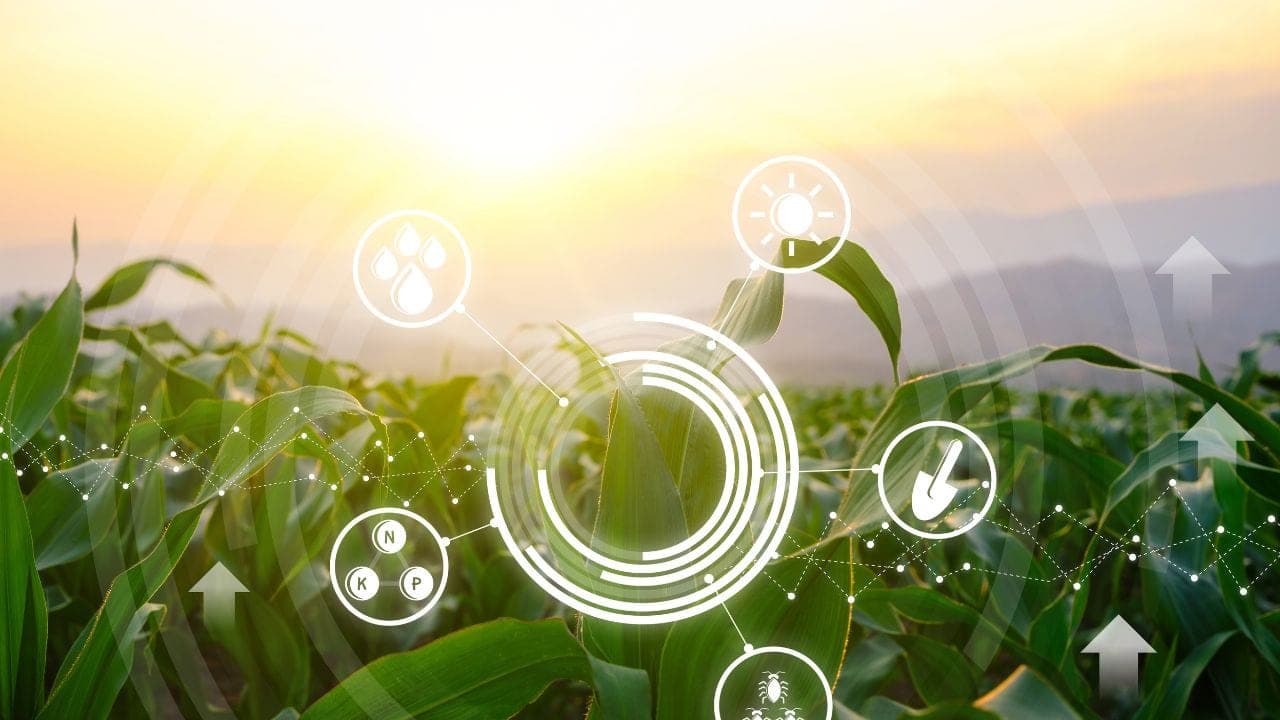
For example, a farmer could take a photo of a crop leaf using a smartphone. AI can analyze the image and identify possible signs of disease. This can help the farmer notice a problem earlier and take the right steps before it spreads.
AI can also help with water management. By using soil moisture, weather information, crop type, and past farm data, an AI system can suggest when irrigation may be needed. This can help reduce unnecessary water use and protect an important resource.
Weather is another area where AI can be useful. Farmers do not only need to know whether it will rain. They need to know what that weather means for their farm. If heavy rain is expected, they may delay irrigation or avoid spraying a crop. Turning weather information into simple farming advice can make it much more useful.
Market information is equally important. A farmer may produce a good crop but still receive a low price because they do not have enough information about different markets. AI can help compare market prices, transport costs, and demand so farmers can make better selling decisions.
Technology should stay in the background while the farmer stays at the center.
Local languages and even voice
Another important part is language.
Agriculture technology should not expect every farmer to understand English or complicated technical terms. AI can make farming support available through local languages and even voice. A farmer should be able to ask a question naturally and receive a simple answer.
Not a replacement for farmers or agricultural experts
But AI is not a replacement for farmers or agricultural experts.
Farmers have years of experience and understand their land better than anyone. AI should support that knowledge, not replace it. It can provide information, warnings, and suggestions while the final decision can consider the farmer's experience and local conditions.
I also believe that technology should be affordable. If an AI solution is too expensive or difficult to use, it will not create much impact. The best technology is not always the most advanced one. Sometimes, the best solution is simply the one a farmer can easily use every day.
A simple message in the morning
The future of agriculture could be much more connected.
A farmer could receive a simple message in the morning:
- "Rain is expected tomorrow. You may not need to irrigate today."
Or:
- "Some plants in your field may be showing early signs of disease. Please check them."
Or:
- "Market prices are currently better at this nearby location."
These may sound like small improvements, but for a farmer, timely information can make a real difference.
At the same time, we should remember that AI alone cannot solve every agricultural problem. Farmers also need better storage, transport, market access, irrigation, training, and expert support. AI should work together with these systems.
To make AI useful for agriculture
For me, the real opportunity is not simply to bring AI into agriculture. It is to make AI useful for agriculture.
The goal should be simple:
- Right information.
- Right time.
- Right action.
I am exploring how AI and data can help make farming more predictive, sustainable, and farmer-friendly.
The real success of agricultural technology will not be measured by how advanced the technology looks.
It will be measured by one simple question:
Did it actually make a farmer's life and decision-making better?
That is where I believe the future of AI in agriculture can make a real difference.
What I Think Agriculture Needs Next
One thing I have started to understand while looking at agriculture and technology is that we should not start with the question, "Where can we use AI?"
We should first ask, "What problem is the farmer facing?"
That small change in thinking can make a big difference.
- If a farmer is losing crops because a disease is detected late, then disease detection should be the focus.
- If water is being wasted, then better irrigation support should be the focus.
- If farmers are not getting fair prices, then market information and better connections with buyers should be the focus.
AI should come after understanding the problem, not before it.
Every farm is different
I also believe that the future of agriculture will depend more on personal advice than general advice. Every farm is different. Soil can be different, weather can be different, crop conditions can be different, and even two fields in the same village can need different care.
This is where data can become useful.
Over time, a system could learn from a farm's previous crop, soil condition, weather, irrigation, and production history. Instead of giving the same advice to everyone, it could provide suggestions based on that particular farm.
Connecting farmers with people who can actually help them
There is also a huge opportunity in connecting farmers with people who can actually help them.
Sometimes a farmer may know that something is wrong with the crop but may not know whom to contact. A simple technology platform could help connect the farmer with an agriculture expert, local service provider, buyer, or other useful support.
That connection can be as important as the AI itself.
The farmer stays at the center
For me, the biggest goal is not to make agriculture look more digital.
It is to make farming decisions easier, faster, and more informed.
Technology should stay in the background while the farmer stays at the center.
If we can build that kind of system, AI can become more than just another technology. It can become a practical tool that helps farmers protect their crops, save resources, find better opportunities, and build a more secure future.
That is the kind of agriculture innovation I would like to see—and hopefully contribute to.
About the author
GAURAV SINGH RAJPUT
Founder, AgroSense AI
Founder of AgroSense AI, an agritech startup working on AI-based crop disease detection and precision advisory for smallholder farmers, aligned with India's Digital Agriculture Mission and AgriStack. A Google Gemini Certified Educator and Google Student Ambassador, with a Bachelor of Computer Applications from B.S.S. College, Supaul and five years of freelance writing on technology and agriculture. Based in Patna, Bihar.
A contributed perspective, published as submitted. The views are the author's own and are not IndianAgri's. IndianAgri has no commercial relationship with the author or with AgroSense AI.