ICAR-CIFRI Leads Week-Long Survey and Conservation Drive to Protect Teesta River's Endemic Fish Species
Scientists, state officials and fishing communities joined hands across five Sikkim districts to assess and safeguard the Teesta River basin's unique cold-water fish biodiversity through field surveys, traditional knowledge documentation an

Expert insights
Dr. Pradip Dey · Director, ICAR-Agricultural Technology Application Research Institute (ATARI), Kolkata
A soil scientist whose Mridaparikshak technology and GPS/GIS-based fertility mapping across 173 districts reshaped India's Soil Health Card programme. Holds two patents and five software copyrights, and has authored 500+ publications, including 207 research papers and 21 books.
The short answer
ICAR-Central Inland Fisheries Research Institute, Barrackpore, conducted a week-long field survey and awareness campaign across Sikkim from 7 to 14 July 2026 to assess fish diversity, document traditional ecological knowledge and promote sustainable fisheries management in the Teesta River basin. The initiative, carried out in collaboration with ICAR-CIFRI's Guwahati regional centre and the Government of Sikkim's Department of Fisheries, covered the districts of Mangan, Gangtok, Pakyong, Soreng and Namchi. More than 150 participants — including fishers, fish farmers, students, scientists and fisheries officials — took part in the campaign.
The initiative
A Multi-District Push for Teesta River Fisheries Conservation
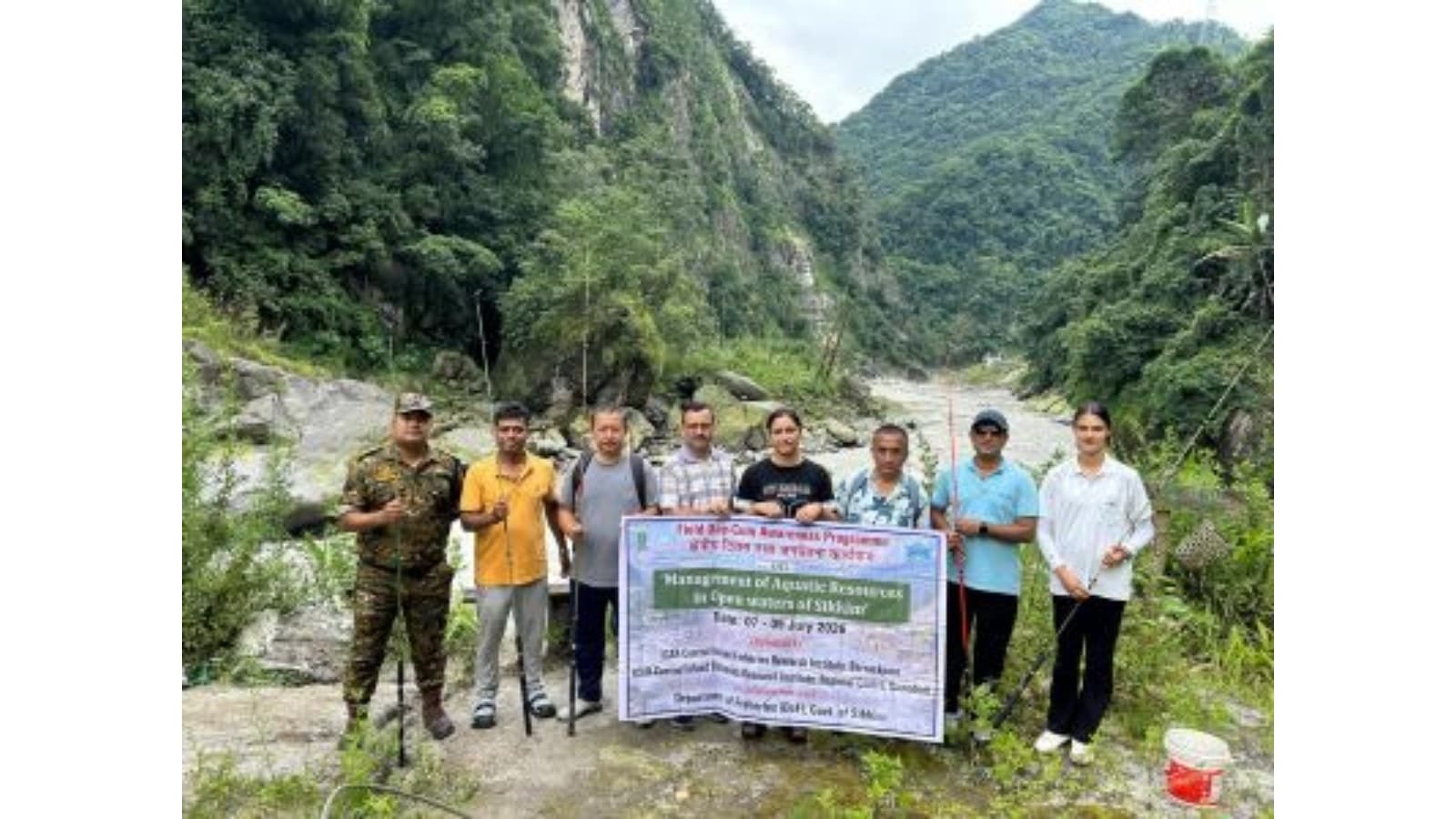
From 7 to 14 July 2026, ICAR-CIFRI, Barrackpore, mounted a coordinated field campaign titled "Management of Aquatic Resources in Open Waters of Sikkim" — one of the institute's most geographically extensive conservation drives in the eastern Himalayan region.
Conducted jointly with the ICAR-CIFRI Regional Centre, Guwahati, and the Government of Sikkim's Department of Fisheries, the campaign spanned five districts — Mangan, Gangtok, Pakyong, Soreng and Namchi — covering major stretches of the Teesta River basin. The programme blended three distinct workstreams:
- Scientific field surveys and experimental fishing in the Teesta and Rangeet rivers and their tributaries
- Documentation of traditional ecological knowledge from local fishing communities
- Community awareness sessions using materials distributed in local languages
More than 150 participants, including fishers, fish farmers, students, scientists and fisheries officials, engaged actively with the programme throughout the week.
The science
Assessing Cold-Water Fish Diversity and Habitat Health
ICAR-CIFRI scientists conducted experimental fishing and systematic field surveys across the Teesta River, the Rangeet River and associated tributaries to build a current picture of fish species diversity, habitat quality and the conservation status of endemic cold-water species unique to the Himalayan river system.
A senior scientist from the ICAR-CIFRI Regional Centre, Guwahati, addressed technical sessions focused specifically on the diversity and conservation standing of fish species endemic to the Teesta River system — species that, by their very nature, have no refuge outside this watershed if local populations collapse.
Equally significant was the institute's effort to capture traditional ecological knowledge from fishing communities who have observed these rivers across generations. Such first-hand accounts of long-term shifts in fish populations and river ecology complement formal survey data and provide historical baselines that laboratory science alone cannot reconstruct.
The Teesta River basin is one of India's most valuable freshwater ecosystems, harbouring a remarkable diversity of endemic fish species that require science-based conservation and sustainable management.
The threats
Hydropower, Climate Change and Indiscriminate Fishing Put Basin at Risk
The campaign drew pointed attention to the escalating pressures on Himalayan river ecosystems. The threats identified span both physical and human dimensions:
- Habitat degradation altering river morphology and reducing suitable spawning and feeding grounds
- Hydropower development disrupting natural flow regimes and fish migration corridors
- Indiscriminate fishing, including outside legally mandated seasonal ban periods
- Climate change, which is reshaping temperature and precipitation patterns that cold-water species depend upon
Shri Surendra Bhandari, Assistant Director, Department of Fisheries, Government of Sikkim, used the awareness sessions to make a direct appeal to fishing communities to strictly observe seasonal fishing bans and actively support conservation efforts — a signal that compliance with existing regulations remains a pressing on-ground challenge. Interactive field demonstrations and locally translated awareness materials were deployed to convert scientific messaging into actionable community behaviour.
The collaboration
Government–Science–Community Partnerships at the Core
The programme was conceptualised under the leadership of ICAR-CIFRI's Director and implemented with the active involvement of Ms. Roshni Rai, Secretary, Department of Fisheries, Government of Sikkim, and Shri K. K. Shrestha, Director, Department of Fisheries, Government of Sikkim — indicating strong political and administrative buy-in at the state level.
According to ICAR-CIFRI, the enthusiastic response from stakeholders is expected to deepen long-term collaboration between the institute, Sikkim's fisheries department and local communities. The campaign's model — combining peer-reviewed field science with government outreach infrastructure and grassroots participation — is being positioned as a replicable framework for sustainable fisheries management across the broader Himalayan region.
By anchoring its conservation argument in both ecological importance and socio-economic relevance, ICAR-CIFRI has sought to make a compelling case to fishing communities that protecting native fish species is inseparable from protecting their own fisheries-based livelihoods.
Why it matters
The Teesta River basin supports fisheries-based livelihoods across a fragile Himalayan ecosystem under mounting pressure from hydropower development, habitat degradation, indiscriminate fishing and climate change. For policymakers and fisheries managers, this initiative signals a science-led, community-partnered model that can inform evidence-based regulation — particularly around seasonal fishing bans. Traders and agri-businesses reliant on cold-water fisheries in the north-east should watch whether ICAR-CIFRI's survey data leads to formal conservation designations or revised management guidelines for endemic species in the Teesta basin.
Frequently asked
What was the objective of ICAR-CIFRI's Sikkim campaign in July 2026?
The campaign, titled 'Management of Aquatic Resources in Open Waters of Sikkim', aimed to assess fish diversity, habitat quality and the conservation status of endemic cold-water fish species in the Teesta River basin, while also documenting traditional ecological knowledge from local fishing communities and spreading conservation awareness.
Which rivers and districts were covered during the survey?
Scientists conducted field surveys and experimental fishing in the Teesta River, the Rangeet River and their tributaries. The campaign covered five districts of Sikkim: Mangan, Gangtok, Pakyong, Soreng and Namchi.
What are the key threats to the Teesta River's fish biodiversity identified during the campaign?
The initiative highlighted habitat degradation, hydropower development, indiscriminate fishing and climate change as the principal threats facing the Teesta River basin's aquatic ecosystems and endemic fish species.
Who participated in the ICAR-CIFRI Sikkim conservation campaign?
More than 150 participants attended, including fishers, fish farmers, students, scientists and fisheries officials. The programme was implemented in collaboration with the ICAR-CIFRI Regional Centre, Guwahati, and the Department of Fisheries, Government of Sikkim.
Source
This report summarises and analyses coverage from icar.org.in. The analysis and India context are IndianAgri's own.
Edited by Devendra Kumar Jha. How we report, source and correct: editorial policy. Spotted an error? Tell us.