India's Agri Graduates Deserve Better: The Case for a Professional Agriculture Council
Highly qualified BSc, MSc, and PhD agriculture graduates are being pushed into unsuitable sales roles and facing workplace abuse — a structural failure that demands institutional remedy through a dedicated professional council.
Expert insights
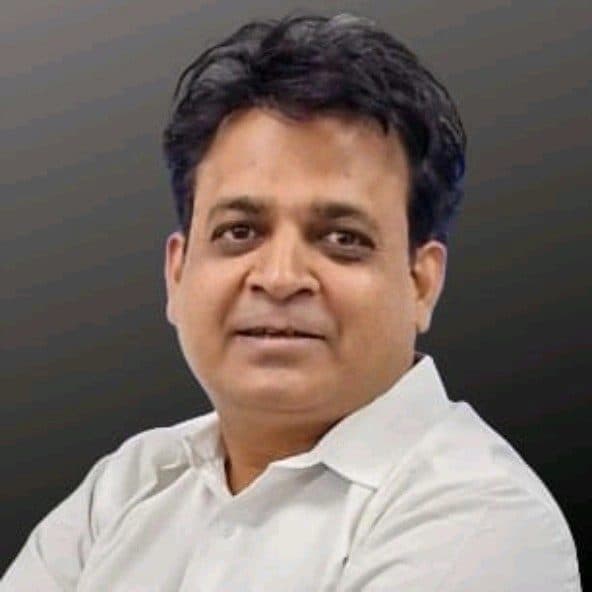
Devendra Kumar Jha · Founder, Agpro Consulting
Devendra Kumar Jha is an agricultural engineer and founder of Agpro Consulting, with over 25 years bridging corporate strategy and the Indian agri-sector.
The short answer
Agriculture graduates in India — including MSc and PhD holders with advanced laboratory research experience — are routinely placed in field sales roles under agri-input dealers who often lack formal agricultural qualifications, where unmet sales targets lead to abuse and professional humiliation. Unlike their counterparts in veterinary, engineering, and medical sciences, agri graduates lack a professional regulatory council that could define appropriate career pathways and infrastructure standards. The call is now for agriculture students themselves to mobilise and push for the creation of such a council to safeguard their professional dignity and employability.
The core problem
Highly Trained, Poorly Placed: Agri Graduates in the Wrong Roles
India's agriculture colleges produce graduates at every level — BSc, MSc, and PhD — many of whom have conducted sophisticated molecular research in well-equipped laboratories. Yet a large number of these professionals find themselves in agri-input sales roles, working under dealers who often hold no formal agricultural qualification.
When sales targets go unmet, these graduates frequently face verbal abuse from dealers and seniors alike — a form of workplace indignity that their peers in veterinary science, engineering, and medicine are rarely subjected to. The central question being raised is a pointed one: why should someone trained in high-end molecular science be deployed in a role that neither requires nor respects those skills?
Institutional gap
The Missing Council: Why Agriculture Stands Apart
Veterinary professionals, engineers, and medical practitioners all operate within the framework of statutory professional councils that define standards, protect practitioners, and regulate conduct. Agriculture — despite being the backbone of the Indian economy — has no equivalent body.
This absence has real consequences. Without a professional council, there is no institutional mechanism to:
- Define appropriate roles for graduates at each qualification level
- Set infrastructure standards for agricultural colleges beyond land area requirements
- Regulate workplace conduct between employers, dealers, and qualified professionals
The argument being made is that professional organisations — not just academic bodies — are best placed to identify what infrastructure and curriculum reforms are actually needed to produce job-ready graduates.
Women in agriculture
A Workforce Overlooked: The Employability Gap for Women Agri Graduates
Women now constitute a significant portion of agriculture's graduate output, yet current curricula and placement pathways do not adequately account for their specific employability needs and constraints.
The call is for ICAR and its allied research centres to ground curriculum design in employability realities — particularly for women graduates, who represent a major and underutilised national resource. A professional council could serve as the platform through which these needs are formally articulated, and through which suitable employment channels are identified and developed. The framing is one of nation-building: a skilled female agricultural workforce, properly channelled, is a strategic asset that India is currently failing to deploy.
The way forward
Students Must Lead the Push for a Professional Agriculture Council
The prevailing model of large land banks as the primary metric for agricultural college legitimacy is being challenged as outdated. Physical acreage, the argument goes, is a poor proxy for the quality of professional formation — what matters is whether graduates emerge career-ready and protected by institutional frameworks that reflect modern agricultural practice.
The call to action is directed squarely at agriculture students themselves — identified as the group with the most at stake and, therefore, the most reason to mobilise. The view is that waiting for ICAR, state governments, or university administrations to initiate reform is insufficient. Student-led advocacy for a formal Professional Agri Council is presented as both urgent and necessary to convert aspiration into policy reality.
Why it matters
The absence of a statutory professional council for agriculture is not merely an institutional gap — it is actively suppressing the career outcomes of thousands of graduates each year, including a growing proportion of women entering the field. Until ICAR and allied research bodies reform curricula to address real employability challenges, and until a professional council sets standards for roles, infrastructure, and conduct, India risks squandering the very human capital it has invested in training. Policymakers and agri-education administrators should treat this as an urgent structural reform, not a peripheral concern.
Frequently asked
Why are agriculture graduates ending up in input sales roles?
There is no professional council to define and regulate appropriate career pathways for agri graduates. As a result, even MSc and PhD holders with advanced research backgrounds are placed in agri-input sales roles under dealers who often lack formal agricultural qualifications.
How does agriculture compare to other professions in India in terms of professional regulation?
Veterinary, engineering, and medical graduates all benefit from statutory professional councils that set standards and protect practitioners. Agriculture currently has no equivalent body, leaving graduates without institutional protection or clearly defined career frameworks.
What role should ICAR play in addressing the employability crisis?
The argument is that ICAR and its allied research centres need to reform curricula to address real-world employability challenges — including those specific to women graduates, who form a major share of agricultural output but whose career needs are not adequately reflected in current course design.
Who should drive the creation of a Professional Agriculture Council?
Agriculture students are identified as the primary constituency that should advocate for the council's creation, as they are the most directly affected by the current structural failures in employment and professional recognition.
This is an original IndianAgri report. The analysis and India context are IndianAgri's own.
Edited by Devendra Kumar Jha. How we report, source and correct: editorial policy. Spotted an error? Tell us.