India Opens Door to Ammonia as a Farm Fertiliser, Eyes End to Urea Import Reliance
A gazette notification permits anhydrous ammonia with 82% nitrogen for agricultural use in India — but industry warns that infrastructure gaps, gas-leak risks, and field standardisation challenges mean full-scale adoption remains years away
The short answer
India has officially permitted the use of anhydrous ammonia — carrying 82% nitrogen compared to urea's 46% — as a fertiliser, under a three-year window granted by the Union Agriculture Ministry's gazette notification of July 23. If successfully deployed, India would become only the fourth country globally, after the US, Canada, and Australia, to use ammonia directly in farming. However, the absence of soil-injection infrastructure, safety concerns over gas leaks, and the need for field-level standardisation mean the policy step is far ahead of on-ground readiness.
The policy move
Centre Clears Anhydrous Ammonia for Farm Use in a First for India
The Union Agriculture Ministry, through a gazette notification dated July 23, has permitted the manufacture and agricultural use of anhydrous ammonia — defined as containing a minimum of 82 per cent nitrogen by weight — for a period of three years under Clause 20A of the Fertiliser (Inorganic, Organic or Mixed) (Control) Order, 1985.
The move is being read as a strategic response to India's heavy dependence on urea imports, which stand at approximately 100 lakh tonnes annually, with domestic production of around 300 lakh tonnes itself largely dependent on imported LNG. By comparison, anhydrous ammonia packs nearly double the nitrogen punch of conventional urea, which carries 46 per cent N.
If the initiative gains traction, India would join an exclusive group of four nations — the United States, Canada, and Australia being the others — that directly apply ammonia as a crop nutrient. Industry observers, however, are tempering expectations: the regulatory green light is acknowledged as a necessary first step, but the path to farm-level deployment is considered steep.
The implementation gap
Infrastructure, Safety Risks, and Lessons from Sulphur-Coated Urea
A senior official from a urea manufacturing company welcomed the policy in principle but was candid about the obstacles. "Permitting the use is good as it is the first step. But, to implement it is the key challenge because of the risks involved due to the possibility of gas leaks," the official said, adding that his company had no plans to enter the space, seeing it as neither within its core domain nor commercially viable at this stage.
The official drew a pointed parallel with sulphur-coated urea — a product that received regulatory clearance but has seen negligible adoption. He noted that sulphur coating is not suitable for prilled urea, the subsidised form prevalent in India, and works only with granular urea, of which domestic manufacturing is minimal.
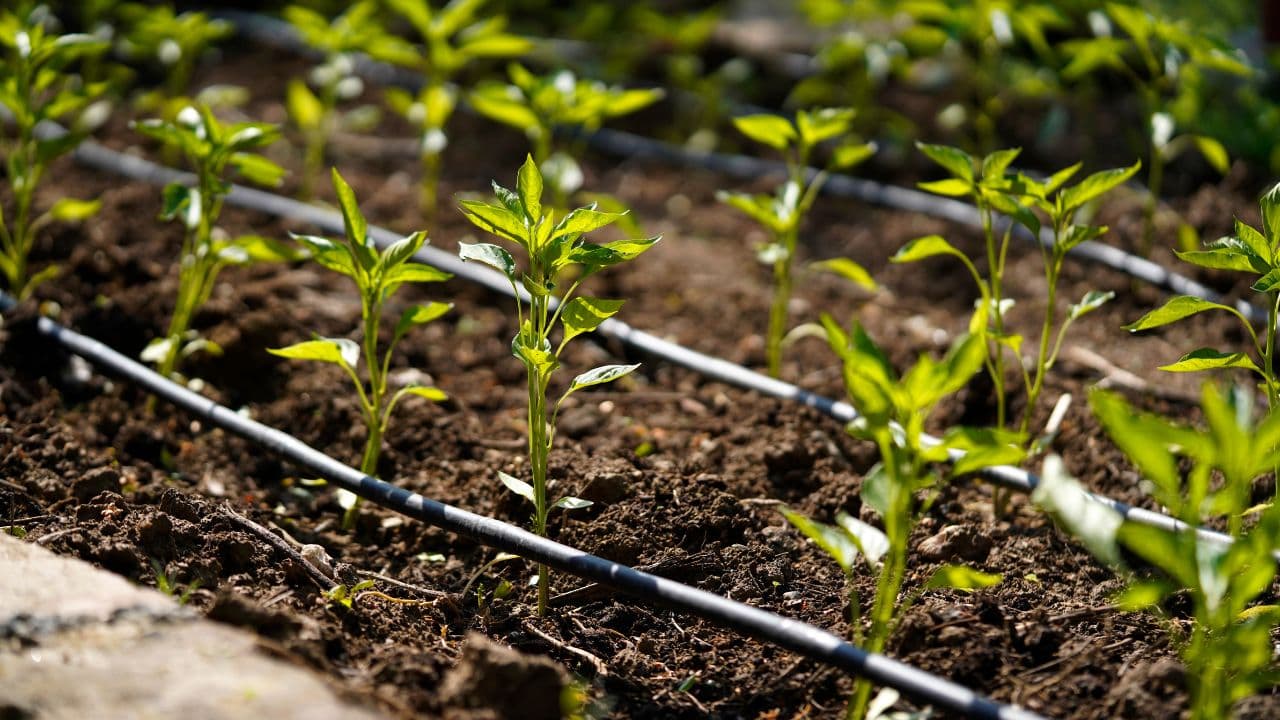
Anhydrous ammonia must be injected under the soil, requiring specialised equipment and a delivery network that does not yet exist at scale in India. Industry sources noted that many urea plants already generate 2,000–6,000 tonnes of surplus ammonia annually that cannot be absorbed in urea production; government policy currently channels such surplus ammonia as a priority feedstock for complex fertiliser units.
Permitting the use is good as it is the first step. But, to implement it is the key challenge because of the risks involved due to the possibility of gas leaks.
The trial track
ICAR Fast-Tracks Trials After Kharif Window Is Missed
ACME Cleantech Solutions had applied to the Indian Council of Agricultural Research (ICAR) for a collaborative pilot to validate the use of anhydrous and aqueous ammonia — including green ammonia — as an alternative to conventional urea, as reported by BusinessLine in July 2025. With approval arriving after the Kharif 2025 sowing window had closed, trials are now scheduled across 13 ICAR institutions during the Rabi 2025-26 season.
Sources indicated that while the original plan called for a three-season trial, ICAR fast-tracked approval to accelerate manufacturing readiness, with the aim of covering at least some areas under a pilot scheme in the next Kharif season.
Early field-trial results from an ICAR institute during Rabi 2026, evaluating green ammonia in direct-seeded rice, showed higher biomass and greater leaf greenness in some plots compared with standard urea applications. However, non-uniform crop growth was also observed in certain plots, attributed to inconsistent NH₃ injection — pointing to the need for standardised application methodology.
"It is very important to test its efficacy in low land transplanted crops, particularly in rice and maize and standardise the time of application, time gap between application and puddling," said a scientist involved in the trial.
The green pivot
Green Urea Plants and the CO₂ Feedstock Challenge
Running parallel to the ammonia push is a broader government effort to establish green urea production domestically. The Fertiliser Ministry has flagged growing interest from prospective investors, and a 150-tonne-per-day green urea plant at Pudimadaka, Andhra Pradesh is being developed by NETRA — the R&D arm of NTPC — as a technical reference facility. The plant integrates Carbon Capture and Utilisation (CCUS) systems with water electrolysis.
The Department of Fertilizers has also held a high-level pre-Expression of Interest meeting for the establishment of green urea plants across India.
Scale and feedstock are the twin constraints. Green urea production requires carbon dioxide as a synthesis input, meaning captured CO₂ from thermal power, cement, and steel plants becomes an essential upstream resource. A world-scale urea plant with an annual capacity of 12.7 lakh tonnes would require nearly 10 lakh tonnes of CO₂ per year. Meanwhile, setting up a green ammonia plant of 1,200 TPD capacity alone would demand an investment of ₹13,000–₹15,000 crore — a figure that underlines the capital intensity of the transition.
Demand signal
Urea Demand Surges in July as Monsoon Sowing Peaks
The policy developments come against a backdrop of exceptionally strong near-term urea demand. Surplus rainfall in the first ten days of July has accelerated Kharif sowing, and more than 60 per cent of July's total urea demand had already been sold by July 17 — a sharp contrast to less than 50 per cent for DAP and complex fertilisers, and just 30 per cent for MOP over the same period.
July is structurally the highest-demand month for urea, coinciding with peak sowing activity and the most intensive rainfall of the monsoon season. The surge reinforces why reducing import dependence — India brings in roughly 100 lakh tonnes of urea annually — remains a policy priority, and why any viable domestic nitrogen alternative, whether ammonia-based or green urea, carries significant strategic and fiscal relevance.
Why it matters
With India importing roughly 100 lakh tonnes of urea annually — most domestic production also relying on imported LNG — the push to develop ammonia-based and green urea alternatives carries significant implications for fertiliser subsidy bills, energy security, and farmer input costs. The three-year manufacturing window and fast-tracked ICAR trials signal that policymakers are serious about accelerating timelines, but the ₹13,000–₹15,000 crore investment needed for a single green ammonia plant of 1,200 TPD capacity underscores the scale of private and public capital required. Traders and agri-businesses should watch whether the Rabi 2025-26 ICAR trials produce the standardisation breakthroughs needed to enable even a limited Kharif pilot — that will be the real proof-of-concept moment.
Frequently asked
What has India approved regarding ammonia use in agriculture?
The Union Agriculture Ministry, via a gazette notification dated July 23, has permitted the manufacture and agricultural use of anhydrous ammonia containing a minimum of 82 per cent nitrogen by weight. The approval is valid for three years under Clause 20A of the Fertiliser (Control) Order, 1985.
Why is anhydrous ammonia considered an alternative to urea?
Anhydrous ammonia contains 82 per cent nitrogen by weight, nearly double the 46 per cent found in conventional urea, making it a more nitrogen-dense input. India currently imports around 100 lakh tonnes of urea annually, and ammonia — including green ammonia — is seen as a potential route to reduce that dependence.
What are the key challenges to using ammonia directly on farms in India?
Ammonia must be injected under the soil, requiring specialised infrastructure and equipment that does not yet exist at scale in India. Industry sources also flag the risk of gas leaks as a significant safety concern. Early ICAR field trials noted non-uniform crop growth due to inconsistent NH₃ application, highlighting the need to standardise injection methodology.
How much investment is needed to build a green ammonia plant in India?
According to industry sources cited in the source report, establishing a green ammonia plant with a capacity of 1,200 tonnes per day would require an investment of ₹13,000–₹15,000 crore.
Source
This report summarises and analyses coverage from The Hindu BusinessLine — Agri Business. The analysis and India context are IndianAgri's own.