India Measures Its Soil Better Than Anyone — Then Ignores What It Finds
Five million soil samples, twelve measurements each — yet fertiliser application bears almost no relation to what the data shows. A deep look at why India's world-class soil testing programme is failing to change outcomes on the ground.

Expert insights
Sathyanarayanan Sankaran · CEO, Rainmatter Foundation
Chief Executive of Rainmatter Foundation, a technologist and public-policy postgraduate working to expand climate-resilient landscapes across urban, rural, and wild areas.
The short answer
India runs the world's most extensive soil testing programme, generating five million samples across twelve parameters per field — but the data is not translating into better farm practice. Fertiliser application remains disconnected from soil health readings, organic carbon is critically low in over half of all samples, and groundwater nitrate contamination is spreading across 440 districts. The programme measures precisely, but the system acts as though it never read the results.
The scale
A Testing Programme Without Parallel — and Without Impact
India's Soil Health Card scheme is, by any measure, an extraordinary undertaking. Five million soil samples, each assessed across twelve distinct chemical parameters, with results delivered to individual farmers as personalised nutrient recommendations. No other country comes close to this density of farmland surveillance.
Yet the headline finding is damning in its simplicity: what a district's soil actually needs has almost no bearing on what it receives. Statistical analysis puts soil carbon's explanatory power over district-level nitrogen application at just 0.6%. In practical terms, fertiliser decisions are being made as though the testing programme does not exist.
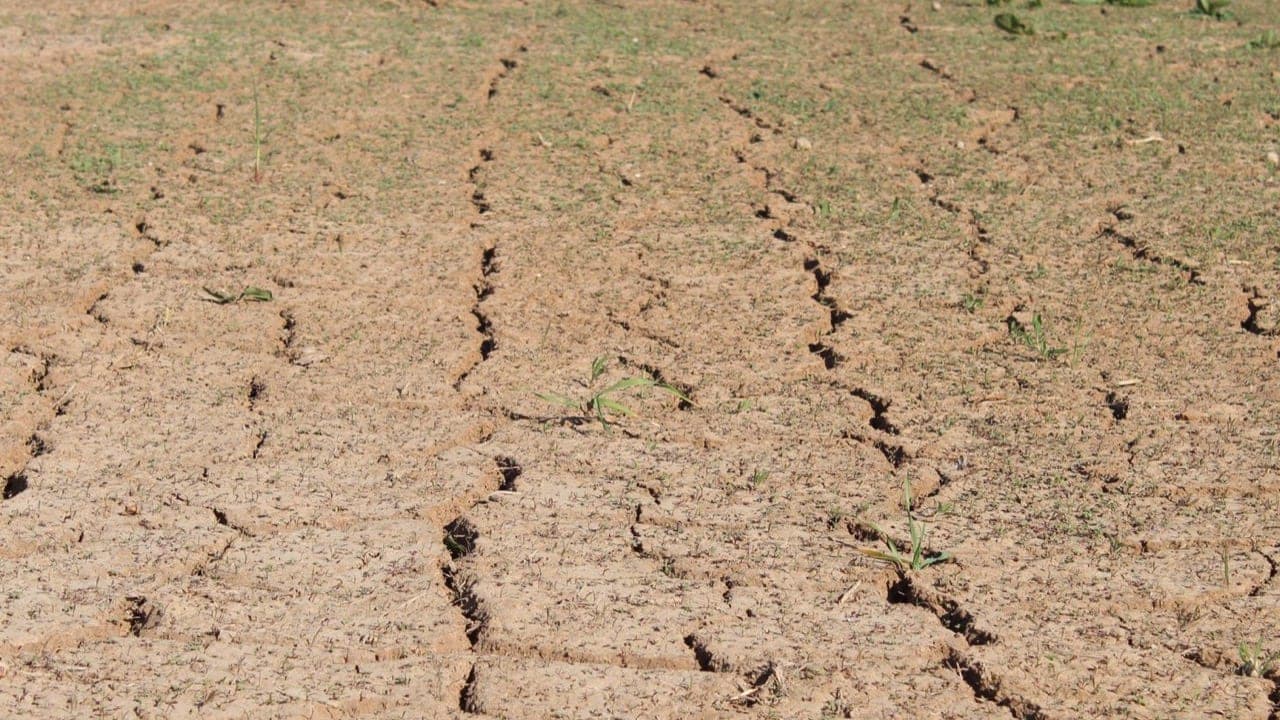
More than half of all samples return low in organic carbon — confirming the soil stress is real, not an artefact of over-cautious measurement. The alarm the data is raising is genuine. The response, so far, is not.
The measurement gap
Precise Numbers That Cannot Tell You Whether Things Are Getting Better
Eight years of continuous testing have produced a vast dataset — but not a usable trend line. The soil readings are not imprecise; they are, by all accounts, precise. The problem is that successive readings for the same areas are precisely disagreeing with each other, making it impossible to determine whether soil health is improving or deteriorating over time.
The twelve parameters on the Soil Health Card compound the problem in a different way: every one of them is chemical. Microbial populations, earthworm counts, and broader soil biology — the first indicators to respond when regenerative or natural farming practices take hold — are entirely absent from the measurement framework.
A card blind to recovery
Biology is what a soil transition rebuilds first; carbon is what moves last. A monitoring system that only tracks carbon and chemistry will be slow to register early improvement and may actively discourage farmers who are doing the right things but cannot yet show it on the card. Crucially, there is currently no independent instrument capable of verifying whether the card's readings are correct — the data has no external check.
The subsidy signal
₹1.19 Lakh Crore of Urea Is Doing Exactly What You Would Expect
India's total fertiliser subsidy stands at approximately ₹1.68 lakh crore, of which ₹1.19 lakh crore — the dominant share — is directed at urea alone. That price signal shapes everything downstream.
The efficiency data is stark. Districts that apply nitrogen most lightly generate around 48 kilograms of grain per kilogram of nitrogen applied. The heaviest-applying districts produce just 17 kilograms per kilogram — less than a third of the return. The subsidy structure is, in effect, rewarding diminishing returns at scale.
The organic alternative is frequently proposed but does not survive a basic arithmetic check. India's entire annual crop residue output, combined with manure from the world's largest cattle herd, could substitute for roughly 30% of the nitrogen currently applied nationally. In Punjab — where the fertiliser intensity is highest — that figure falls to 16%. There is no viable pathway to replacing urea with compost at the scale India currently operates.
The spillover
Private Soil, Public Water: Nitrate Contamination Spreads Across 440 Districts
Soil management is legally treated as a private decision — but the consequences of that management do not stay on the farm. Nitrate leaching from excess nitrogen application has already pushed 27% of India's sampled wells above the nationally recognised safe limit. The contamination is not concentrated in a single agricultural zone: it spans 440 districts and is still rising.
This reframes the fertiliser efficiency debate. What begins as an agronomic and economic argument — too much urea for too little grain — becomes a public-health and water-security argument at the district scale. The costs of soil mismanagement are being externalised into shared groundwater that communities, not just individual farmers, depend upon.
For policymakers, this is the dimension that most clearly demands a cross-ministerial response: agriculture ministries control the subsidy structure, but the health and water consequences fall elsewhere.
The way forward
What Would It Take to Close the Loop Between Data and Action?
The analysis does not suggest that India's soil testing investment has been wasted — the data exists and the scale is genuinely unprecedented. The problem is the absence of any effective mechanism connecting measurement to behaviour change.
Several structural gaps are identified:
- The subsidy architecture — overwhelmingly weighted towards urea — overrides any nutrient-balancing signal the Soil Health Card might otherwise generate.
- The card's biological blindness means farmers transitioning to regenerative practices receive no positive feedback from the system during the years when it matters most.
- Trend analysis is currently impossible because of inconsistencies between successive readings, leaving the programme unable to demonstrate its own impact.
- No independent verification instrument exists to validate card readings, meaning the programme's accuracy cannot be externally checked.
The evidence, taken together, points to a programme that is world-class in its ambition and in its measurement infrastructure, but that has not yet been connected to the policy levers — pricing, extension, biological monitoring — that would translate data into changed practice.
Why it matters
For Indian policymakers, the core problem is not the absence of data — it is the absence of a feedback loop between data and action. With ₹1.19 lakh crore of the total ₹1.68 lakh crore fertiliser subsidy channelled exclusively into urea, price signals are actively working against the nutrient balance the Soil Health Card is meant to encourage. For farmers and traders, the finding that the heaviest-applying districts yield only 17 kg of grain per kg of nitrogen — against 48 kg in lighter-applying districts — is a stark efficiency argument. The nitrate contamination figure, already above safe limits in 27% of sampled wells, signals that soil mismanagement is crossing into a public-health crisis that no single ministry can contain.
Frequently asked
How many soil samples does India test under the Soil Health Card scheme?
India tests five million soil samples, with each sample assessed across twelve parameters, making it the most extensive national soil testing programme in the world.
What proportion of India's sampled wells exceed the safe nitrate limit?
According to the analysis, 27% of India's sampled wells are already above the safe nitrate limit, and the contamination spans 440 districts and is continuing to rise.
Can India replace urea with organic alternatives like compost or manure?
Not at current scale. All of India's crop residue combined with manure from its cattle herd could cover only around 30% of the nitrogen currently applied nationally. In high-intensity states like Punjab, that figure drops to just 16%.
Why can't India's soil testing data show whether soil health is improving over time?
Eight years of data have produced inconsistent successive readings for the same areas — not because the measurements are imprecise, but because the readings are precisely contradicting each other. There is also no independent instrument currently available to verify whether the card's readings are accurate.
This is an original IndianAgri report. The analysis and India context are IndianAgri's own.