Kharif 2026 Sowing at 787 Lakh Hectares: Pulse and Coarse Cereal Gaps Persist Despite Monsoon Recovery
India's kharif sowing has covered 71.28% of normal area as of 24 July 2026, but year-on-year deficits in pulses, oilseeds, and coarse cereals signal supply-side risks that August rains must address.

Information courtesy
Mukund Kulkarni · Founder, MK Global Grains
Mukund Kulkarni is the founder of MK Global Grains, with over 34 years of expertise in global agro sourcing, food solutions, and supply across domestic and international markets.
The short answer
India's total kharif sown area stood at 787.37 lakh hectares as of 24 July 2026, with the year-on-year gap narrowing to 4.7% after improved monsoon rainfall in the second half of July, according to the Ministry of Agriculture & Farmers Welfare. However, significant acreage deficits remain across pulses (-7.53%), coarse cereals (-11.9%), oilseeds (-2.1%), and cotton (-3.9%). Sugarcane is one of the few bright spots, registering a 1.5% year-on-year increase in area, while urad is the only major pulse crop showing positive growth.
The headline
Monsoon Recovery Trims the Gap, But Sowing Still Trails Last Year
India's kharif season sowing reached 787.37 lakh hectares as of 24 July 2026, equivalent to 71.28% of the normal sowing area, according to the Progressive Crop Area Sown Portal maintained by the Ministry of Agriculture & Farmers Welfare. The year-on-year deficit has narrowed meaningfully to 4.7%, a direct outcome of improved monsoon rainfall during the second half of July.
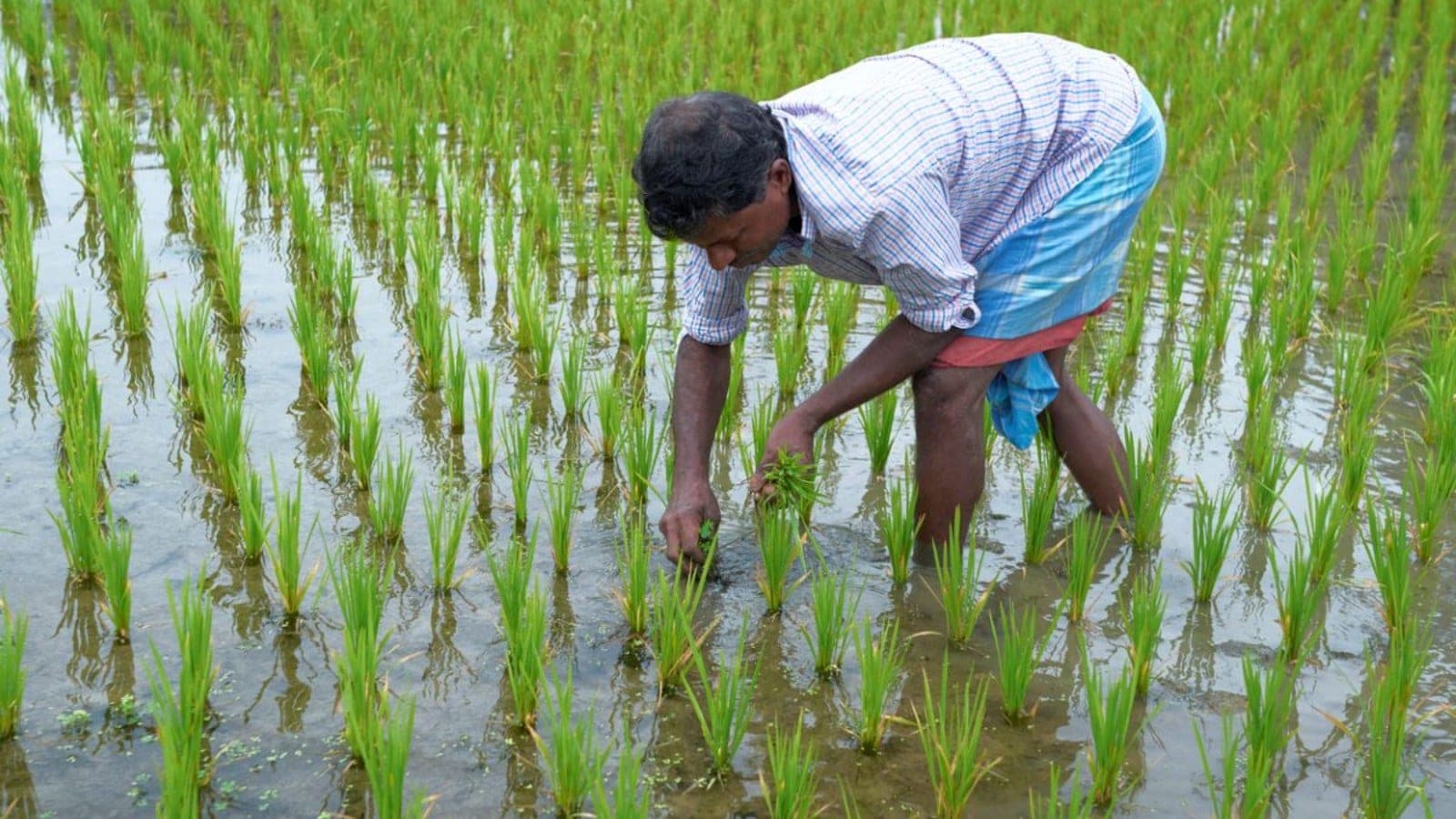
The recovery is encouraging but uneven. Paddy transplanting has picked up with recent showers, yet eastern states continue to trail the pace seen at this point last year. Sugarcane is a clear outperformer, with area rising 1.5% year-on-year to 57.58 lakh hectares — one of the very few crops in positive territory this season.
Crop-wise picture
Pulses and Coarse Cereals Record the Steepest Shortfalls
The stress points in kharif 2026 are concentrated in three categories:
Pulses (84.57 LH, -7.53% YoY)
- Tur: 44.60 LH (-8.42%)
- Moong: 15.15 LH (-9.01%)
- Urad: 18.60 LH (+8.07% — the sole major pulse with positive growth)
- Chana, moth bean, and other pulses remain below last year's levels
Shri Anna & Coarse Cereals (142.21 LH, -11.9% YoY) — the steepest sectoral decline, driven by lower planting of maize, bajra, and jowar.
Oilseeds (163.54 LH, -2.1% YoY) — soybean acreage is down year-on-year, while groundnut has held broadly stable.
Cotton (98.72 LH, -3.9% YoY) — delayed early-season rainfall disrupted planting timelines. Paddy at 234.43 LH is marginally lower (-2.6% YoY), though transplanting momentum has improved.
Market read
Acreage Deficits Set the Stage for Firm Prices if Weather Risks Continue
For commodity markets, the acreage data delivers a clear message: supply-side fundamentals remain tight across the pulse, oilseed, and coarse-cereal segments. Lower planted area does not automatically translate into lower production — timely August rains can still support yields — but it removes the buffer that traders and processors rely on when crop stress materialises.
Pulse prices are particularly vulnerable. With tur and moong both running nearly 8–9% below last year's acreage at this stage, any weather disruption during pod-filling could amplify domestic supply concerns. Similarly, a continued shortfall in soybean planting will keep the oilseed complex under watch.
Procurement teams and processors are advised to monitor rainfall distribution data, crop condition bulletins, and any government policy signals — including potential import adjustments or buffer-stock releases — over the weeks ahead.
What's next
August Rainfall Will Be the Season's Defining Variable
The second half of July's improved monsoon activity has brought meaningful relief to sowing progress, but the season's outcome hinges heavily on August weather. This is the month when most kharif crops move through critical vegetative and reproductive stages — adequate and well-distributed rainfall during this window directly determines yield potential and final production volumes.
For traders, agri-businesses, and policymakers, the watchlist for the coming weeks is clear:
- Monsoon distribution across deficit eastern states and major pulse-growing belts
- Crop condition reports from DAFI and state agriculture departments
- Government policy developments, including any adjustments to minimum support prices, import duties, or procurement operations
The narrowing of the year-on-year gap to 4.7% is a positive signal, but the season is far from secured.
Why it matters
With pulses and coarse cereals recording the sharpest acreage declines so far this season, traders and procurement teams face the real prospect of tighter domestic supplies and firmer prices if August rainfall proves uneven or deficient. Soybean and maize shortfalls add further pressure on the oilseed and feed-grain segments. Policymakers will need to watch crop condition reports closely, as any additional weather stress in August could have outsized implications for food inflation and import decisions heading into the rabi season.
Frequently asked
How much kharif area has been sown in India as of 24 July 2026?
According to the Ministry of Agriculture & Farmers Welfare, total kharif sowing stood at 787.37 lakh hectares as of 24 July 2026, covering 71.28% of the normal sowing area, with the year-on-year gap narrowing to 4.7%.
Which kharif crop has recorded the steepest acreage decline in 2026?
Shri Anna and coarse cereals have recorded the steepest decline at -11.9% year-on-year, primarily due to lower sowing of maize, bajra, and jowar. Pulses as a category are also significantly lower, down 7.53% year-on-year.
Is any major pulse crop showing positive sowing growth this kharif season?
Yes. Urad is the only major pulse with positive year-on-year growth, with area sown at 18.60 lakh hectares, up 8.07% compared to the same period last year. Tur and moong are both running below last year's levels.
Why is August weather so critical for kharif 2026 crop outcomes?
August is when most kharif crops pass through key vegetative and reproductive growth stages. Adequate and well-distributed rainfall during this period is essential for crop establishment, yield potential, and final production — particularly given the existing acreage shortfalls in pulses, oilseeds, and coarse cereals.
This is an original IndianAgri report. The analysis and India context are IndianAgri's own.