NITI Aayog's AgriBio 2.0: CRISPR, Bioinputs and a 2035 Deadline to Rewire Indian Agriculture
NITI Aayog has proposed AgriBio 2.0 — a flagship national mission using CRISPR gene editing, biofertilisers and biopesticides to build climate-resilient crops and cut chemical fertiliser dependence by 2035.
The short answer
NITI Aayog has recommended a new AgriBio 2.0 mission that would deploy CRISPR-based gene editing, genomic selection and biological farm inputs to develop climate-resilient crops and reduce chemical fertiliser use by 2035. The mission would be jointly led by the Department of Biotechnology, ICAR and the Ministry of Agriculture, and would consolidate several existing schemes into a single coordinated framework rather than creating a standalone programme. It forms part of a broader bioeconomy roadmap that targets expanding India's bioeconomy from $195.3 billion in 2025 to $691 billion by 2035.
The proposal
What AgriBio 2.0 Actually Is — and Who Will Run It
NITI Aayog has laid out AgriBio 2.0 as one of six National BioMissions anchoring its Roadmap for Building India as a Leading BioEconomy Powerhouse by 2035. The mission would be jointly steered by the Department of Biotechnology (DBT), the Indian Council of Agricultural Research (ICAR) and the Ministry of Agriculture and Farmers' Welfare — a three-agency structure designed to bridge laboratory science and on-farm implementation.
Critically, the proposal does not call for an entirely new government programme. Instead, NITI Aayog recommends consolidating a range of existing schemes — including the National Mission on Sustainable Agriculture, Paramparagat Krishi Vikas Yojana, National Food Security Mission, Mission for Integrated Development of Horticulture, Soil Health Card Scheme and several DBT-led initiatives such as Biotech-KISAN and the Biofuel and Bioenergy Mission — into a single, coordinated framework. The stated aim is to accelerate the journey from scientific discovery to farmers' fields without duplicating ongoing efforts.
The technology
CRISPR, Genomic Selection and the Push for Next-Generation Crop Breeding
At the heart of AgriBio 2.0 is a clear bet on advanced crop biotechnology. The NITI Aayog report advocates large-scale deployment of CRISPR-based gene editing, genomic selection and molecular breeding to produce crop varieties better equipped to handle the climate stresses already battering Indian agriculture — drought, extreme heat, salinity and new pest pressures.
These are not incremental tools. CRISPR-based gene editing allows breeders to make precise, targeted changes to a crop's own genome, potentially compressing breeding timelines that traditional methods would stretch over years or decades. The report positions these technologies as central to India's long-term food security strategy, arguing that conventional breeding alone cannot keep pace with the speed at which climate conditions are shifting across the country's diverse agro-ecological zones.
Field validation is built into the proposal: new crop varieties and bioinputs would be tested and demonstrated through Biotech-KISAN hubs, Krishi Vigyan Kendras (KVKs) and state agricultural universities before wider commercial release, with the report emphasising that a quality-first approach is essential for building farmer confidence.
The inputs agenda
Biofertilisers, Biopesticides and New Production Clusters Across India
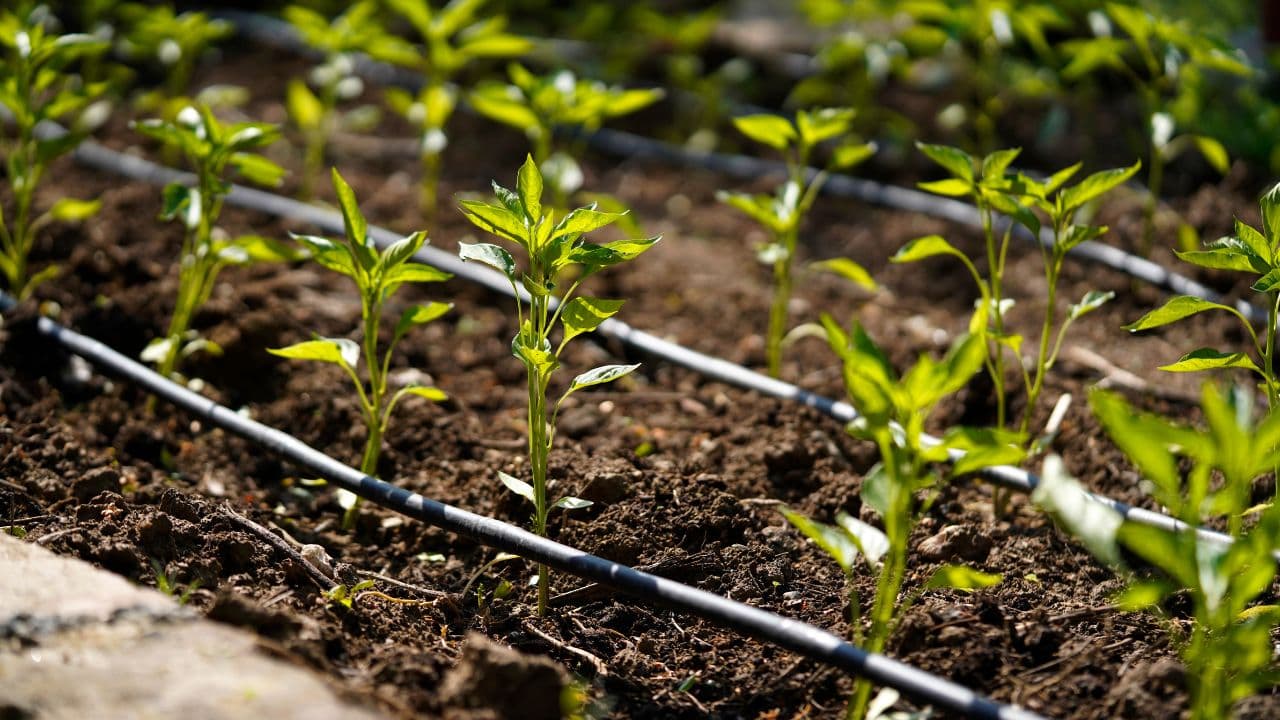
Alongside crop breeding, AgriBio 2.0 places substantial weight on transforming India's farm-input ecosystem. NITI Aayog recommends scaling up biofertilisers, biopesticides, microbial consortia and soil-health enhancers to progressively displace chemical fertilisers — a move aligned with both the Bharat Krishi Initiative and the Sustainable Agriculture Mission.
To back this with supply-side capacity, the proposal calls for establishing BioInput Production and Innovation Clusters across the country, co-located with existing rural biotechnology hubs. These clusters would manufacture indigenous biofertilisers, biostimulants, biopesticides and microbial seed coatings, and would be linked to the PM PRANAM Scheme, the Atmanirbhar Clean Plant Initiative and state-level organic and natural farming missions.
The intent is clear: reduce India's dependence on imported and chemically intensive inputs while building a domestic bioinput industry capable of serving major cropping systems at scale. Beyond productivity, the report frames the bioinput push as a soil-health and ecological imperative — stressing the need to minimise damage to soil, human health and the broader environment.
The bigger picture
A $691 Billion Bioeconomy Target — and What AgriBio 2.0 Must Deliver Within It
AgriBio 2.0 does not stand alone. It is one piece of NITI Aayog's sweeping bioeconomy roadmap, which sets out to grow India's bioeconomy from $195.3 billion in 2025 to $691 billion by 2035 and ultimately to $2.6 trillion by 2047. The roadmap also targets the creation of over 30 million high-value jobs, positioning India among the world's leading biotechnology nations.
Within that framework, AgriBio 2.0 carries a specific mandate for the agricultural sector: commercialise climate-resilient crop varieties, mainstream biological inputs across India's major cropping systems and establish India as a global leader in sustainable agricultural biotechnology — all by 2035.
Whether those targets prove realistic will depend on how effectively DBT, ICAR and the Agriculture Ministry coordinate, how quickly the regulatory environment for gene-edited crops evolves, and whether BioInput Production Clusters can generate the supply needed to serve India's vast and heterogeneous farming base.
Why it matters
For Indian farmers facing intensifying drought, heat stress and salinity, AgriBio 2.0 represents a potential step-change in how science reaches the field — consolidating fragmented schemes and routing validated technologies through Biotech-KISAN hubs, KVKs and state agricultural universities. For agri-businesses and input manufacturers, the proposed BioInput Production and Innovation Clusters signal a deliberate push to build indigenous biofertiliser and biopesticide supply chains. Policymakers should watch whether DBT, ICAR and the Agriculture Ministry can align their mandates within a single mission framework — that coordination challenge will determine whether AgriBio 2.0 becomes a genuine policy shift or another well-intentioned roadmap document.
Frequently asked
What is the AgriBio 2.0 mission proposed by NITI Aayog?
AgriBio 2.0 is a flagship agricultural biotechnology mission recommended by NITI Aayog as part of its Roadmap for Building India as a Leading BioEconomy Powerhouse by 2035. It aims to develop climate-resilient crop varieties using CRISPR-based gene editing, genomic selection and molecular breeding, while also scaling up biofertilisers and biopesticides to reduce chemical fertiliser dependence.
Which government bodies will lead AgriBio 2.0?
The mission is proposed to be jointly led by the Department of Biotechnology (DBT), the Indian Council of Agricultural Research (ICAR) and the Ministry of Agriculture and Farmers' Welfare.
What are the bioeconomy targets linked to AgriBio 2.0?
NITI Aayog's broader bioeconomy roadmap — of which AgriBio 2.0 is a part — targets growing India's bioeconomy from $195.3 billion in 2025 to $691 billion by 2035, and ultimately to $2.6 trillion by 2047, while generating over 30 million high-value jobs.
Will AgriBio 2.0 create new government schemes or consolidate existing ones?
NITI Aayog recommends consolidating existing schemes — including the National Mission on Sustainable Agriculture, Paramparagat Krishi Vikas Yojana, National Food Security Mission and several DBT-led programmes — into a single coordinated framework, rather than launching a standalone new programme.
Source
This report summarises and analyses coverage from Rural Voice — Latest. The analysis and India context are IndianAgri's own.
Edited by Devendra Kumar Jha. How we report, source and correct: editorial policy. Spotted an error? Tell us.