Price Surge Bigger Threat Than Monsoon Gaps for India's Soluble Fertiliser Sector: SFAI
Input costs for soluble fertilisers have jumped 60–100% on China export curbs and West Asia disruptions, threatening to push Indian farmers back to cheaper substitutes even as a weak monsoon could lift demand.
The short answer
India's soluble fertiliser industry faces a double bind this Kharif season: input prices have surged 60–100% over the past year, with monoammonium phosphate (MAP) now trading at $1,500–1,600 per tonne, up from around $1,000. The Soluble Fertilizer Association of India (SFAI) warns that high prices pose a greater risk than monsoon uncertainty, as farmers may abandon these speciality products for cheaper substitutes like SSP or conventional fertilisers. A carryover stock from last year's flood-hit season is providing a short-term buffer, but a strong demand pickup could strain the next replenishment cycle.
The Price Shock
China Curbs and West Asia Crisis Drive Input Costs to Multi-Year Highs
Soluble fertiliser prices in India have climbed steeply over the past twelve months, with key inputs now costing 60–100% more than a year ago, according to SFAI President Rajib Chakraborty. The sharpest move has been in monoammonium phosphate (MAP), a critical phosphorus source used in drip and foliar fertigation. MAP, which traded at around $1,000 per tonne over the previous couple of years, has surged to $1,500–1,600 per tonne — an increase Chakraborty described as "a big thing" for the sector.
Two structural factors are behind the spike: China's export restrictions on key fertiliser products, and supply chain disruptions stemming from the ongoing West Asia conflict. Together, these have curtailed the volumes reaching Indian importers. Efforts to source from alternative suppliers in Russia and the CIS region have had limited success, as availability from those markets also remains constrained. With domestic manufacturing of soluble fertilisers minimal, the country has little internal capacity to offset the import shortfall.
The Demand Risk
Farmers May Abandon Speciality Products as Costs Bite
SFAI identifies price, not weather, as the single biggest risk to soluble fertiliser demand this Kharif season. When costs climb sharply, farmers tend to reduce or eliminate soluble fertiliser applications, Chakraborty noted — and the current price environment is already prompting substitution.
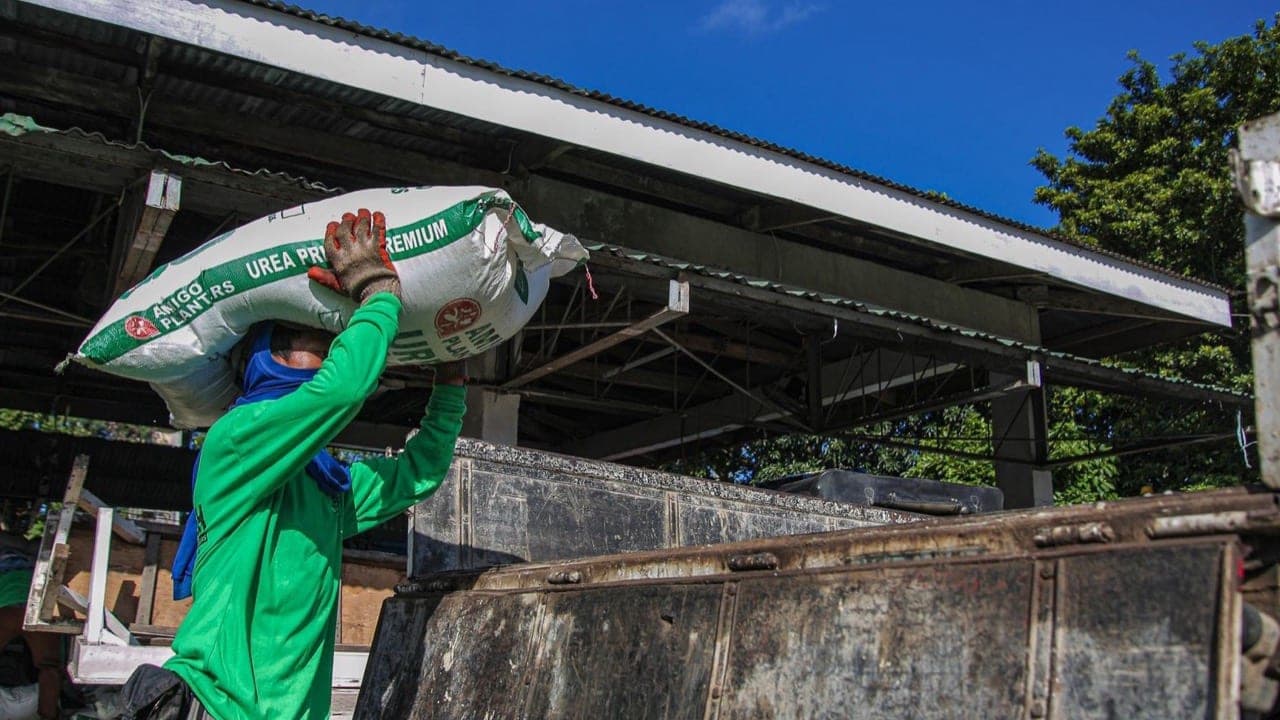
Cheaper phosphatic alternatives such as single superphosphate (SSP) are seeing renewed interest. While SSP carries a phosphorus content of only 20–22% compared to MAP's 61%, its significantly lower cost makes it an attractive fallback for budget-constrained growers. A broader retreat to conventional fertilisers — urea and DAP — is also on the cards, which would carry a secondary consequence: a higher government subsidy outgo, since those products attract substantial state support.
Crucially, Chakraborty acknowledged that the industry has no mechanism to control prices, leaving farmers to absorb the full market impact or switch products entirely.
The moment it becomes very expensive, farmers stop using it.
The Supply Picture
Carryover Stocks Offer a Buffer, But the Next Replenishment Is the Real Test
Despite the price spike, immediate supply conditions are not yet critical. Last year's excessive rainfall and flooding across major farming regions suppressed consumption significantly, leaving a meaningful stock carryover that is cushioning the current season's opening.
India typically imports around 4 lakh tonnes of soluble fertilisers annually — a figure that has been trending upward year on year. For the current fiscal, total imports are estimated at 2–2.5 lakh tonnes, with approximately 1 lakh tonne having arrived at Indian ports up to June. The bulk of consumption in India falls between September and March, meaning the critical demand window is still ahead.
Chakraborty flagged that if demand accelerates sharply as the season progresses — particularly if monsoon stress boosts adoption — the next procurement cycle could come under pressure. Fresh consignments have begun arriving at ports, and he expressed cautious optimism that prices, believed to be near their peak, may soften once these supplies reach the distribution network.
The Monsoon Angle
Below-Normal Rainfall Could Paradoxically Lift Soluble Fertiliser Use
While a deficient monsoon is conventionally bearish for farm input demand, it may have a contrarian effect on soluble fertilisers. These water-soluble products require far less water than conventional fertigation methods, making them better suited to drier conditions.
Crops such as cotton, which typically receive two soluble-fertiliser spray applications per season, could see higher adoption if dry spells persist and leaf yellowing — a stress symptom farmers respond to quickly — becomes widespread. "If there is no rain, there will be yellow leaves. So, they will tend to use more," Chakraborty told PTI.
The broader pattern holds: adoption of speciality fertilisers tends to increase during periods of agrarian stress. The India Meteorological Department has warned that below-normal rainfall is likely from mid-July onward, having confirmed that the southwest monsoon has covered the entire country but that the active spell has ended. This outlook could translate into demand support for soluble products even as high prices weigh on purchasing power.
The India Read
Structural Import Dependence Leaves Sector Exposed to Geopolitical Shocks
India's soluble fertiliser market is structurally vulnerable: domestic production capacity is negligible, annual import requirements run to around 4 lakh tonnes, and the two dominant supply corridors — China and West Asia — are both disrupted simultaneously. The attempt to pivot towards Russia and the CIS has met with limited success due to constrained availability.
For policymakers, the situation presents a policy dilemma. Price controls are not feasible, as SFAI itself acknowledges. Yet without intervention, a sustained shift by farmers towards subsidised conventional fertilisers like urea and DAP would expand the government's subsidy liability. For agri-businesses and commodity traders, the near-term watch points are port arrival volumes, the trajectory of MAP prices on global markets, and rainfall distribution across key cotton and horticulture belts in the weeks ahead.
Why it matters
If price-sensitive farmers shift en masse to urea and DAP, the government's subsidy bill will rise — an outcome policymakers will want to monitor closely heading into the peak September–March consumption window. With domestic manufacturing of soluble fertilisers negligible and alternative supply sources from Russia and the CIS also constrained, India's import dependence remains structurally exposed to geopolitical shocks. Traders and agri-businesses should watch port arrival data and post-monsoon demand signals closely, as SFAI expects prices to ease once fresh consignments are distributed.
Frequently asked
Why have soluble fertiliser prices risen so sharply in India?
According to SFAI President Rajib Chakraborty, prices of key inputs have surged 60–100% over the past year due to China's export restrictions on fertiliser products and supply chain disruptions linked to the West Asia conflict. These factors have curtailed shipments to India, and alternative sources in Russia and the CIS region also have limited availability.
What is the current price of monoammonium phosphate (MAP)?
MAP is currently trading at $1,500–1,600 per tonne, up from around $1,000 per tonne over the previous couple of years — a rise of approximately $600 per tonne, which SFAI describes as significant for the sector.
How much soluble fertiliser does India import each year?
India typically imports around 4 lakh tonnes of soluble fertiliser annually, a figure that has been rising year on year. For the current fiscal, total imports are estimated at 2–2.5 lakh tonnes, with about 1 lakh tonne landed at Indian ports up to June 2026.
Could a weak monsoon actually increase demand for soluble fertilisers?
Yes, according to SFAI. Soluble fertilisers require far less water than conventional fertigation methods, making them more suitable under dry conditions. Crops like cotton, which typically receive two soluble-fertiliser sprays per season, could see higher application rates if below-normal rainfall — as warned by the IMD from mid-July onward — leads to crop stress symptoms such as leaf yellowing.
Source
This report summarises and analyses coverage from The Hindu BusinessLine — Agri Business. The analysis and India context are IndianAgri's own.
Edited by Devendra Kumar Jha. How we report, source and correct: editorial policy. Spotted an error? Tell us.