₹60,500 in a Single Day, Mud on Every Boot: The Real Cost of Guava Farming in Odisha
An Odisha guava farmer's account of selling 1,100 kg of fruit in one rain-lashed day strips away the romance of 'good numbers' — and lays bare the gruelling economics of small-scale horticulture.
From the field
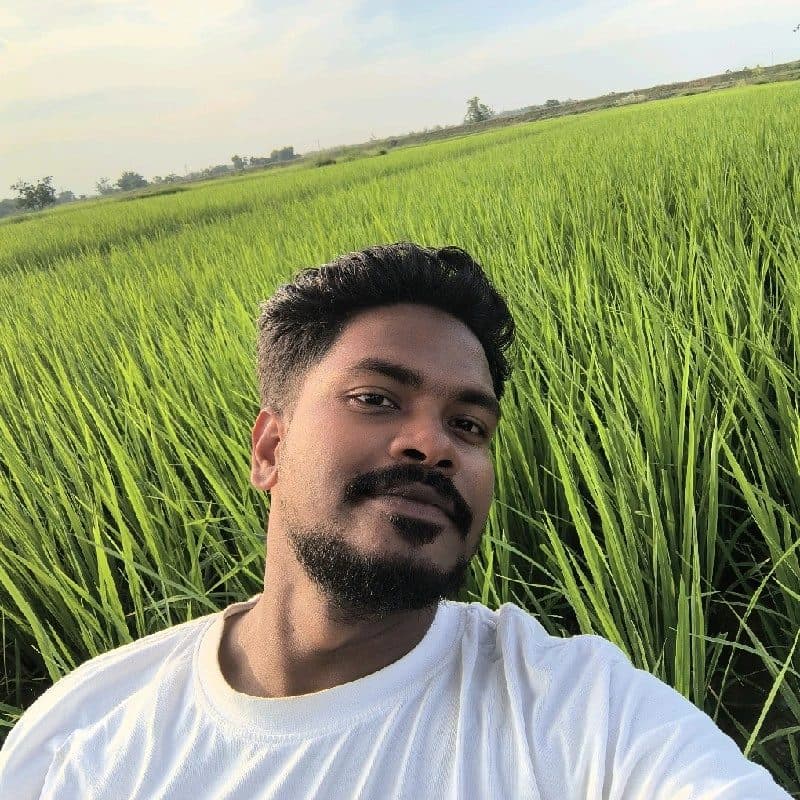
Sradharabinda Samantarray · Guava Farmer and Field Researcher, Odisha
Sradharabinda Samantarray is a practicing guava farmer in Odisha who conducts field experiments in irrigation, mulching, and pruning.
The short answer
A guava orchard in Odisha generated approximately ₹60,500 from roughly 1,100 kg of fruit sold in a single day — but the revenue came at the cost of nine labourers working nearly ten hours in heavy rain, through waterlogged fields and dense vegetative growth. The farmer is working toward a cumulative target of ₹30 lakhs from 2,000 guava plants. The account highlights a fundamental constraint of perishable horticulture: harvest timing is dictated by crop readiness, not by weather or market price.
From the orchard
A Day That Looked Good on Paper
On a single rain-drenched day at his guava orchard in Odisha, the farmer sold approximately 1,100 kg of fruit, generating around ₹60,500 in revenue. By most measures of small-scale horticulture, that is a respectable single-day figure. But the numbers alone tell very little of the story.
The harvest day began at 5:00 AM and stretched to 3:00 PM — nearly ten continuous hours of field work carried out under persistent, heavy rainfall. The orchard floor had turned to mud, making every crate heavier to lift and every path through the trees more treacherous. Vegetative growth, accelerated by the wet weather, had made movement within the orchard significantly more difficult, adding to the physical burden on the harvest crew.
Labour breakdown
Nine Workers, Six Tasks, One Truck
The day's operation required a team of nine labourers, organised into three groups of three, each handling a distinct stage of the harvest chain:
- Plucking — three workers pulling ripe fruit from the trees
- Carrying crates — three workers moving loaded crates through the waterlogged orchard to the collection point
- Grading and packing — three workers sorting and boxing produce to market-ready standard
Beyond these three core functions, the full workflow also covered intra-orchard transport, final loading onto the truck, and ensuring produce quality was maintained despite the adverse conditions. The operation had to be executed without pause: guava is a perishable crop, and any delay between harvest and despatch risks quality loss and market rejection.
As farmers, waiting for prices to rise is often a myth. The crop must be harvested when it is ready, regardless of the weather, market mood, or field conditions.
The farmer's reality
Waiting for a Better Price Is, for Most Farmers, a Myth
Perhaps the sharpest insight from this account is one that experienced commodity traders already know but that rarely surfaces in policy discussions: a perishable crop must be harvested when it is ready, irrespective of the weather, the prevailing market mood, or the physical condition of the field.
For guava and other fresh-fruit growers, the harvest window is not a matter of strategic choice. Delaying to wait for a price uptick is not a viable option — the fruit will not wait. This creates a fundamental asymmetry: the farmer absorbs all the physical and financial risk of adverse conditions, while the output price at the farm gate remains largely outside their control.
The farmer frames this plainly: "The only thing we can control is our effort." That single line captures the operating reality for millions of smallholder horticulture producers across India.
The bigger journey
₹30 Lakhs from 2,000 Plants: Tracking a Cumulative Target
The day's harvest is one instalment in a longer, documented effort to generate ₹30 lakhs in total revenue from 2,000 guava plants. The farmer is publicly tracking progress toward this target — an approach that adds a dimension of entrepreneurial accountability rarely seen in traditional smallholder farming narratives.
The ₹60,500 earned on this single day illustrates both the scale of what is achievable and the effort required to get there, harvest by harvest. For agri-business professionals and investors evaluating the economics of high-density fruit orchards, this kind of ground-level, per-day revenue and labour data — from a practicing farmer conducting real field conditions — offers more honest benchmarking than idealised projections.
For traders sourcing fresh guava, it also signals that consistent supply, even in adverse weather, is maintained at considerable cost to the grower.
Why it matters
This ground-level account underlines a structural tension that policymakers and agri-businesses often underweight: for perishable horticultural crops, the farmer has almost no leverage over harvest timing or daily price realisation. Rain, mud, and labour intensity are constants that the headline revenue figure obscures entirely. For commodity traders, it is a reminder that farm-gate supply of fresh fruit is inelastic to short-term price signals. For policymakers, it makes the case for better rural infrastructure — all-weather orchard access roads, covered grading yards, and reliable harvest-labour supply chains — that could materially reduce the physical and financial cost of a single harvest day.
Frequently asked
How much revenue did the Odisha guava farmer earn in a single day?
The farmer generated approximately ₹60,500 from the sale of around 1,100 kg of guava in one day.
What is the farmer's overall revenue target from the guava orchard?
The target is ₹30 lakhs in total revenue from 2,000 guava plants.
How many labourers were needed to harvest guava in a single day?
Nine labourers were deployed — three for plucking, three for carrying crates through the orchard, and three for grading and packing — working from 5:00 AM to 3:00 PM.
Why can't guava farmers wait for better market prices before harvesting?
Guava is a perishable crop that must be harvested when it is ready. Delaying harvest to wait for price improvement risks quality loss and market rejection, leaving farmers with little control over the timing of their sale.
Source
This report summarises and analyses coverage from linkedin.com. The analysis and India context are IndianAgri's own.
Edited by Devendra Kumar Jha. How we report, source and correct: editorial policy. Spotted an error? Tell us.