From Iron Ploughs to a 50 HP Tractor: An Engine Maker Comes Back to the Farm
A hundred-year-old Satara engine maker has built its own tractor, and entered at 50 HP — not a round number but a regulatory boundary. The machine is credible. Whether it sells will be decided somewhere else entirely.
The short answer
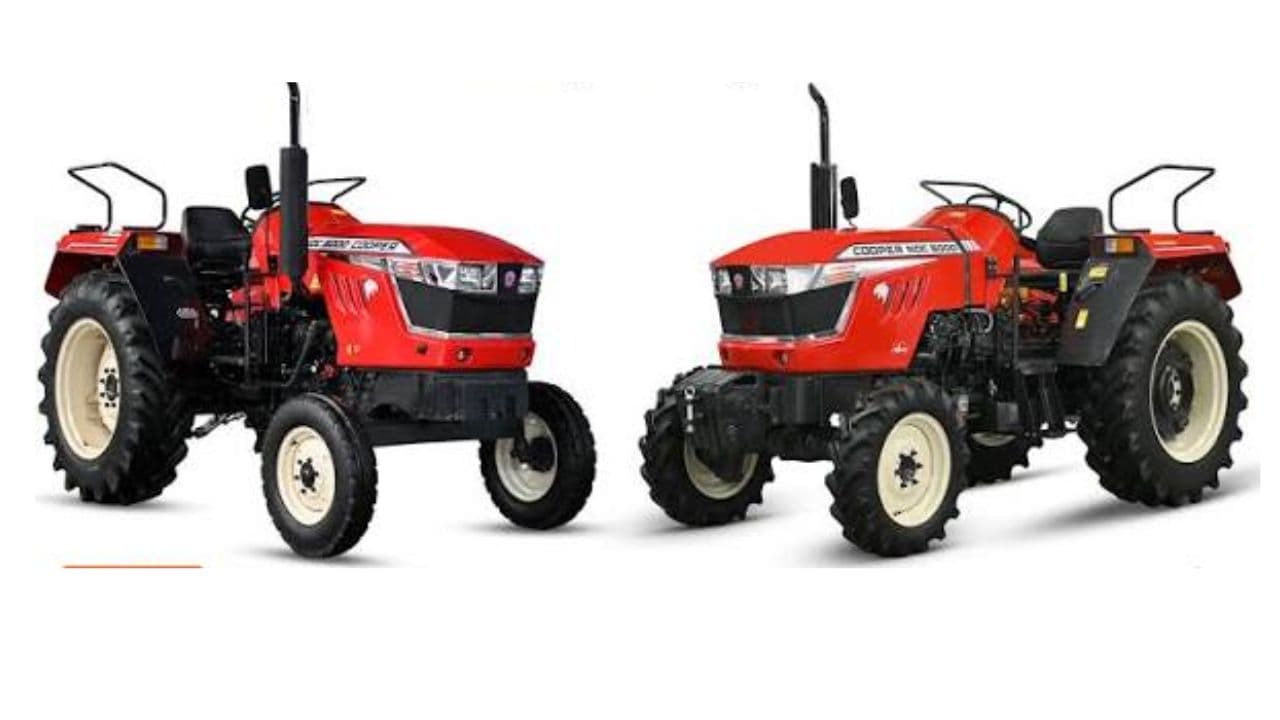
Cooper Corporation, a Satara engine and genset manufacturer founded in 1922 to make iron ploughs, opened a dedicated tractor plant in February 2025 and launched its NDC Series — 50 HP with 42 HP at the PTO, developed with Magna Steyr, Ricardo UK, Carraro and Mita, on a 10-acre site built for about 2,000 tractors a month at a cost of ₹50–60 crore in internal funds. It has entered at the 41–50 HP band that holds roughly 64% of Indian tractor sales, a concentration created largely by TREM IV emission norms applying only above 50 HP. Prices have not been published.
The return
It began with iron ploughs in Satara
On the eve of Ganesh Chaturthi in 1922, a small works opened on Satara Road in western Maharashtra making iron ploughs, sugarcane crushers and other farm equipment. Its founder was Dhanjishah Bomanji Cooper — later knighted, and later still the first Prime Minister of the Bombay Presidency after the 1937 elections. The firm took his name in 1928, and over the next century it drifted away from the field and towards the engine: diesel and gas engines, engine components and gensets, supplied to Indian and global OEMs from a cluster of factories in the same town.
In February 2025 it came back. Cooper Corporation inaugurated a dedicated tractor plant at Satara and rolled out the NDC Series, its first tractor in a hundred years of trading. The plant sits on 10 acres, was built for around ₹50–60 crore of internal funds with no external borrowing, and carries an installed capacity of about 2,000 tractors a month, with production planned to start at 750–1,000. Maharashtra is the first market; the company has said it will widen out from there.
Chairman and Managing Director Farrokh N. Cooper — the founder's grandson, an agriculture graduate who farms himself — launched the tractor in his eighties, and in June 2026 was recognised for his lifetime contribution to manufacturing at the ET Now Machinist Super Shopfloor Awards.
The machine
What the NDC Series actually is
Cooper has begun at 50 HP, with a range announced from 25 HP to 75 HP to follow. Two models are listed today, both rated 50 HP with 42 HP at the PTO. The NDC 5000 runs an 8 forward + 8 reverse gearbox and a 1,500 kg hydraulic lift. The NDC 5001 is the heavier-duty version: dual clutch, a 12F + 12R shuttle shift, a 2,300 kg lift, 4WD, 420 mm ground clearance, a 3-metre turning radius, oil-immersed brakes, power steering and a 49-litre tank.
The engineering is bought-in where it needed to be and built in-house where it counts. Magna Steyr did the design, Ricardo UK the engine development, Carraro the transmission and Mita the hydraulics. The engine itself is a four-valve unit with a Bosch fuel system, ceramic-coated rings and a compacted-graphite cylinder head — specification choices aimed squarely at service life rather than at a spec-sheet headline.
One thing is still missing from the public record, and it is the one farmers ask first: Cooper has not published ex-showroom prices for either model. Tractor listing sites carry the specifications with the price field blank. Until that changes, the NDC Series cannot be compared against the 50 HP machines it is aimed at.
This tractor is designed to enhance productivity, reduce operational costs and withstand farming conditions.
The market
Why 50 HP is the number that decides everything
Cooper has entered at the busiest point on the chart, and that is not an accident. FY2025-26 was a record year for the Indian tractor industry: trade compilations of manufacturer dispatches put domestic wholesales at roughly 11.6 lakh units, up about 23% on the previous year, with Mahindra alone accounting for a little over 5 lakh of them. Good output, an above-normal monsoon and easier farm credit did most of the work.
Within that total, the 41–50 HP band is the market — somewhere around 64% of it. Part of that is genuine demand: larger holdings, heavier implements, more haulage. But a large part is regulation. Bharat TREM Stage IV emission norms took effect in January 2023 and apply only to tractors above 50 HP, a band that was then just 7–8% of volume. Everything at 50 HP and below stayed on the older TREM IIIA standard, and stayed cheaper. Buyers moved down to the line and stopped there.
That line is now being redrawn. The Tractor and Mechanization Association has recommended that the coming TREM V norms apply below 25 HP and above 50 HP while exempting the 25–50 HP band in between — an acknowledgement that tightening emissions across the heart of the market would raise prices for the majority of Indian buyers. Whatever the government settles on will move more volume than any single product launch.
The advantage
The engine is the part most new entrants buy in
Tractor start-ups usually source their engine. It is the most expensive system on the machine, the hardest to certify, and the one that decides whether a tractor is still working in its twelfth year. Cooper arrives having done nothing else for decades: it exports engines, components and gensets to more than 40 countries, and exports account for a majority of what it produces.
That matters most on emissions, which is where farm machinery is heading. Cooper's gas gensets are marketed as the only EPA-certified engines exported from India — the company's own claim, but a checkable one — and in July 2025 it launched a joint venture with Japan's Sinfonia Technology to build a CPCB IV+ compliant 10 kVA LPG genset at Satara, sold as 'Daimon' in India and, neatly, as 'Satara' in Japan. A firm that has already taken engines through American and Indian clean-air certification is better placed than most to take a tractor engine through TREM V.
There is a second, quieter advantage. Cooper casts and machines in-house, from metal to finished engine, in a town where all of its plants sit together. Vertical integration of that depth is rare in Indian farm machinery, and it is the difference between controlling a cost line and negotiating it.
The test
Specs don't break down in a field — service does
None of this settles the question a farmer actually faces. A tractor is a financed working asset that has to run through a sowing window and a harvest window, and what determines whether it does is not the cylinder head. It is whether a trained mechanic and the right part can reach the field within a day, in October, 200 km from the plant. Incumbents have spent forty years building that reach, and it is the reason a farmer will pay more for a familiar badge.
It is also what a new entrant cannot buy. Cooper's manufacturing credentials are not in doubt; its service footprint outside Maharashtra is unproven, and its resale values do not yet exist, which matters to anyone borrowing against the machine.
Three things are worth watching over the next year. Whether published pricing appears, and where it lands against the 50 HP competition. Whether the announced 25–75 HP range actually materialises, particularly at the sub-30 HP end where smallholder mechanisation is growing fastest. And whether the dealer and service network extends past Maharashtra into the tractor-heavy northern belt. A hundred-year-old engine maker returning to the crop it started with makes a good story. The workshop network is what will decide whether it becomes a tractor business.
Why it matters
Almost every new tractor brand in India buys its engine in. Cooper is the reverse case — a firm that has built engines for decades and has taken them through American EPA and Indian CPCB IV+ certification, arriving just as tractor emission rules tighten again under TREM V. That is a real structural advantage. It is also not the one that decides tractor sales: dealer reach, parts availability inside a harvest window and resale value are what a financed farm buyer is actually purchasing, and those take a decade to build.
Frequently asked
Who makes the Cooper NDC tractor?
Cooper Corporation, a Satara-based engine, engine-component and genset manufacturer in Maharashtra that traces back to 1922. It inaugurated a dedicated tractor plant at Satara in February 2025 and launched the NDC Series there — its first tractor. The machines were developed with Magna Steyr (design), Ricardo UK (engine development), Carraro (transmission) and Mita (hydraulics), and are built on a 10-acre site with capacity for about 2,000 tractors a month.
What are the Cooper NDC 5001 specifications and price?
The NDC 5001 is rated 50 HP with 42 HP at the PTO, and comes with a dual clutch, a 12 forward + 12 reverse shuttle-shift gearbox, 4WD, a 2,300 kg hydraulic lift, oil-immersed brakes, power steering, 420 mm ground clearance, a 3-metre turning radius and a 49-litre fuel tank. The NDC 5000 is the lighter variant at the same 50 HP, with 8F + 8R gears and a 1,500 kg lift. Cooper has not published ex-showroom prices for either model; tractor listing sites carry the specifications with the price field empty, so ask a dealer for a written quote.
Why are so many Indian tractors rated just under 50 HP?
Because of where the emission line falls. Bharat TREM Stage IV norms came into force in January 2023 and apply only to tractors above 50 HP; anything at 50 HP or below remained on the older, cheaper TREM IIIA standard. Manufacturers and buyers both clustered under that threshold, and the 41–50 HP band now accounts for roughly 64% of sales. The Tractor and Mechanization Association has asked that the coming TREM V norms apply below 25 HP and above 50 HP, exempting the 25–50 HP band, to avoid pushing up prices across the bulk of the market.
Does Cooper build its own tractor engine?
Yes — engines are the company's core business rather than a bought-in part, which is unusual for a new tractor entrant. Cooper manufactures diesel and gas engines, components and gensets and exports to more than 40 countries, with exports making up the majority of its output. The NDC engine is a four-valve unit developed with Ricardo UK, using a Bosch fuel system, ceramic-coated rings and a compacted-graphite cylinder head.
Source
- Autocar Professional — Cooper Corporation enters tractor market with new plant in Maharashtra
- Rural Voice — Cooper Corporation inaugurates its tractor plant in Satara
- Autocar Professional — Farrokh Cooper's entrepreneurial journey
- TractorKarvan — Cooper NDC 5001 specifications
- Business Standard — Cooper Corp forms JV with Japan's Sinfonia Technology for LPG gensets
- Autocar Professional — TMA recommends excluding 25–50 HP tractors from TREM V norms
- Business Standard — ICRA on TREM IV's impact on domestic tractor volumes
- Tractor Junction — domestic tractor sales rise to 11.6 lakh units in FY26
- Wikipedia — Dhanjishah Cooper
Plant, investment and capacity figures are as reported at the February 2025 launch and by the company; specifications are from public model listings. Export reach, the EPA-certification claim and vertical-integration claims are Cooper's own and are reported as such. FY2025-26 sales are trade compilations of manufacturer dispatches (wholesales), not retail registrations. IndianAgri makes no product recommendation and has no commercial relationship with any company named here.