Go to Gemba: Why the Answers to Indian Agriculture's Toughest Problems Live in the Field
The real intelligence in Indian agriculture doesn't sit in satellite dashboards or AI models — it sits in the farmer's own domain expertise, and in the discipline of returning to the field, season after season.

Expert insights
Sooraj Naik · Co-founder, Kali Agro
Sooraj Naik is Co-founder of Kali Agro, focused on carbon farming and climate-smart regenerative agriculture for tropical plantations.
The short answer
The most critical risk in building for Indian agriculture is not a technology gap — it is solving the wrong problem entirely. The Toyota Production System principle 'Go to Gemba' — go where the work happens — is being applied to argue that genuine field proximity, not AI or satellite imagery alone, is what reveals actionable insight. The central conviction: the farmer is not merely a customer but a domain expert, and the shift from building 'for' farmers to building 'with' them changes everything about how agri-solutions are designed.
The core idea
'Go to Gemba': A Manufacturing Principle That Agriculture Needs Now
The Toyota Production System introduced the world to a discipline called Gemba — a Japanese term meaning 'the actual place,' the shop floor where work truly happens. The principle is deceptively simple: if you want to improve a process, do not begin with a whiteboard. Go to where the work is being done, observe it directly, and listen before you propose any solution.
This principle is now being carried into the Indian agricultural context — and it holds with striking force. The argument is that the biggest risk in agriculture is not building the wrong product. It is identifying the wrong problem in the first place. And that error, the case goes, almost always originates from insufficient proximity to the field.
What the field reveals
After the First Rain: The Conversations That Never Make It Into Reports
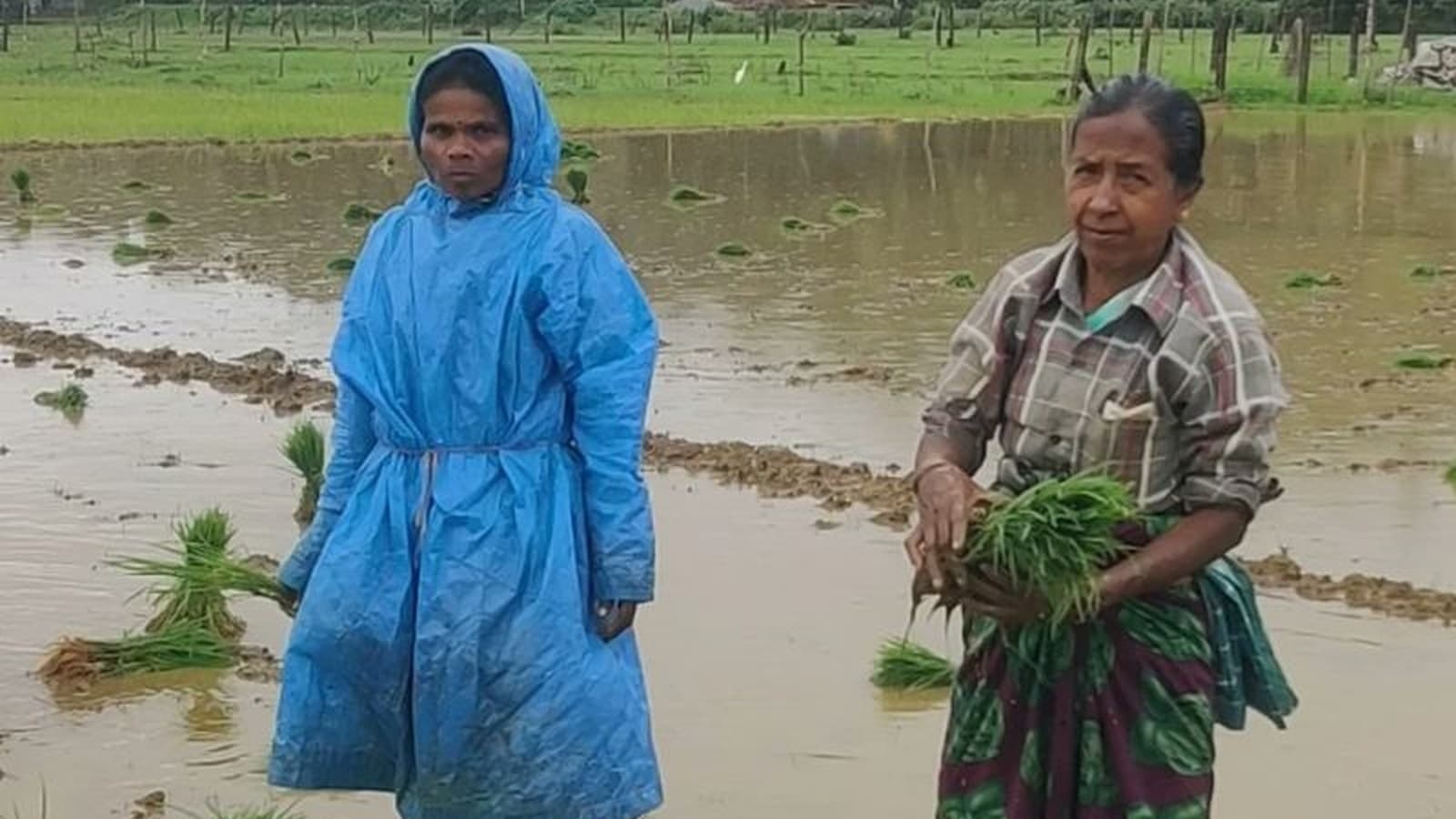
Some of the most consequential exchanges did not occur in boardrooms or at industry conferences. They happened beside a field after the first rain, when the reason water pooled in one patch and drained from another became the subject of an unscheduled, unhurried conversation. They happened over tea, with farmers explaining why a recommendation that appeared technically sound on paper consistently failed when applied to their specific land.
These exchanges rarely find their way into formal reports — yet they frequently contain precisely the answers that well-resourced research programmes are searching for.
The implication for agri-businesses and technology providers is pointed: every visit adds context, every season reveals something different, and every conversation uncovers a layer that was not visible before. No single site visit — however thorough — substitutes for the accumulated insight of return.
Technology's limits
AI and Satellite Imagery Are Tools, Not Substitutes for Proximity
This is not a dismissal of technology. AI, satellite imagery, research papers, and market reports are described as a regular part of how information gets organised, learning accelerates, and assumptions get challenged. These tools have made agricultural intelligence more accessible than at any point in history.
But the line drawn is firm: technology does not replace proximity. The risk — particularly for agri-tech developers, input companies, and policymakers designing scheme parameters — is that data-rich environments can create a false confidence that the problem is already well understood before anyone has stood in the field.
The 'Gemba' discipline demands that the desk be left behind at regular intervals, not as a symbolic gesture, but as a genuine epistemological commitment: the field, not the model, is where ground truth lives.
The shift in thinking
From Building 'For' Farmers to Building 'With' Them
The most pointed idea in this framing is a reframing of the farmer's role. The farmer is not just the customer. The farmer is the domain expert.
That single reorientation — from recipient of solutions to co-creator of them — changes the design logic of agricultural products, advisory services, and even policy instruments. The question shifts from What can we build for farmers? to What can we build with farmers?
The wording change is small. The operational difference is substantial. Co-design requires listening at scale, across seasons and geographies, not extracting a set of user requirements in a single focus group and then disappearing into a development cycle.
For the Indian agri-sector — where soil types, water behaviour, cropping systems, and microclimatic variation make generalisable solutions notoriously difficult to apply — this principle of iterative, farmer-led understanding is not an idealistic aspiration. It is a practical prerequisite for solutions that actually work.
Why it matters
As agri-tech investment continues to flow into AI-driven advisory tools, remote sensing platforms, and data aggregation services, the risk of solutions designed in conference rooms rather than validated in fields remains real. This framing — that repeated, seasonal field visits surface layers of knowledge invisible to any dashboard — is a practical caution for agri-businesses, developers, and policymakers alike. The distinction between building 'for' farmers and building 'with' them has direct implications for product adoption, scheme design, and the long-term credibility of climate-smart agriculture initiatives in India.
Frequently asked
What does 'Go to Gemba' mean in an agricultural context?
'Gemba' is a principle from the Toyota Production System meaning 'go where the work happens.' Applied to agriculture, it means visiting farms directly — and repeatedly — to observe, listen, and understand conditions on the ground before designing any product, service, or policy solution.
Why can't technology replace field visits in agriculture?
AI, satellite imagery, and market reports are valuable tools for organising information and challenging assumptions. However, they do not replace the contextual insight gained from physical proximity to a farm — insight that accumulates with each visit and each season, and that rarely surfaces in formal reports.
What is the practical difference between building 'for' farmers versus building 'with' farmers?
Building 'for' farmers positions the farmer as a passive recipient of a solution designed externally. Building 'with' farmers treats the farmer as a domain expert and co-creator, requiring iterative engagement across seasons and geographies rather than a one-time requirements exercise.
Why is this approach particularly relevant to Indian agriculture?
India's agricultural landscape is characterised by significant variation in soil types, water behaviour, cropping systems, and microclimatic conditions. This diversity makes generalisable, desk-designed solutions difficult to apply effectively — reinforcing the case for farmer-led, field-validated approaches to agri-product and policy design.
This is an original IndianAgri report. The analysis and India context are IndianAgri's own.