ICAR-CIFRI Launches Khet Bachao Abhiyan in Nadia to Link Soil Health with Wetland Conservation
ICAR–CIFRI's campaign at Khalsi Beel in Nadia district brings together over 71 farmers to tackle unscientific fertiliser use that is degrading both soil fertility and freshwater wetland ecology.

Expert insights
Dr. Pradip Dey · Director, ICAR-Agricultural Technology Application Research Institute (ATARI), Kolkata
A soil scientist whose Mridaparikshak technology and GPS/GIS-based fertility mapping across 173 districts reshaped India's Soil Health Card programme. Holds two patents and five software copyrights, and has authored 500+ publications, including 207 research papers and 21 books.
The short answer
ICAR–Central Inland Fisheries Research Institute, Barrackpore, launched the Khet Bachao Abhiyan at Khalsi Beel, Haringhata block, Nadia district on 24 June 2026, drawing participation from more than 71 farmers including 23 women. The campaign addressed the direct link between indiscriminate urea application and the degradation of soil health, crop productivity, and wetland ecosystems. Scientists promoted soil testing, Soil Health Cards, Dhaincha green manure, and Integrated Nutrient Management as practical correctives.
The campaign
Khalsi Beel Becomes the Stage for a Soil–Water Wake-Up Call
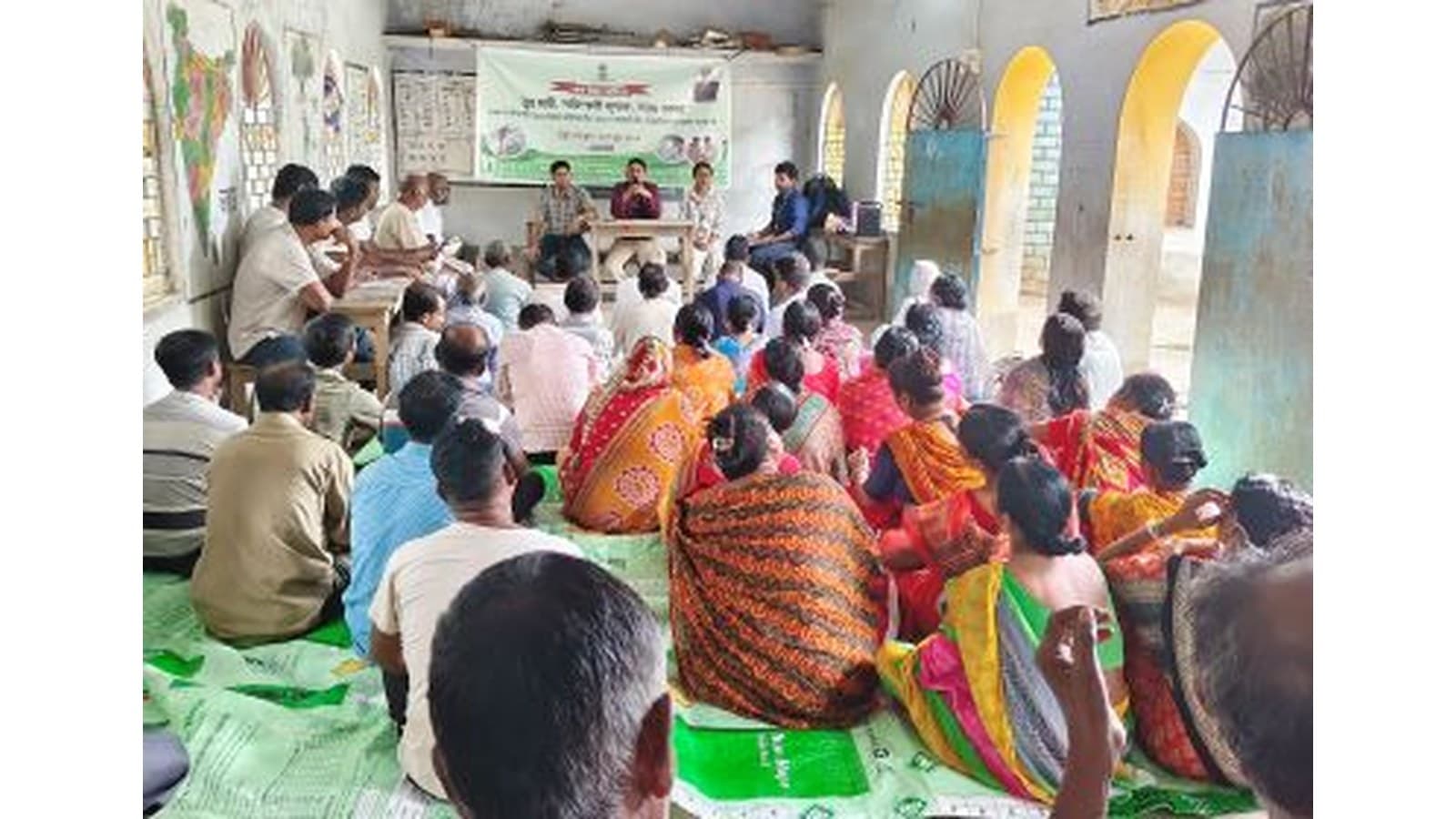
On 24 June 2026, ICAR–Central Inland Fisheries Research Institute (CIFRI), Barrackpore, organised the Khet Bachao Abhiyan at Khalsi Beel in Haringhata block of Nadia district, West Bengal. The event was held in collaboration with Khalsi Udbastu Matsyajibi Samabay Samiti Limited and drew more than 71 farmers — including 23 women — from the villages of Uttarbrahmapur, Mathpara, and Khalsi.
The choice of a wetland setting was deliberate. Scientists used the occasion to make the case that what farmers apply on their fields travels directly into adjacent water bodies, with measurable consequences for fish stocks and aquatic ecology. The campaign framed soil stewardship and water conservation not as separate concerns but as two sides of the same agrarian challenge.
The problem
Urea Without Guidance: How Unscientific Fertiliser Use Harms Fields and Beels Alike
During field interactions, ICAR-CIFRI scientists found that several farmers growing jute and pointed gourd were doing so without Soil Health Cards and were applying fertilisers — particularly urea — without any scientific basis.
The consequences, scientists explained, run in two directions:
- On land: Excessive and imbalanced fertiliser application progressively degrades soil organic matter and long-term fertility.
- In water: Nutrient runoff from over-fertilised fields enters wetlands and triggers eutrophication — a process that fuels harmful algal blooms.
Scientists drew particular attention to Microcystis, a toxic blue-green alga whose proliferation threatens aquatic biodiversity, fish production, and the ecological integrity of freshwater wetlands. For the fishing communities that depend on beels such as Khalsi, the risk is not merely environmental but directly economic.
A collective commitment to restoring humanity's covenant with soil and water bodies — the twin lifelines of our ecosystems and the silent foundations of food security, livelihoods, biodiversity, and civilization.
The solutions
Dhaincha, Biofertilisers, and INM: The Science-Backed Toolkit on Offer
Farmers were urged to get their soils tested at nearby Krishi Vigyan Kendras and to base fertiliser decisions on Soil Health Card recommendations rather than habit or guesswork.
Dhaincha (Sesbania spp.) received prominent attention as a proven green manure crop. Scientists credited it with enriching soil organic matter, improving nitrogen availability, enhancing moisture retention, and lowering the overall fertiliser requirement — a combination well suited to the paddy-dominated cropping systems of Nadia.
Beyond Dhaincha, the campaign advocated a broader basket of eco-friendly inputs:
- Green manures and compost
- Biofertilisers and organic inputs
- Integrated Nutrient Management (INM) as a holistic framework that sustains crop yields while reducing chemical dependency
The environmental risks of indiscriminate pesticide use and the importance of crop planning were also highlighted as part of a wider agenda for rebuilding soil resilience.
Community voices
Progressive Farmer Shri Debu Mandal Bridges Science and Practice
The programme moved beyond top-down knowledge transfer by creating space for peer learning. Progressive farmer Shri Debu Mandal shared practical experiences and on-farm success stories, helping translate scientific recommendations into language familiar to fellow cultivators and sparking meaningful dialogue between the research community and farming households.
The event also sensitised attendees about flagship government schemes, including PM-Kisan and the Kisan Credit Card (KCC), reinforcing the connection between improved agronomic practices and access to formal financial support. Organisers said the participatory format — with scientists responding directly to field-level queries — was central to the campaign's design.
Why it matters
Freshwater wetlands in eastern India double as critical fisheries resources, meaning nutrient runoff from poorly managed farmland carries direct economic consequences for fishing communities alongside ecological ones. The proliferation of toxic Microcystis algae, driven by excess fertiliser, poses a concrete threat to fish production and aquatic biodiversity in beels that thousands of marginal farmers depend on. Campaigns of this kind signal a broadening of the soil-health agenda beyond cropping alone — one that policymakers and agri-businesses supplying eastern India's input markets would do well to track.
Frequently asked
What is the Khet Bachao Abhiyan and where was it held?
The Khet Bachao Abhiyan is an awareness campaign launched by ICAR–Central Inland Fisheries Research Institute, Barrackpore, at Khalsi Beel in Haringhata block of Nadia district, West Bengal, on 24 June 2026. It was organised in collaboration with Khalsi Udbastu Matsyajibi Samabay Samiti Limited and focused on linking soil health with the conservation of freshwater wetland ecosystems.
Why is unscientific fertiliser use a concern for wetlands?
According to ICAR-CIFRI scientists, excess and imbalanced fertiliser application — especially urea — causes nutrient runoff into adjacent wetlands, triggering eutrophication and harmful algal blooms. The campaign specifically highlighted Microcystis, a toxic blue-green alga whose proliferation threatens aquatic biodiversity and fish production in freshwater wetlands.
What sustainable practices were recommended to farmers?
Scientists recommended regular soil testing at Krishi Vigyan Kendras, adoption of Soil Health Cards, and the use of eco-friendly inputs such as Dhaincha (Sesbania spp.) green manure, compost, biofertilisers, and organic inputs. Integrated Nutrient Management (INM) was also advocated as a holistic approach to sustaining crop productivity while reducing chemical dependency.
Which government schemes were highlighted at the campaign?
The programme sensitised participating farmers about PM-Kisan and the Kisan Credit Card (KCC) scheme, connecting improved agronomic practices with access to government financial support for farmers.
Source
This report summarises and analyses coverage from icar.org.in. The analysis and India context are IndianAgri's own.
Edited by Devendra Kumar Jha. How we report, source and correct: editorial policy. Spotted an error? Tell us.