ICAR Short Course on Plantation Crops at CPCRI Kasaragod: Who Can Apply by 2 November
Ten days on coconut, arecanut and cocoa, from planting material to project reports, for teachers and scientists. The fee is ₹50, but the deadline is close.
The short answer
ICAR-CPCRI, Kasaragod, Kerala, is running a ten-day ICAR short course, "Advances in Production, Processing and Entrepreneurship in Plantation Horticulture", from 30 November to 9 December 2026, sponsored by the ICAR Education Division. It is open to faculty of State Agricultural Universities, ICAR institutes, KVKs and Central Universities with a Master's degree, a post at Scientist, Assistant Professor or Subject Matter Specialist level or above, and two years of teaching or research experience. The fee is ₹50 by demand draft; lodging and meals are free. Applications close on 2 November 2026 and selected participants are informed by 5 November.
The news
A free ten-day course at India's coconut and arecanut research institute
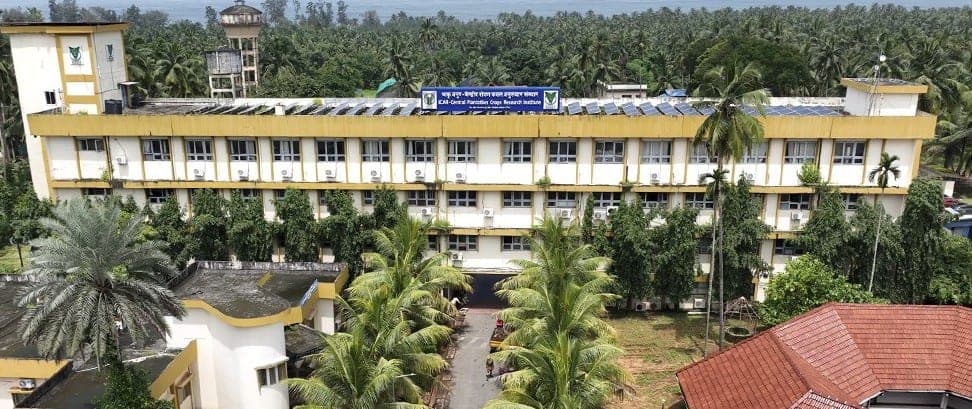
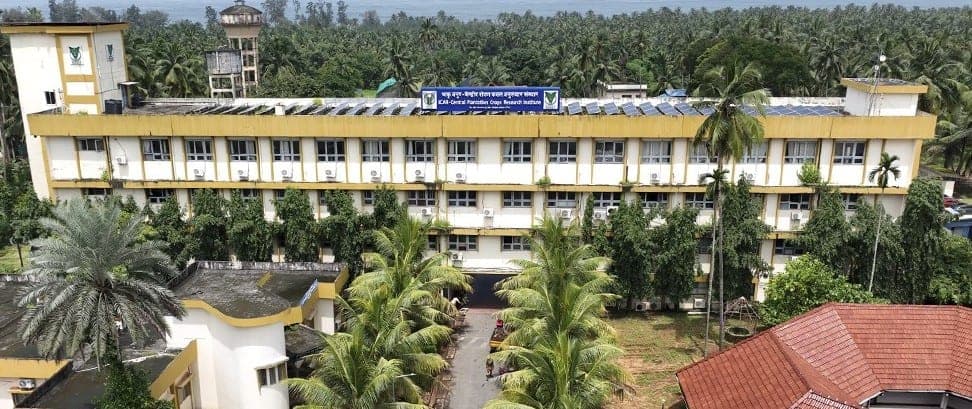
The ICAR-Central Plantation Crops Research Institute (CPCRI), Kasaragod will run an ICAR short course called "Advances in Production, Processing and Entrepreneurship in Plantation Horticulture" from 30 November to 9 December 2026. The course is sponsored by the Education Division of the Indian Council of Agricultural Research.
It is meant for teachers and scientists, not farmers. Over ten days it covers how plantation crops such as coconut, arecanut and cocoa are grown, processed and turned into businesses, with the aim of helping participants teach and advise on these crops with more practical knowledge.
Applications close on 2 November 2026. That is a Monday, and the application needs a signature and seal from your own institute. Start now.
Running a training course or workshop?List it on IndianAgri's events calendarICAR institutes, agricultural universities and KVKs: send us the brochure and we will list your course with its dates, eligibility and how to apply.Email usWhatsApp us
Who can apply
Faculty and scientists with a Master's degree and two years' experience
The course is open to staff of four kinds of institution:
- State Agricultural Universities (SAUs)
- ICAR institutes
- Krishi Vigyan Kendras (KVKs)
- Central Universities
You need a Master's degree, a post at the level of Scientist, Assistant Professor or Subject Matter Specialist or higher (or an equivalent cadre), and at least two years of teaching or research experience.
Private-sector staff, students and farmers are not covered by the eligibility rules in the brochure.
Want to attend a short course in India?Tell us your field and we will send you the courses open to youScientists, faculty, KVK staff, students, farmers and company staff: tell us what you want to learn and we will point you to ICAR, university and KVK short courses you can apply for.Email usWhatsApp us
What it costs
A ₹50 fee; food, room and train fare are covered
- Registration fee: ₹50, paid by demand draft and not refunded.
- Lodging and meals: free for every participant, at the CPCRI guest house, as per ICAR norms.
- Travel: participants from SAUs and other ICAR institutions get travel allowance as per their entitlement, capped at the AC II-tier train fare by the shortest route. You must submit the original tickets to claim it.
Check with your own institute whether it treats the course as duty and how leave is recorded.
How to apply
Four steps before 2 November
- Fill the registration form. It asks for your name, designation, employer and address, basic pay, department, contact details, gender, teaching, research and extension experience, the number of papers you have published in the last five years, and your academic record (each exam passed, subject, year, class and university).
- Get it signed by your institute. The form has a "Recommendation of the forwarding Institute" box, which needs the signature, designation and seal of your forwarding authority.
- Send the application and register online. Email the application to abicpcri@gmail.com and fill in the online registration form.
- Post the ₹50 demand draft. Make it out to "ICAR UNIT, CPCRI", payable at Kasaragod, and send it to the course director, Dr K. Ponnusamy, Head, Division of Social Sciences, ICAR-CPCRI, Kasaragod, Kerala. Write the DD details on your form. Post it early: it has to travel to Kerala.
What happens next: CPCRI will put the list of selected participants on its website, cpcri.gov.in, and email the people chosen by 5 November 2026. The course starts on 30 November.
For questions, write to abicpcri@gmail.com or to the Director, ICAR-CPCRI, at directorcpcri@gmail.com.
What is taught
From planting material to a project report
The course outline in the brochure has fifteen topics. Grouped by theme, they are:
- Growing the crops: palm-based cropping systems, new work on breeding and planting material, precision farming, nutrient and energy budgeting, soil and water conservation, soil enrichment products, and the scope for natural farming in plantation crops.
- Products and processing: products made from mature and tender coconut water, the biochemical make-up of coconut-based value-added products, and technologies for coconut, cocoa and arecanut businesses.
- Business: pest and disease management as a business idea, value chain mapping, and how to judge whether a plantation-crop project will pay (techno-economic feasibility).
- New tools and context: AI and IoT in plantation farming, and the role ICAR has played in the growth of Indian horticulture.
For background on the crops themselves, the IndianAgri Atlas has official figures on coconut, arecanut and cocoa, state by state, and on Kerala's farming, including coconut in Kerala.
Making coconut, arecanut or cocoa products?Tell readers in the plantation sector about your workStartups and processors of tender coconut water, virgin coconut oil, cocoa or arecanut products: write to the desk about being featured on IndianAgri.Email usWhatsApp us
Getting there
Kasaragod, on the Kerala–Karnataka border
CPCRI's campus is about 5 km from Kasaragod railway station, which has trains to the main cities of Kerala and the neighbouring states. The nearest airport is Mangaluru International Airport, about 60 km away. Kasaragod is on NH 66, with buses from the major towns, and a taxi or autorickshaw from the station or bus stand takes you to the institute.
Early December is a good time to be there: the brochure describes the first week of December as warm, sunny and generally dry. Temperatures in Kasaragod run between about 24°C and 33°C through the year, and the district gets around 3,341 mm of rain, mostly in the south-west monsoon.
The course is also listed on our events calendar, and this guide is also available in Hindi.
Why it matters
Plantation crops like coconut, arecanut and cocoa are moving from selling raw nuts to selling products, from tender coconut water to chocolate. The teachers and KVK scientists who advise farmers and students are the people who carry that shift into the field, and a free course at the national institute for these crops is a direct way to get them up to date.
Frequently asked
What is the last date to apply for the ICAR short course at CPCRI Kasaragod?
Applications for the ICAR short course "Advances in Production, Processing and Entrepreneurship in Plantation Horticulture" close on 2 November 2026. Selected participants are told by 5 November 2026, and the course runs from 30 November to 9 December 2026.
Who is eligible for the CPCRI plantation horticulture short course?
Faculty of State Agricultural Universities, ICAR institutes, Krishi Vigyan Kendras and Central Universities who hold a Master's degree, work at the level of Scientist, Assistant Professor, Subject Matter Specialist or equivalent, and have at least two years of teaching or research experience.
Is there a fee for the ICAR short course at CPCRI?
The registration fee is ₹50, paid by a non-refundable demand draft in favour of ICAR UNIT, CPCRI, payable at Kasaragod. Lodging and meals at the CPCRI guest house are free, and travel allowance is paid as per entitlement up to the AC II-tier train fare.
How do I apply for the CPCRI short course?
Email the application, signed by your forwarding institute, to abicpcri@gmail.com, register using the online form linked in the brochure, and post the ₹50 demand draft to the course director at ICAR-CPCRI, Kasaragod, Kerala.
What topics does the CPCRI plantation horticulture course cover?
Palm-based cropping systems, breeding and planting material, coconut water products, soil and water conservation, AI and IoT in plantation farming, coconut, cocoa and arecanut enterprises, precision farming, natural farming, value chain analysis and the techno-economic feasibility of plantation-crop projects.
Source
- ICAR-CPCRI course brochure, "Advances in Production, Processing and Entrepreneurship in Plantation Horticulture" (2026)
- ICAR-Central Plantation Crops Research Institute, Kasaragod
This guide is written from ICAR-CPCRI's own course brochure, and the course also appears on cpcri.gov.in (checked 25 October 2026). IndianAgri has no link with the course and was not paid to write this. The brochure's contact phone number is deliberately not printed here; the official email addresses and registration form are given as published. Confirm dates and terms with CPCRI before applying.
Edited by Devendra Kumar Jha. How we report, source and correct: editorial policy. Spotted an error? Tell us.