The Malawi Mango Model: Why African Agriculture Must Start With Markets, Not Harvests
A single Malawian mango processor offers a five-lesson blueprint for turning African raw commodities into globally competitive export businesses — by reversing the production-first mindset that holds the continent back.

Expert insights
Hennie van der Merwe · CEO, ADC Africa Group and Founder, Agri4Africa
Hennie van der Merwe is an agricultural engineer and agribusiness entrepreneur with 40 years of experience, including 30-plus years in agribusiness development and trade facilitation across Africa.
The short answer
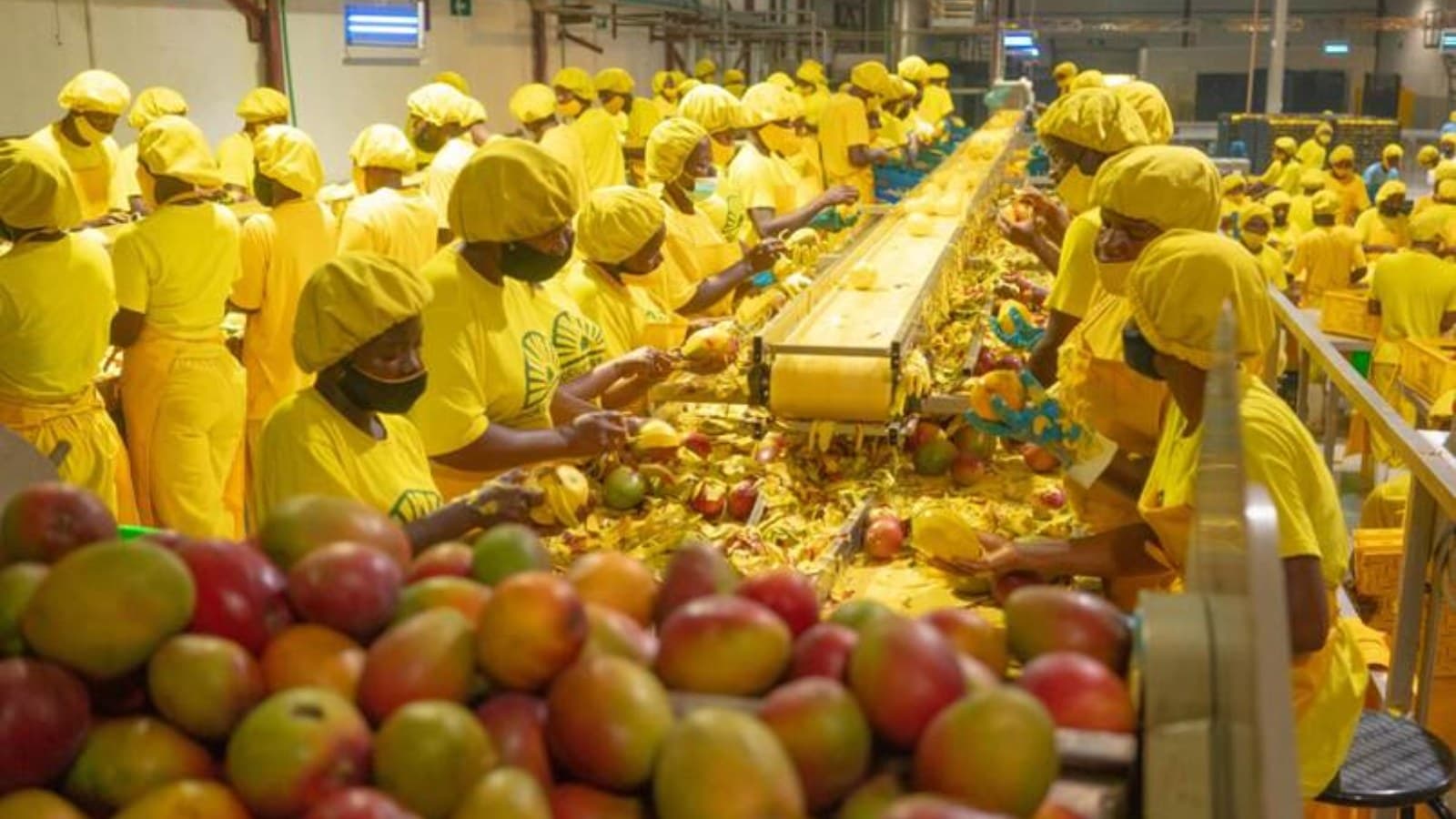
Malawi Mangoes, a fruit processor based in Salima, has built a fully integrated agribusiness ecosystem — combining commercial orchards, smallholder networks, on-site processing, international certification, and export logistics — that positions its products on European and Middle Eastern supermarket shelves. The company's defining discipline was sequencing: market requirements were set first, and production was built to meet them, not the other way around. Agri4Africa argues the model is replicable across Africa wherever raw materials exist but the surrounding ecosystem does not.
The bigger question
Why Tonnage Is the Wrong Starting Point
Most conversations about African agriculture — and, by extension, many developing-agriculture debates globally — begin and end with production metrics: hectares planted, tonnes harvested, farmers enrolled. These figures matter, but they are the wrong foundation for building competitiveness.
As Agri4Africa's analysis makes clear, volume alone has never determined whether a country captures value from what it grows. The sharper question is how agricultural products become globally competitive businesses, not simply larger harvests. The Malawi Mangoes case is presented as a working answer to that question — one worth examining not because mangoes are uniquely important, but because the model that built the business is transferable to virtually any crop in any African country that already has fertile land and favourable growing conditions.
The core insight: raw-material abundance is not the constraint. The missing ingredient, in country after country, is the ecosystem of processing, certification, logistics, finance, and market linkages that converts a harvest into an export industry.
Lessons one and two
Market-First Sequencing and In-Country Value Addition
Lesson 1 — Start with the market, not the field. Malawi Mangoes did not plant trees in anticipation of finding buyers. Product specifications, food-safety standards, and verified international demand shaped what was grown and how it was processed before production was scaled. Too many African agribusiness projects still invert this sequence — planting first and discovering afterwards that packaging, certification, or quality does not match buyer requirements. Reversing that order is, according to Agri4Africa, one of the strongest single determinants of whether an agricultural product becomes an export business or remains a subsistence crop.
Lesson 2 — Add value before export. A raw mango sold at the farm gate earns a fraction of what a processed, packaged, export-ready product commands. Malawi Mangoes' Salima processing facility converts a highly perishable, low-value commodity into dried and fresh products with months of shelf life, consistent quality, and premium positioning in international markets. This is precisely where value currently leaks out of African economies: raw produce is exported cheaply, processed elsewhere, and often sold back at several multiples of the original price. Processing, the analysis argues, is where a country decides whether it keeps the margin or hands it to someone else's supply chain.
Processing creates value. Integration creates competitiveness.
Lessons three and four
Partnership-Built Scale and Certification as Strategic Infrastructure
Lesson 3 — Partnerships build scale. No single farm, however efficiently managed, can supply an export business at volume on its own. Malawi Mangoes combined its own commercial orchards with a network of thousands of smallholder farmers, supported by financiers, technical partners, logistics providers, and international buyers. Each partner contributes what others cannot: farmers bring land, local knowledge, and labour; commercial operations deliver consistency and volume; financiers provide capital; buyers provide market access.
Agri4Africa identifies a common and costly failure mode here — treating smallholders as suppliers to be squeezed on price rather than as partners to be developed. The value chains that hold up under commercial pressure, the analysis concludes, are those where every participant has a genuine stake in the outcome.
Lesson 4 — Certification opens markets. Food safety, traceability, and international certification are frequently treated as a compliance cost — a box to tick before shipment. Malawi Mangoes treats them as strategic infrastructure: certification is what allows a Malawian product to sit on a European or Middle Eastern supermarket shelf and be judged on equal terms with produce from anywhere in the world. Without it, market access does not exist regardless of underlying product quality. Agri4Africa describes this as one of the highest-return investments an African agribusiness can make — and one of the most consistently under-funded.
Lesson five
Ecosystem Thinking Over Isolated Investment
The fifth and most transferable lesson is also the most structural: resilience comes from integration, not from any single component. It would be straightforward to attribute Malawi Mangoes' performance to a well-equipped factory, a strong export contract, or a capable investor. Agri4Africa argues that framing misses the point entirely.
The business works because farmers, finance, processing, certification, logistics, and buyers function as one system rather than five disconnected activities. No individual machine, facility, or contract created this outcome — their integration did.
The replicability question: Angola, Zambia, Mozambique, Tanzania, Ghana, and Kenya are all cited as geographies with crops and growing conditions suited to the same approach — from cashews and avocados to coffee and horticulture. In each case, the constraint is rarely the raw material. It is whether anyone has yet assembled the ecosystem around it. Africa's future competitiveness, Agri4Africa concludes, will depend less on producing more commodities and more on creating greater value before products leave the continent.
The India read
Five Lessons That Travel Beyond Africa
The Malawi Mango Model distils into five actionable disciplines that are relevant to any export-oriented agricultural economy:
- Start with markets, not production — let buyer specifications set the growing and processing standard
- Add value before export — process and package in-country to retain margin
- Build partnerships across the value chain — treat smallholders as co-investors, not price-takers
- Invest in certification and quality — treat food-safety credentials as market access infrastructure
- Design integrated ecosystems, not isolated projects — production, processing, finance, technology, and markets function as one system
For commodity traders, agri-businesses, and policymakers in markets such as India — where raw commodity exports routinely surrender value to overseas processors — the framework offers a replicable template. The raw materials exist. The discipline of building the ecosystem around them is the work that remains.
Why it matters
For Indian agri-businesses and policymakers tracking global value-chain models, the Malawi Mangoes case is a direct counterpoint to India's own persistent challenge of exporting primary commodities at low margins while value addition happens offshore. The five-lesson framework — market-first sequencing, in-country processing, partnership-based scale, certification as strategic infrastructure, and ecosystem thinking — is directly applicable to Indian export crops from alphonso mangoes to cashews and spices. The critical watchpoint is whether development finance and agri-policy in emerging markets will fund the ecosystem, not just the farm.
Frequently asked
What is the Malawi Mango Model and why is it significant?
The Malawi Mango Model refers to the integrated agribusiness approach of Malawi Mangoes, which combines commercial orchards, smallholder farmer networks, on-site processing, international food-safety certification, and export logistics into one coordinated system. Its significance lies in demonstrating that the constraint to African agricultural competitiveness is rarely raw-material availability — it is the absence of a complete ecosystem connecting production to global markets.
Which African countries could replicate this model according to Agri4Africa?
Agri4Africa identifies Angola, Zambia, Mozambique, Tanzania, Ghana, and Kenya as geographies with crops and growing conditions suited to the same integrated approach, citing commodities such as cashews, avocados, coffee, and horticultural produce as candidates.
Why does Agri4Africa say certification is more than a compliance cost?
According to Agri4Africa, international food-safety certification and traceability standards are strategic infrastructure, not a tick-box exercise. Without them, market access to European and Middle Eastern supermarket shelves simply does not exist regardless of product quality — making certification one of the highest-return investments an African agribusiness can make, even though it is among the most consistently under-funded.
How does Malawi Mangoes work with smallholder farmers?
Malawi Mangoes combines its own commercial orchards with a network of thousands of smallholder farmers, supported by financiers, technical partners, logistics providers, and international buyers. Agri4Africa's analysis stresses that treating smallholders as partners to be developed — rather than suppliers to be squeezed on price — is a defining feature of the model, and that value chains built on genuine shared stakes are the ones that hold up under commercial pressure.
Source
This report summarises and analyses coverage from linkedin.com. The analysis and India context are IndianAgri's own.