From Landfill to Livelihood: Why Organic Waste Composting Is a Smart Agribusiness Strategy
As fertiliser prices climb and climate stress on agriculture intensifies, converting organic waste into compost offers farmers a practical, low-cost route to healthier soil, reduced input costs, and stronger yields.

Expert insights
Esther Ogbonna · Founder, D'Green Foods and Farms
Esther Ogbonna is an agripreneur and founder of D'Green Foods and Farms, focused on organic farming and integrated livestock systems to strengthen farmer livelihoods.
The short answer
Fruit peels, vegetable scraps, eggshells, and other biodegradable kitchen and farm waste that routinely end up in landfills can be composted into a powerful soil amendment — cutting dependence on chemical fertilisers and lowering production costs. The process requires no expensive technology: segregation, layering of green and brown materials, and regular turning is sufficient. In an era of rising food insecurity and escalating input prices, composting is increasingly an agribusiness decision, not merely an environmental one.
The core problem
Organic Waste Is a Misclassified Resource
Every day, households, restaurants, and farms discard large volumes of fruit peels, vegetable scraps, eggshells, coffee grounds, and other biodegradable material. The overwhelming majority of this ends up in landfills, where it contributes to environmental pollution rather than productive use.
The central argument gaining traction among agripreneurs and sustainability advocates is straightforward: the problem is not the volume of waste generated, but the failure to recognise its value. Reframing organic discards as an input — rather than a liability — is the conceptual shift that unlocks a practical, low-cost solution for farmers and agri-businesses alike.
What composting delivers
Soil Health, Lower Costs, and Reduced Landfill Burden
Finished compost delivers a measurable range of agronomic and economic benefits:
- Improved soil fertility, giving crops a richer nutrient base without synthetic inputs
- Greater water retention, critical during dry spells and in rain-shadow regions
- Reduced dependence on chemical fertilisers, directly lowering input costs per acre
- Less organic material routed to landfills, easing municipal waste pressure
- Higher yields at lower production cost, improving farm-level profitability
In a context where fertiliser prices continue to rise globally and climate change places growing pressure on Indian agriculture, these benefits make composting a financially rational choice — not simply an environmental gesture.
Compost's export potential is easy to overstate in this context — IndianAgri's breakdown of India's cow dung export data shows a small trade weighted towards processed and devotional products.
How to do it
A Six-Step Composting Protocol Any Farm Can Adopt
The process demands no specialised equipment or capital outlay. The essential steps are:
- Segregate at source — keep organic waste separate from plastics, metals, and non-biodegradable materials.
- Collect biodegradables — fruit and vegetable peels, eggshells, coffee grounds, dry leaves, and grass clippings all qualify.
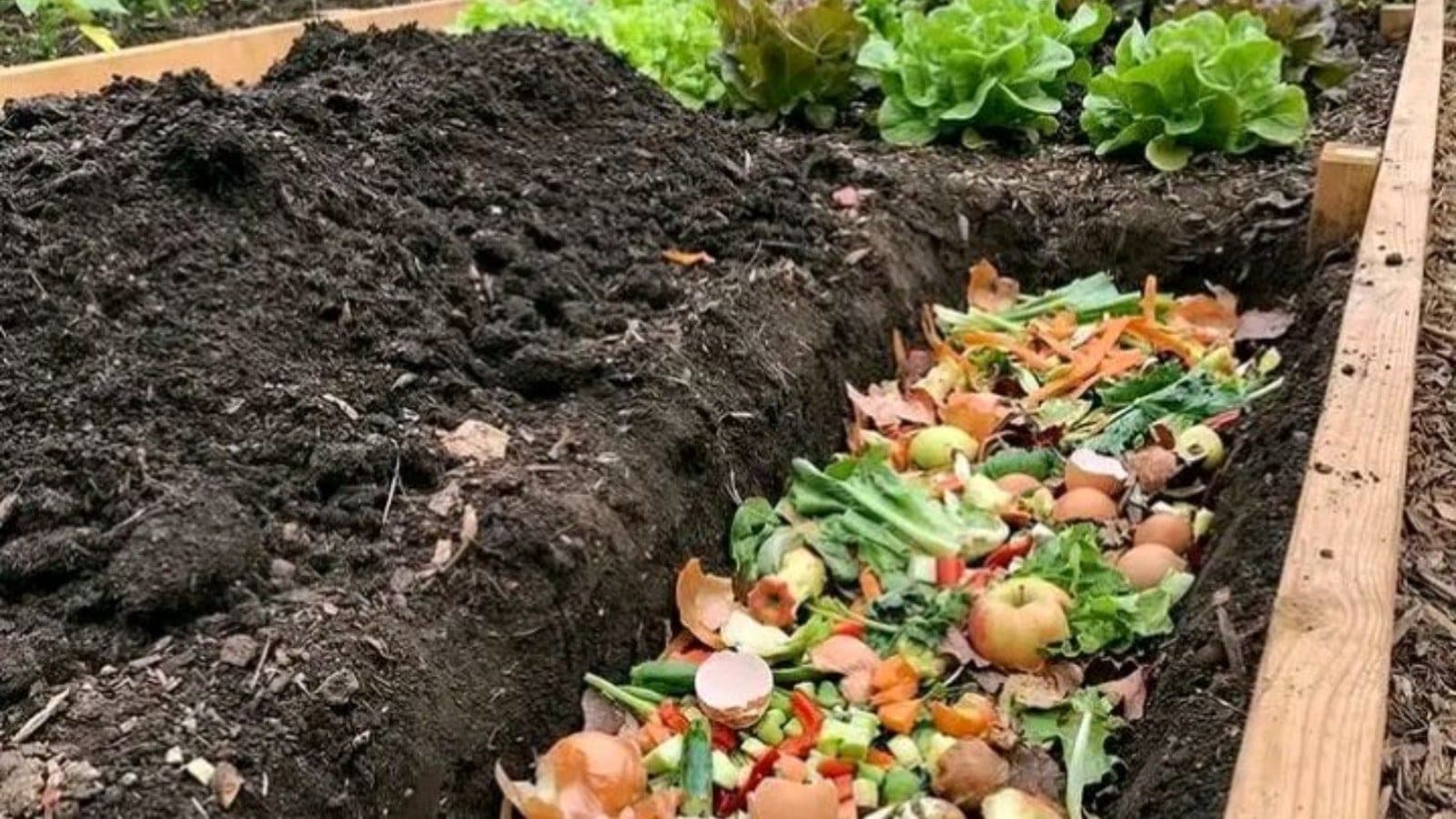
- Layer green and brown materials — place waste in a compost pit, bin, or trench, mixing fresh food scraps (green) with dry leaves, cardboard, sawdust, or straw (brown) to activate decomposition.
- Turn regularly — aerating the pile improves airflow and accelerates breakdown.
- Allow several weeks for the material to become dark, crumbly, and earthy.
- Apply to fields and beds — finished compost enriches soil naturally when spread across farms, gardens, and vegetable plots.
The bigger picture
Innovation Without Expensive Technology
A recurring theme in sustainable agriculture discussions is the assumption that innovation requires costly inputs — precision sensors, digital platforms, or imported machinery. Composting challenges that assumption directly.
With food insecurity rising and climate volatility compressing margins, the ability to extract value from materials already on-farm or in the kitchen represents a genuine competitive edge. Agri-businesses and farmer collectives that systematise organic waste collection and composting at scale can simultaneously reduce input costs, improve soil organic matter over successive seasons, and build a more climate-resilient production base — all from resources that were previously being discarded.
The question worth asking is no longer how do we dispose of this waste? but how do we create value from it?
Why it matters
For Indian farmers already squeezed by high fertiliser costs and erratic weather, on-farm composting represents a tangible, low-capital intervention to improve soil health and reduce cash outflows on chemical inputs. The practice also eases pressure on overloaded municipal waste systems and reduces landfill-driven pollution. As climate stress on agriculture grows, policymakers and agri-businesses that incentivise organic waste recycling at the farm and community level will be better positioned to support resilient, cost-efficient food production. The shift in mindset — from waste disposal to resource creation — is the first and most important step.
Frequently asked
What types of organic waste can be composted on a farm or at home?
Fruit and vegetable peels, eggshells, coffee grounds, dry leaves, grass clippings, cardboard, sawdust, and straw are all suitable composting materials, according to the framework outlined by organic farming advocates.
How long does the composting process take?
The material needs to decompose for several weeks — with regular turning to improve airflow — until it becomes dark, crumbly, and earthy before it is ready to apply to soil.
What are the main agronomic benefits of using compost instead of chemical fertilisers?
Compost improves soil fertility, increases the soil's ability to retain water, reduces dependence on chemical fertilisers, and can help farmers lower production costs while improving crop yields.
Does composting require expensive equipment or technology?
No. Composting can be done using a simple compost pit, bin, or trench — making it accessible to smallholder farmers and households without any significant capital investment.
This is an original IndianAgri report. The analysis and India context are IndianAgri's own.