Tamil Nadu Agriculture Budget 2026-27: ₹58,374 Crore Allocated, Organic Farming and AI Push Take Centre Stage
Tamil Nadu's agriculture budget jumps 28% to ₹58,374 crore for 2026-27, with bold targets on foodgrain output, organic farming incentives, millet missions, and a new AI-powered farmer advisory scheme.
The short answer
Tamil Nadu has earmarked ₹58,374 crore for agriculture and allied sectors in its Revised Budget Estimates for 2026-27, a significant rise from ₹45,661 crore in 2025-26. The budget sets a foodgrain production target of 125 lakh tonnes for the year, rising to 131 lakh tonnes over five years. Key priorities include organic farming incentives, a Cotton Renaissance Mission, millet and oilseed expansion, and the new Uzhavar AI Scheme for real-time crop advisory.
Big picture
A 28% Budget Surge for Tamil Nadu's Farm Sector
Tamil Nadu's agriculture and allied sectors will receive ₹58,374 crore under the Revised Budget Estimates for 2026-27, up sharply from ₹45,661 crore in the previous fiscal. Of the total outlay, revenue expenditure accounts for ₹49,685 crore and capital expenditure for ₹8,689 crore.
The Rural Development and Panchayat Raj department commands the single-largest share at ₹18,103 crore, underscoring the state's integrated approach to rural infrastructure alongside farm-sector support.
The state has set an ambitious five-year foodgrain production target of 131 lakh tonnes, with 125 lakh tonnes to be produced in 2026-27 alone. Alongside cereals, production targets for pulses, vegetables, and fruits have been outlined to achieve self-sufficiency and nutritional security.
Organic push
₹4,000/Acre Incentive Anchors Organic and Natural Farming Drive
Organic farming receives a direct financial nudge in the form of a ₹4,000 per acre incentive for farmers who transition to organic practices, covering 20,000 acres at a total outlay of ₹8 crore.
Complementing this, ₹9 crore from Union and State funds will be deployed under the Paramparagat Krishi Vikas Yojana (PKVY) to establish Organic Farming Clusters across 7,500 acres. New Natural Farming Clusters covering 3,125 acres are also proposed, alongside second-year activities for existing clusters spanning 7,500 acres, all under the National Mission on Natural Farming.
Quality assurance gets attention too: a 100% subsidy for Pesticide Residue Analysis — for produce certified under the National Programme for Organic Production — has been provisioned with ₹25 lakh. An allocation of ₹10 crore has been set aside for permanent vermicompost production units, while ₹63.50 crore will fund green manure distribution and a ₹3,000 per acre ploughing subsidy for green manure incorporation.
Crop missions
Cotton, Millet, Maize and Oilseeds: Sector-by-Sector Expansion Plans
Cotton: The Cotton Renaissance Mission will be rolled out across 73,360 acres with a combined Union-State outlay of ₹27.21 crore, targeting benefits for 40,000 cotton farmers.
Millets: A Millet Mission with a ₹63.81 crore outlay will be implemented in 2026-27, while the Tamil Nadu Minor Millet Mission will cover all 29 districts at a State-funded outlay of ₹7.61 crore.
Maize: A dedicated maize production scheme will be launched with a ₹36 crore combined outlay.
Pulses and Oilseeds: The state targets expanding pulse cultivation from 15.19 lakh acres to 24.70 lakh acres, pushing production from 3.88 lakh tonnes to 7.72 lakh tonnes. Oilseed acreage is to grow from 9.26 lakh acres to 14.89 lakh acres, with output rising from 8.77 lakh tonnes to 16.14 lakh tonnes — a near-doubling in both cases, covering groundnut, sesame, sunflower, and castor.
Tech and water
Uzhavar AI Scheme, Drone Training, and ₹785 Crore for Micro-Irrigation
Tamil Nadu has launched the Uzhavar (Farmers) Artificial Intelligence Scheme, designed to deliver real-time guidance on soil health and crop cultivation directly to farmers. An initial allocation of ₹2 crore has been made for the current fiscal, signalling a pilot-scale rollout before wider deployment.
In a nod to the Centre's 'Drone Didi' initiative, the state plans to train women farmers in drone-based agricultural applications — broadening technology access at the grassroots level.
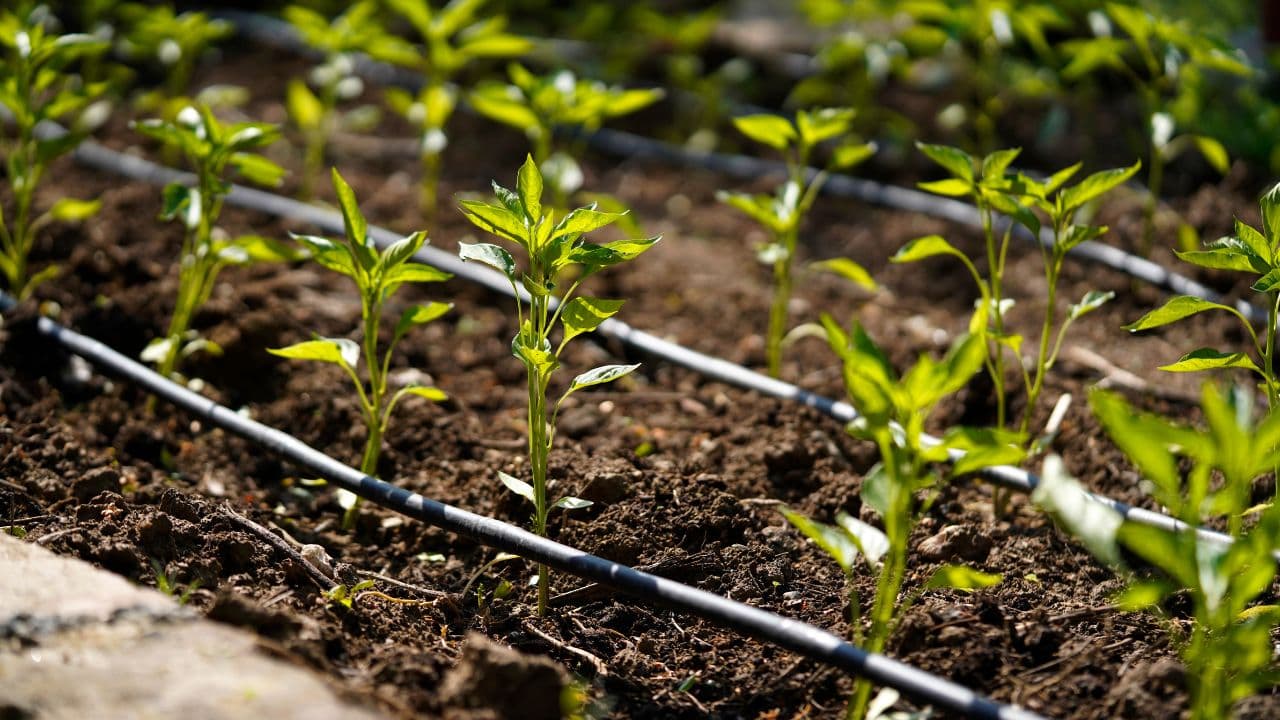
Water efficiency remains a priority: ₹785 crore has been earmarked for micro-irrigation to promote judicious water use across the state's farm holdings.
On the agri-processing front, ₹20 lakh has been set aside to prepare a Detailed Project Report and Feasibility Report for a 100-klpd ethanol distillery at the Kallakurichi-I Co-operative Sugar Mill — a step that could expand the state's ethanol blending contribution.
Why it matters
The near-28% surge in Tamil Nadu's agriculture budget signals serious state-level intent to boost farm productivity, nutritional security, and climate-resilient cropping. The near-doubling of pulse and oilseed production targets, if met, could meaningfully reduce the state's dependence on imports of these commodities. The introduction of the Uzhavar AI Scheme and drone training for women farmers reflects a push to modernise extension services — a model other states may watch closely. Agri-businesses and input suppliers serving Tamil Nadu should note the expanding footprint of organic clusters, millet missions, and micro-irrigation investments.
Frequently asked
How much has Tamil Nadu allocated for agriculture in the 2026-27 budget?
Tamil Nadu has earmarked ₹58,374 crore for agriculture and allied sectors in the Revised Budget Estimates for 2026-27, compared to ₹45,661 crore in 2025-26.
What incentive is offered to farmers adopting organic farming in Tamil Nadu?
The budget proposes an incentive of ₹4,000 per acre for farmers taking up organic farming, covering 20,000 acres with a total allocation of ₹8 crore.
What is the Uzhavar AI Scheme announced in the Tamil Nadu Agriculture Budget?
The Uzhavar (Farmers) Artificial Intelligence Scheme is a state initiative to provide farmers with real-time information on soil health and crop cultivation. An allocation of ₹2 crore has been made for the current fiscal.
What are Tamil Nadu's foodgrain production targets under the new budget?
The state aims to produce 125 lakh tonnes of foodgrains in 2026-27, with a five-year target of 131 lakh tonnes to ensure food security.
Source
This report summarises and analyses coverage from The Hindu BusinessLine — Agri Business. The analysis and India context are IndianAgri's own.