IMD Warns of Below-Normal July Monsoon After June Records Fifth-Lowest Rainfall Since 1901
India's June monsoon crashed to 99.5 mm — 39.8% below its long-period average and the fifth lowest since 1901 — and IMD now forecasts July at just 94% of normal, deepening fears for kharif sowing and reservoir levels.
The short answer
The India Meteorological Department has forecast July monsoon rainfall at 94% of the long-period average of 280.4 mm, categorising it as 'below-normal', following a severely deficient June that recorded only 99.5 mm against a normal of 165.3 mm — a shortfall of 39.8%. El Niño conditions and an unfavourable Madden-Julian Oscillation were the primary drivers of June's failure, with no low-pressure systems forming in the Bay of Bengal during the month. Kharif crop sowing acreage had already dipped 23% below year-ago levels as of June 25, and water stress across rainfed regions is now a serious concern for the agriculture sector.
The deficit picture
June Monsoon Crashes to Fifth-Lowest in 122 Years
India's June monsoon delivered just 99.5 mm of rainfall against a long-period average (LPA) of 165.3 mm — a shortfall of 39.8% that ranks as the fifth lowest since 1901, according to the India Meteorological Department. The bureau had itself forecast sub-92% LPA performance for the month, but actual outcomes were worse than anticipated.
IMD director-general Mrutyunjay Mohapatra cited three compounding factors for the severe deficit:
- An unfavourable phase of the Madden-Julian Oscillation (MJO), which suppressed convective rainfall activity
- Zero low-pressure systems in the Bay of Bengal during June, against a historical norm of two to three
- The emergence of El Niño conditions, which characteristically weakens the Indian summer monsoon
The spatial damage was sweeping: only 9 of India's 36 meteorological subdivisions — covering just a quarter of the country's geographical area — reported normal or above-normal rainfall. At the district level, 560 out of 741 districts (76%) recorded deficient precipitation.
Regional breakdown
Central India Bears the Brunt; North-West Food Bowl Also Squeezed
The regional breakdown reveals how unevenly the monsoon's failure has been distributed — and which agricultural belts face the steepest water stress.
Central subdivision — predominantly rainfed farmland — received only 84.4 mm against a normal of 170.3 mm, a 50% shortfall that marks the seventh lowest June total since 1901. This region's dependence on seasonal rain makes it the most vulnerable to back-to-back deficits.
North-west subdivision, India's primary food-producing belt, received 53.7 mm against a normal of 78.1 mm — 31% below average.
East and north-east subdivision clocked 197.5 mm against an LPA of 328.4 mm, a 40% deficit that is the lowest for the region since 1901. Despite this massive shortfall, the region's absolute rainfall still exceeded the normal levels of any other Indian subdivision.
South peninsula reported 117.4 mm against an LPA of 161 mm — 27% below normal.
Among individual districts, Gujarat's Dwarka received zero rainfall in June against a district normal of 100.3 mm, exemplifying the extreme patchiness of this season.
The next 15 days are very crucial for planting most of the kharif crops. Let us watch the progress of the monsoon in the heartlands of the country. There is definitely a worry while looking at water availability in our reservoirs and scorching heat.
Kharif at risk
Sowing Down 23%, Water Stress Looms as Next 15 Days Turn Critical
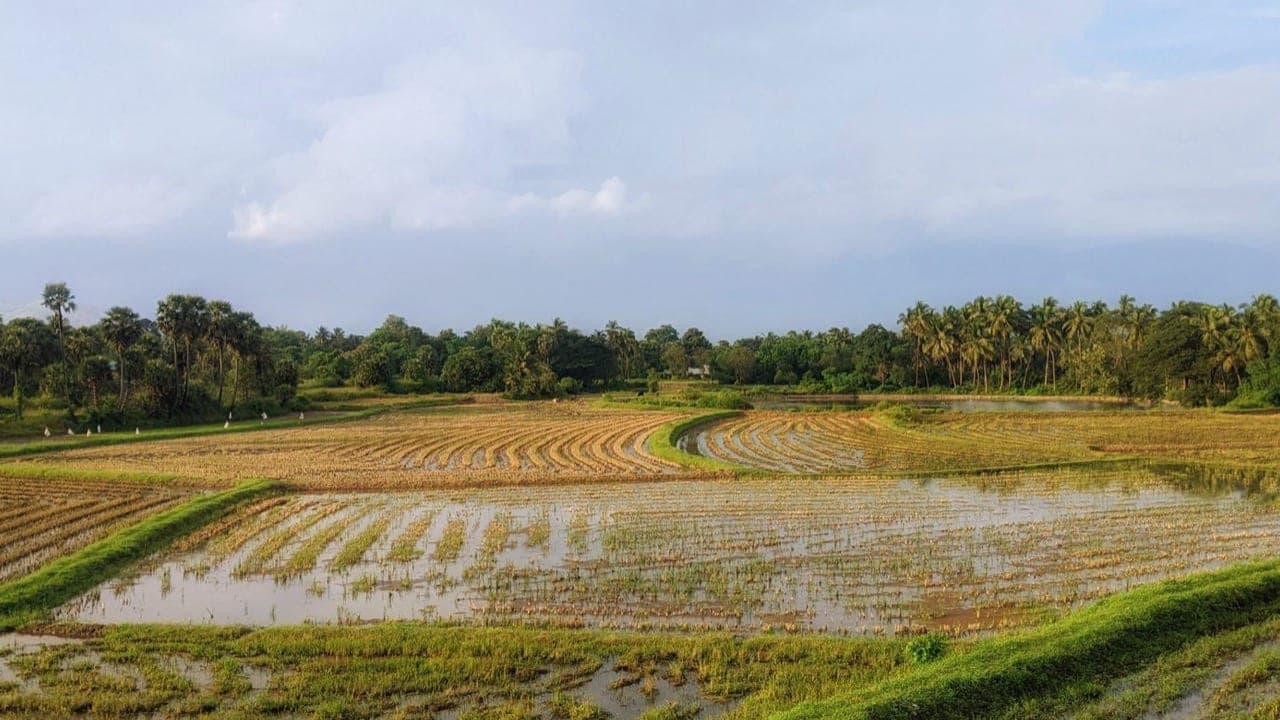
The monsoon's poor start has already dented field-level activity. Kharif crop sowing acreage as of June 25 was 23% below the year-ago level, with the low-pressure system forecast for the first week of July offering the nearest hope of reversing that trend. IMD has indicated this Bay of Bengal system could bring widespread rainfall and support planting across multiple regions.
Former agriculture commissioner J S Sandhu underscored the urgency: "The next 15 days are very crucial for planting most of the kharif crops. Let us watch the progress of the monsoon in the heartlands of the country. There is definitely a worry while looking at water availability in our reservoirs and scorching heat," he said, while adding it was premature to conclude that kharif sowing coverage would be low for the full season.
IMD's Mohapatra flagged that a back-to-back June–July deficit could strain water availability for irrigation, and advised that farmers consider short-duration crop varieties and alternative crops in rainfall-deficient areas — while noting that specific advisories are the Agriculture Ministry's domain.
The July outlook
IMD Pegs July at 94% of LPA; Most of India Faces Below-Normal Rain
For July, IMD forecasts quantitative rainfall at 94% of the LPA of 280.4 mm — classified as 'below-normal'. The geographic distribution will be uneven:
- Below-normal rainfall is expected across most of the country
- Normal to above-normal conditions are forecast for parts of the north-west, north-east, east-central India, and the eastern peninsular region
Maximum temperatures in July are also expected to remain above normal across most of India, with only isolated pockets of west-central India likely to see normal-to-below-normal highs — adding to the moisture stress on standing crops and soil.
On the possibility of relief via a positive Indian Ocean Dipole (IOD), Mohapatra was measured in his assessment. IMD's own models currently show neutral IOD conditions persisting through the monsoon season until September. A shift to positive IOD remains possible, and if it materialises, it could marginally reduce El Niño's adverse impact — but this is not a base-case scenario. Mohapatra noted that 1997, when India received 2% above-normal rainfall despite a strong El Niño year, was "the only exception" in such conditions.
Why it matters
Two consecutive months of deficient rainfall — with June logging its fifth-lowest total since 1901 and July forecast to remain below normal — create compounding risk for kharif production, particularly in rainfed central India, which recorded a 50% June deficit. With 76% of India's 741 districts already reporting deficient rainfall and reservoir levels under stress, the next 15 days of monsoon progress across the country's agricultural heartlands are critical for planting decisions. Farmers, traders, and policymakers should watch for the Agriculture Ministry's advisory on short-duration crop varieties and the evolution of the Bay of Bengal low-pressure system expected in early July. A potential positive IOD event in September offers a slim buffer, but IMD's own models currently see neutral conditions persisting through the monsoon season.
Frequently asked
How deficient was India's June 2026 monsoon rainfall?
India received just 99.5 mm of rainfall in June 2026 against a long-period average of 165.3 mm — a deficit of 39.8%, making it the fifth lowest June rainfall since 1901, according to IMD.
What has IMD forecast for July 2026 monsoon rainfall?
IMD has forecast July 2026 monsoon rainfall at 94% of the long-period average of 280.4 mm, categorising it as 'below-normal'. Most parts of the country are expected to receive below-normal rain, except parts of the north-west, north-east, east-central India, and the eastern peninsular region.
How has the monsoon deficit affected kharif crop sowing?
Kharif sowing acreage as of June 25 was 23% below the year-ago level. IMD has said the next 15 days are critical for planting, and a low-pressure system expected in the Bay of Bengal in early July could provide some sowing support.
Can a positive Indian Ocean Dipole (IOD) offset the El Niño impact on India's monsoon?
IMD's own models currently project neutral IOD conditions through the monsoon season until September. While a shift to positive IOD is possible and could marginally reduce El Niño's adverse effect, IMD director-general Mrutyunjay Mohapatra noted that 1997 — when India got 2% above-normal rain during a strong El Niño — was 'the only exception' in such years.
Source
This report summarises and analyses coverage from The Hindu BusinessLine — Agri Business. The analysis and India context are IndianAgri's own.
Edited by Devendra Kumar Jha. How we report, source and correct: editorial policy. Spotted an error? Tell us.