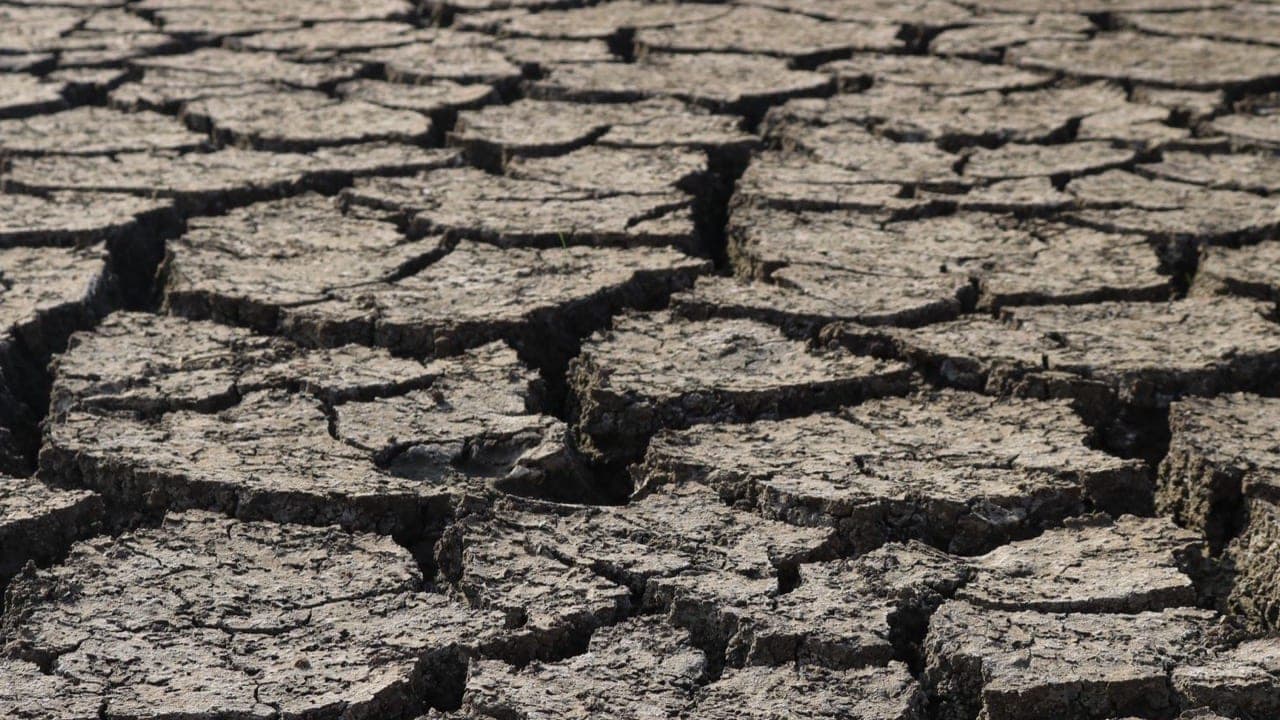
Kharif Sowing Trails Last Year by 17.96 Lakh Hectares as Rice Area Falls 4.41%; Rainfall 11% Below Normal
As of August 7, India's Kharif crop coverage is 1.82% short of last year's pace, with rice leading the decline across ten states — even as oilseeds post a 2.97% acreage gain and a short-term rainfall uptick offers modest hope.
The short answer
India's Kharif sowing as of August 7 stood at 967.92 lakh hectares, down 17.96 lakh hectares or 1.82% from the same period last year, with rice accounting for the bulk of the shortfall at 15.90 lakh hectares. Cumulative monsoon rainfall through August 5 was 11% below normal, and live reservoir storage across 166 monitored bodies was 73.25% of last year's level. Oilseeds provided the sole bright spot, with acreage rising 2.97% to 180.20 lakh hectares — but the overall picture leaves the season's outcome heavily dependent on monsoon performance in the weeks ahead.
Crop coverage
Rice Drives a 1.82% Sowing Deficit Against Last Year
According to the Agriculture Statistics Division, total Kharif sowing as of August 7 reached 967.92 lakh hectares, against 985.89 lakh hectares at the same point last year — a shortfall of 17.96 lakh hectares or 1.82%. The figure also lags the normal area of 1,104.46 lakh hectares for the comparable period.
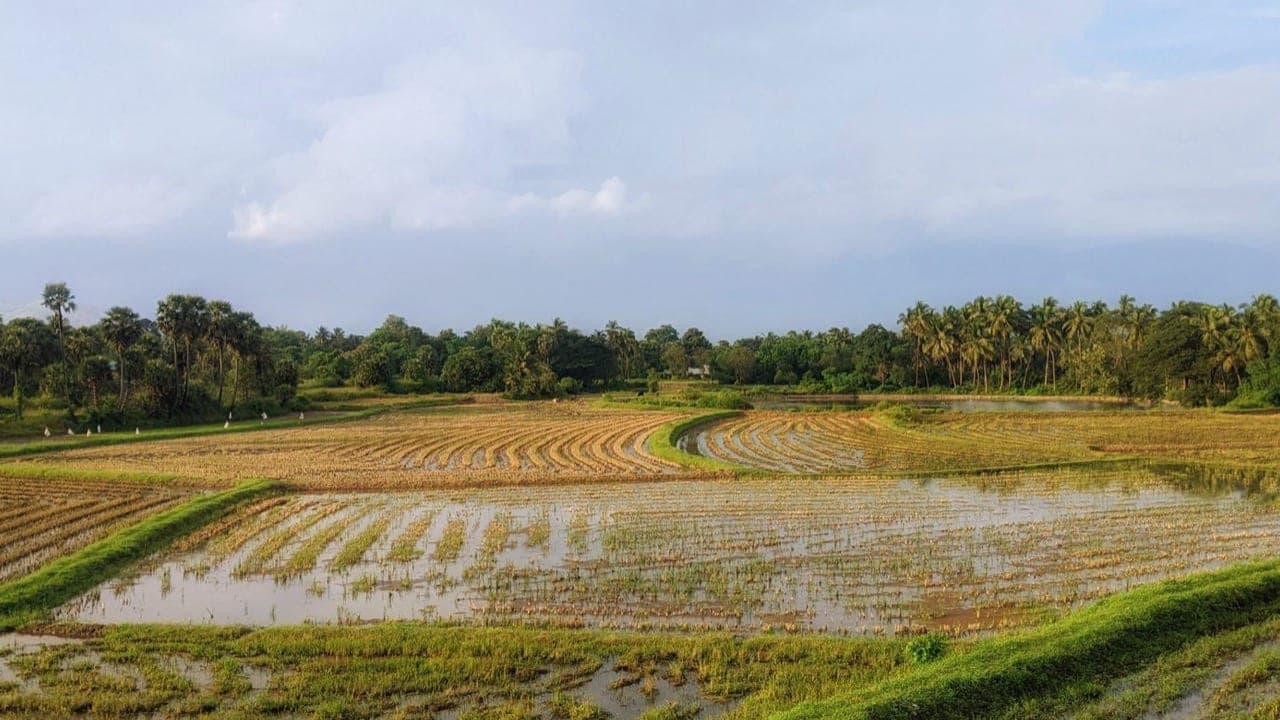
Rice was the single largest drag, with area at 344.78 lakh hectares — down 15.90 lakh hectares or 4.41% from 360.67 lakh hectares last year. Madhya Pradesh, Jharkhand, Maharashtra, Karnataka, Odisha, Tamil Nadu, West Bengal, Bihar, Uttar Pradesh and Andhra Pradesh recorded the steepest declines, while Assam, Telangana, Uttarakhand, Chhattisgarh and Punjab expanded coverage.
Pulses slipped 1.95 lakh hectares to 103.78 lakh hectares, and coarse cereals and Shree Anna fell 4.71 lakh hectares to 168.50 lakh hectares, with Karnataka, Maharashtra and Tamil Nadu among the biggest contributors to the latter decline.
The bright spot
Oilseeds Buck the Trend with 2.97% Acreage Expansion
Against a broadly weak sowing picture, oilseeds emerged as the season's standout performer. Acreage climbed 5.19 lakh hectares or 2.97% to 180.20 lakh hectares from 175.01 lakh hectares last year, driven by strong expansion in Uttar Pradesh, Madhya Pradesh and Rajasthan — even as Gujarat, Maharashtra and Karnataka partially offset the gains.
Cotton and sugarcane were marginally lower — cotton at 106.01 lakh hectares versus 106.42 lakh hectares, and sugarcane at 58.31 lakh hectares versus 58.62 lakh hectares. Jute and mesta recorded a marginal increase to approximately 6.33 lakh hectares.
The oilseed expansion is a strategically significant counter-trend, given India's persistent dependence on edible oil imports, but the gains remain insufficient to neutralise the headline shortfall dominated by rice.
Monsoon watch
Cumulative Rainfall 11% Below Normal; East and Northeast Hardest Hit
India received 434.5 mm of rainfall during June 1–August 5, against a normal of 491.0 mm — an 11% deficit — according to meteorological data cited alongside the sowing report.
Regional breakdown
- Central India: +2% above normal (559.9 mm vs 549.1 mm) — the only region in surplus
- Northwest India: –12% (285.6 mm vs 322.8 mm)
- South Peninsula: –18% (327.5 mm vs 399.7 mm)
- East and Northeast: –27% (588.9 mm vs 805.3 mm) — the steepest deficit
The most recent week (July 30–August 5) painted a more encouraging picture nationally, with rainfall at 66.8 mm against a normal of 62.7 mm, an excess of 7%. South Peninsula posted a 39% weekly excess and Central India 14%. However, Northwest India remained 22% deficient even in the short term, and the seasonal cumulative gap has not yet closed.
Water reserves
Reservoir Storage at 97.13% of Normal but Only 73.25% of Last Year's Level
The Central Water Commission's monitoring of 166 important reservoirs as of August 6 showed live storage at 96.966 billion cubic metres (BCM), equal to 52.82% of total live capacity. This compared with 132.368 BCM at the same time last year, placing current storage at just 73.25% of last year's level and 97.13% of normal.
Regional positions
- Western region (53 reservoirs): 75.86% of capacity, 33.95% above normal — Gujarat (+40.58%) and Maharashtra (+30.52%) particularly strong
- Eastern region (27 reservoirs): 47.19% of capacity, 10.36% above normal
- Northern region (11 reservoirs): 45.80% of capacity, 14.35% below normal; Rajasthan at –18.53%
- Central region (28 reservoirs): 47.38% of capacity, 13.82% below normal; Madhya Pradesh –21.49%, Uttar Pradesh –17.86%
- Southern region (47 reservoirs): 46.47% of capacity, 18.78% below normal — the largest deficit; Telangana critically low at 20.92% of live capacity and 54.98% below normal; Tamil Nadu –39.58%
Season outlook
Coming Monsoon Weeks Remain Decisive for Late Sowing and Water Replenishment
The convergence of a 17.96 lakh hectare sowing shortfall, a cumulative 11% rainfall deficit and reservoir levels at 73.25% of last year's points to a Kharif season that is materially behind on multiple fronts simultaneously.
The recent uptick in weekly rainfall is a welcome development, but has not yet translated into a recovery in aggregate sowing or meaningful reservoir refill nationally. Late-sowing windows remain open for some crops, and states such as Uttar Pradesh have demonstrated an ability to expand pulse and oilseed area even in a challenging season — but the window for rice transplanting is narrowing.
For the sector, the critical variable in the next few weeks is whether the monsoon delivers above-normal rainfall in deficit regions — particularly East and Northeast India, the South Peninsula and the Northern plains — to support crop establishment and fill reservoirs ahead of the rabi season's water needs.
Why it matters
A 17.96 lakh hectare sowing gap, concentrated in rice — the crop that anchors India's food security calculus and paddy procurement pipeline — raises the stakes for price stability in the kharif marketing season. With cumulative rainfall deficits persisting across four of five meteorological regions and reservoir storage nationally at just 73.25% of last year's level, the risk of area under-achievement hardening into yield stress is real. Policymakers will need to watch late-sowing progress in Madhya Pradesh, Jharkhand and Odisha closely, while traders should factor in potential tightness in coarse cereals and pulses alongside the oilseed expansion. The coming monsoon weeks are decisive.
Frequently asked
By how much does Kharif sowing trail last year as of August 7?
Total Kharif sowing stood at 967.92 lakh hectares as of August 7, which is 17.96 lakh hectares or 1.82% below the 985.89 lakh hectares recorded at the same point last year, according to the Agriculture Statistics Division.
Which crop recorded the largest area decline in Kharif 2026?
Rice registered the steepest fall, with area at 344.78 lakh hectares — down 15.90 lakh hectares or 4.41% from 360.67 lakh hectares last year. Major declines were reported from Madhya Pradesh, Jharkhand, Maharashtra, Karnataka, Odisha, Tamil Nadu, West Bengal, Bihar, Uttar Pradesh and Andhra Pradesh.
How is India's cumulative monsoon rainfall tracking this season?
India received 434.5 mm of rainfall during June 1–August 5, against a normal of 491.0 mm, resulting in an 11% deficit. The East and Northeast region recorded the largest shortfall at 27% below normal, while Central India was the only region with a surplus at 2% above normal.
What is the current state of reservoir storage across India?
As of August 6, live storage in 166 monitored reservoirs stood at 96.966 BCM, which is 52.82% of total live capacity, 97.13% of normal, and only 73.25% of last year's level of 132.368 BCM. The Southern region had the largest deficit from normal at 18.78%, with Telangana's storage critically low at 20.92% of live capacity.
Source
This report summarises and analyses coverage from Rural Voice — Latest. The analysis and India context are IndianAgri's own.