Super El Niño Intensifies at Record Pace: 92% Chance 2027 Becomes Hottest Year Ever, Models Warn
A Carbon Brief analysis of 667 climate model simulations finds the 2026 El Niño intensifying faster than any previously recorded event, with a 92% probability that 2027 will become the warmest year in human history — a development with dire
The short answer
The tropical Pacific has shifted from La Niña to a powerful 'Super El Niño' at an unprecedented speed in 2026, with the Niño3.4 index surpassing 2°C by early July — already qualifying as 'very strong'. A Carbon Brief assessment of 667 model simulations now places a 92% probability on 2027 becoming the hottest year ever recorded, with global average temperatures projected at around 1.71°C above pre-industrial levels. For India, a strengthening El Niño historically means a weaker southwest monsoon, raising urgent questions for kharif crop planning and water resource management.
The intensification
From La Niña to Super El Niño in Months — a Record-Breaking Transition
After nearly two years under La Niña's moderating influence, the tropical Pacific completed one of the fastest climate reversals ever documented. The Niño3.4 index crossed the El Niño threshold of 0.5°C in April 2026, then accelerated sharply — reaching 1°C in May and 1.6°C in June, the level at which climate scientists classify an event as 'strong'. By the first weeks of July, the index had surged past 2°C, the threshold for a 'very strong' or 'Super' El Niño.
According to the Carbon Brief assessment, no previous El Niño on record has developed at this speed. The analysis draws on 667 model simulations from 14 major international forecasting systems, including the US Climate Forecast System (CFS), Europe's Copernicus Climate Change Service (C3S), Canada's CanSIPS, and Japan's SINTEX-F. The median projection from these models places the peak Niño3.4 anomaly at 3.59°C, far exceeding the ~2.75°C reached during the strongest event previously on record — the devastating 2015-16 El Niño.
The temperature outlook
2026 Likely Second-Hottest, but 2027 Is the Real Alarm Bell
The immediate temperature implications for 2026 are already striking. Carbon Brief has nearly doubled its estimate of the probability that 2026 will become the warmest year ever — from 19% in April to 35% now. The most likely outcome for the year is that global average temperatures settle around 1.51°C above pre-industrial levels, making it the second-warmest year on record, narrowly behind 2024. There is a 63% probability that 2026 annual temperatures will exceed the symbolic 1.5°C mark.
However, researchers emphasise that the larger story is 2027. Because global temperatures respond to El Niño with a lag of roughly three months, an event peaking in November–December 2026 will deliver its strongest atmospheric warming through 2027. Carbon Brief projects 2027 global temperatures at approximately 1.71°C above pre-industrial levels, with a 92% probability it will be the hottest year in recorded history and a 94% probability it will exceed 1.5°C. Taken together, there is a 93% chance that either 2026 or 2027 will set a new global temperature record.
The India read
Monsoon Risk and Agricultural Consequences for Indian Farmers
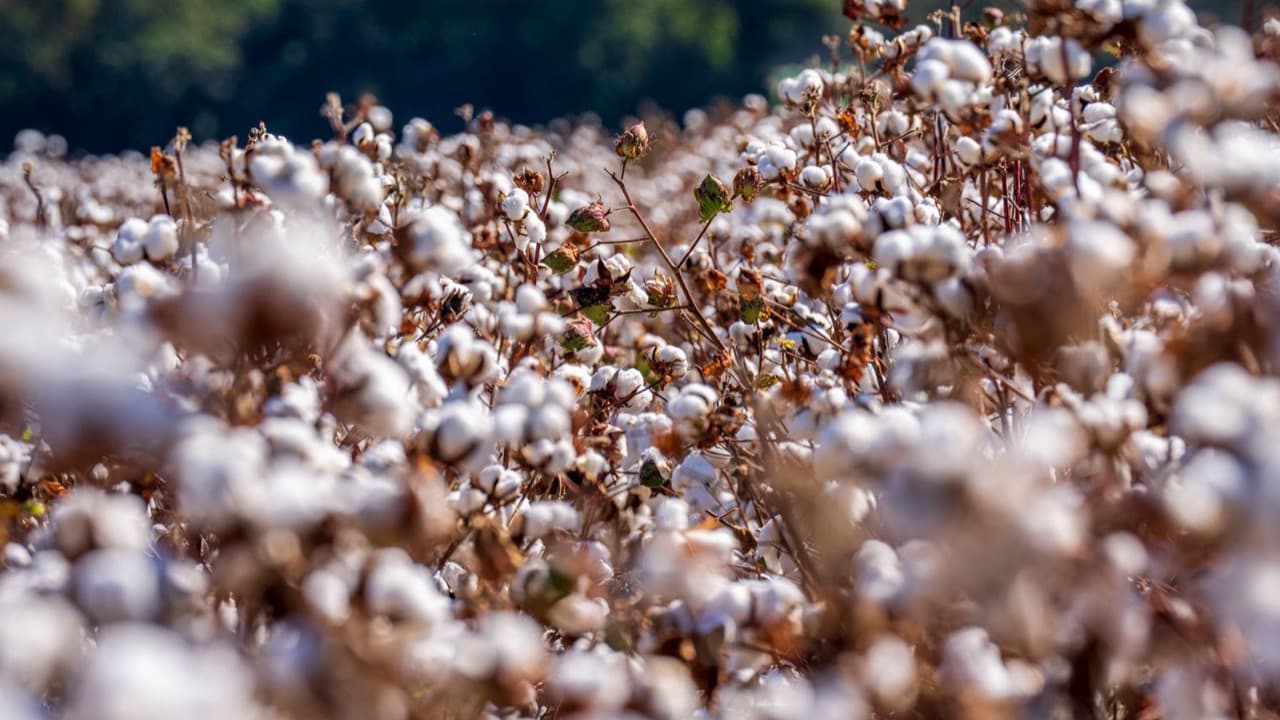
For Indian agriculture, a Super El Niño carries a well-documented hazard. El Niño events have historically been associated with weaker southwest monsoon rainfall, which irrigates the bulk of India's kharif crops — including rice, pulses, oilseeds, and cotton. Carbon Brief explicitly notes El Niño's historical link to monsoon suppression in India, while acknowledging that the Indian Ocean Dipole (IOD) and the Madden-Julian Oscillation (MJO) can modulate its effects in either direction.
The pace and projected magnitude of this event — potentially surpassing even the catastrophic 2015-16 El Niño — should sharpen focus among:
- Farmers and sowing planners tracking rainfall distribution across June–September 2026 and the 2027 rabi season
- Commodity traders exposed to weather-sensitive crops such as rice, sugarcane, and oilseeds
- Policymakers and state governments managing reservoir levels and drought preparedness frameworks
With the India Meteorological Department and global agencies providing evolving seasonal outlooks, close monitoring of IOD trends will be critical to refining India-specific risk assessments.
The climate context
A Hotter Baseline Makes Every El Niño More Dangerous
Scientists are at pains to note that while El Niño is a naturally recurring phenomenon driven by Pacific Ocean heat dynamics, its consequences today are amplified by long-term human-induced climate change. Carbon Brief highlights that the long-term global warming trend has accelerated from approximately 0.18°C per decade in the early 2000s to nearly 0.27°C per decade today — a direct result of continued greenhouse gas emissions.
This accelerating baseline means every powerful El Niño now operates on a significantly warmer ocean and atmosphere than events of comparable intensity in previous decades. The 1997-98, 2015-16, and 2023-24 El Niño cycles all followed the same pattern — the year after peak development was markedly hotter than the year of formation — and 2026-27 is expected to reproduce and potentially exceed that pattern. Even after correcting for background ocean warming using the Relative Oceanic Niño Index (RONI), the median model projection of 3.1°C for 2026 comfortably surpasses the previous RONI-adjusted record of 2.69°C set during the 1982-83 El Niño.
Why it matters
A Super El Niño of this projected magnitude — potentially exceeding the devastation of the 2015-16 event — poses a serious threat to India's southwest monsoon reliability, which underpins roughly half the country's agricultural output. With global warming accelerating the background baseline from 0.18°C per decade to 0.27°C per decade, each successive El Niño arrives on a progressively hotter ocean, magnifying its agricultural and hydrological footprint. Indian farmers, commodity traders, and policymakers should watch monsoon forecasts closely through the second half of 2026 and prepare contingency plans for potential rainfall deficits in 2026 and 2027. The 93% combined probability that either 2026 or 2027 breaks the global temperature record makes this a planning imperative, not a distant risk.
Frequently asked
What makes the 2026 El Niño a 'Super' El Niño?
The Niño3.4 sea surface temperature index crossed 2°C in early July 2026 — the threshold climate scientists use to classify an event as 'very strong' or 'Super' El Niño. The index had reached 1.6°C in June (classed as 'strong') and 1°C in May, representing one of the fastest intensification rates ever observed.
Why is 2027 considered more at risk than 2026 for record heat?
Global temperatures respond to El Niño with a lag of roughly three months, because it takes time for Pacific Ocean heat to spread through the atmosphere. An El Niño peaking in November–December 2026 is therefore expected to exert its strongest warming influence during 2027. Carbon Brief projects 2027 global average temperatures at around 1.71°C above pre-industrial levels, with a 92% probability it will be the warmest year ever recorded.
How does this El Niño compare with the strongest on record?
The median model forecast projects a peak Niño3.4 anomaly of 3.59°C for 2026, well above the approximately 2.75°C reached during the 2015-16 El Niño — currently the strongest on record. Even after adjusting for background ocean warming, the median projection of 3.1°C exceeds the previous adjusted record of 2.69°C set in 1982-83. A total of 91% of all 667 model simulations project the 2026 event will exceed the previous historical record.
What does a Super El Niño mean for India's monsoon and agriculture?
El Niño events have historically been linked to weaker southwest monsoon rainfall in India, which directly affects kharif crops such as rice, pulses, oilseeds, and cotton. Carbon Brief notes this historical association, while cautioning that other ocean-atmosphere systems — the Indian Ocean Dipole and the Madden-Julian Oscillation — can modify El Niño's impact on the Indian monsoon in either direction.
Source
This report summarises and analyses coverage from Rural Voice — Latest. The analysis and India context are IndianAgri's own.