What a Power Weeder Really Costs to Run Per Acre
Purchase prices are everywhere. What it costs to actually run the machine — fuel, blades, depreciation, and the hours it takes to cross an acre — is almost nowhere. So build the number yourself, because the one variable that matters most is your own field.

Written by
Devendra Kumar Jha · Founder, Agpro Consulting
Devendra Kumar Jha is an agricultural engineer and founder of Agpro Consulting, with over 25 years bridging corporate strategy and the Indian agri-sector.
The short answer
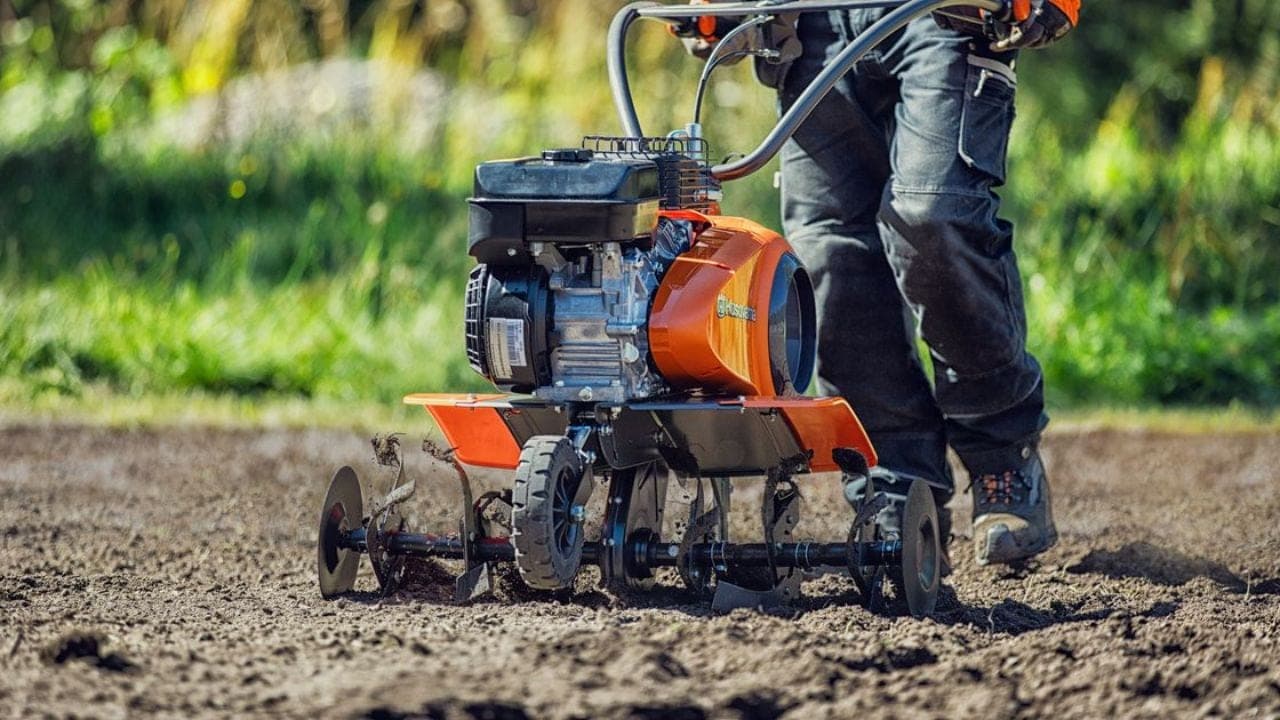
There is no single running cost for a power weeder, and any source quoting one has left something out. Published figures range from about ₹250 per hectare in a paddy study to ₹1,700 in an ICAR rotary weeder evaluation to ₹8,000 in sugarcane, because they include different cost items and were measured in different crops and soil moisture. Real cost per hour is fuel (roughly 0.4–0.75 litres), wear parts, depreciation and interest, and labour — divided by the acres covered in an hour. That last figure swings from about an acre in two to three hours on dryland to roughly nine hours an acre in wet paddy, which moves the cost per acre more than anything else.
The problem
The published costs disagree by a factor of thirty
Search for what a power weeder costs to run and you will find confident numbers. You will also find that they do not agree with each other.
One field study of paddy weeding puts the operating cost at ₹250 per hectare. An ICAR evaluation of a rotary weeder puts a single weeding at ₹1,700 per hectare. A study in sugarcane arrives at ₹8,000 per hectare. Same class of machine, three answers, a thirty-fold spread between the smallest and the largest.
None of them is wrong. They are measuring different things.
Some count only fuel and the operator's wage. Others fold in depreciation on the machine, interest on the money spent buying it, repairs and the cost of the blades wearing out. Some measure a single pass; others count a full season's weeding. And they were taken in different crops, at different row spacings, in soil of different moisture — which, as we will see, changes the answer more than anything else on the list.
So the honest version of this article is not a number. It is the arithmetic, with the parts you have to fill in yourself marked clearly.
The arithmetic
Four things go into the cost, and only one is obvious
Operating cost per hour is the sum of four items. Divide it by the ground you cover in an hour and you have your cost per acre.
Fuel. The only one most people count. Petrol power weeders in this class burn roughly 0.4 to 0.75 litres an hour depending on engine size and how hard the soil is. At current pump prices that is a modest number, and it is why the fuel-only estimates come out so low.
Wear parts. Blades and tynes are consumables. They are what actually touches the soil, and in stony or heavy ground they go blunt and break. This is the item farmers most often leave out of the sum and most often meet as a surprise.
Depreciation and interest. The machine has a working life measured in hours. Spread the purchase price across those hours and you get a real cost that accrues whether you count it or not, plus the interest on the money — borrowed or not, since money in a machine is money not somewhere else. Retail prices for this class ran from about ₹21,000 to ₹1.85 lakh in August 2026, so this term varies more between two buyers than any other.
Labour. Somebody walks behind the machine. If that is you, your time still has a value; if it is hired, it is a wage. A power weeder does not remove labour from weeding. It changes how much of it is needed.
The variable that matters
How much ground you cover in an hour decides everything
Every cost above is per hour. Your cost per acre depends on how many acres an hour buys — and this is where the published figures separate.
A common rule of thumb is that a power weeder covers an acre in two to three hours in reasonable dryland conditions. But a measured evaluation in wet paddy recorded a field capacity of 0.044 hectares an hour at 67% field efficiency. Convert that and it is roughly nine hours to the acre — three to four times slower than the rule of thumb.
That single difference moves the cost per acre by three or four times on its own, before fuel prices or machine cost enter the picture. It is the reason a paddy study and a sugarcane study cannot be compared, and the reason a figure quoted by a dealer in another district tells you very little.
What drives it: soil moisture, weed height at the time you go in, row spacing, plot shape, and how much of the hour is spent turning at headlands rather than cutting. Field efficiency of 67% means a third of the running time was not weeding at all. On small, irregular plots that fraction gets worse.
Against hand weeding
What you are actually replacing
The comparison that decides most purchases is not against another machine. It is against hired hands.
Weeding is one of the heaviest labour demands in the season — roughly a quarter of the total labour a crop takes, with weeding and interculture alone running to 400–600 man-hours per hectare. It is also the operation where labour is hardest to find at the moment you need it, which is a cost that never appears in any table: a weeding done three weeks late is not the same operation.
The ICAR evaluation gives the clearest paired figures, because both sides were measured the same way: ₹1,700 per hectare for a single weeding by rotary machine, against ₹3,600 per hectare manually — with about 54% less labour. A separate paddy study puts a power weeder at ₹250 per hectare against ₹720 for manual weeding with a hoe.
Both point the same direction. Note what they do not say: neither claims the machine is free to run, and neither answers whether it pays back on your acreage. That depends on how many acres you put through it in a year, which is the sum in the last section.
The gap
What nobody publishes, and what to ask the dealer
Two numbers you need are not in any study, any brochure or any price list, and their absence is conspicuous.
How long a set of blades lasts, and what a replacement set costs. Manufacturers describe blades as hardened or boron steel. None publishes hours-to-replacement or a spare price. Yet on a machine whose whole job is cutting soil, this is a running cost, not an accessory.
What the machine is worth after three seasons. There is no established resale market with published values, so depreciation has to be guessed rather than looked up.
Both are answerable locally, and they are the questions worth taking to a dealer instead of the ones about horsepower:
- What does a full set of blades cost, and how many hours do your customers get from one?
- Which parts do you stock, and which are ordered in — and how long does an order take in season?
- Where is the nearest mechanic who has actually opened this engine?
- What have three-year-old units of this model sold for second-hand?
A machine that is cheap to buy and idle for ten days in the weeding window because a part is coming from another state is not cheap. Availability of spares belongs in the cost, even though no table has a column for it.
Before you buy
Do the sum on your own acreage
The calculation that matters is short. Take the four cost items per hour, add them, divide by the acres you genuinely cover in an hour on your land — not the brochure figure — and you have your cost per acre. Multiply by the acres you weed in a year, and by the number of passes each crop needs, and compare that against what the same work costs you in hired labour today.
Then compare it against not buying at all. If a custom-hire operator or a nearby Custom Hiring Centre will do the same work per acre, the machine has to beat that rate often enough to justify the capital, the maintenance and the idle months. For a smallholding weeding a few acres twice a season, hiring frequently wins, and there is no shame in the arithmetic saying so — it is the same conclusion that hill farms reach about tractors.
What tips it the other way is timing rather than cost. Owning means weeding on the day the field needs it instead of the day labour or a hired machine is free. In a season where the window is short, that is often worth more than the per-acre difference — but it is worth putting a number on it rather than letting it be a feeling.
The one thing not to do is buy on a cost-per-hectare figure from a study conducted in another crop, in another state, in soil of another moisture. On this machine, that number does not travel.
Why it matters
Weeding takes roughly a quarter of a crop's labour and is the operation where hired hands are hardest to find in the week they are needed, so this is a machine a great many smallholders are actively considering. What they can find online is purchase price and horsepower; what decides whether the purchase was sound is running cost and coverage rate, and those are published either inconsistently or not at all. Buying on a cost-per-hectare figure measured in another crop, in another state, in soil of another moisture is how a machine ends up idle in a shed — and on a holding of a few acres, the honest arithmetic sometimes says hire rather than buy.
Frequently asked
What does it cost to run a power weeder per acre in India?
There is no single figure, and any source giving you one has left something out. Published operating costs range from about ₹250 per hectare in a paddy study to ₹1,700 in an ICAR rotary weeder evaluation to ₹8,000 in sugarcane, because they count different items and were measured in different crops and soil conditions. Build it yourself: fuel (roughly 0.4–0.75 litres an hour), wear parts, depreciation and interest on the purchase price, and labour — then divide by the acres you actually cover in an hour on your own land.
How much area can a power weeder cover in a day?
It depends far more on conditions than on the machine. A common rule of thumb is an acre in two to three hours in reasonable dryland conditions. A measured evaluation in wet paddy recorded 0.044 hectares an hour at 67% field efficiency, which works out to roughly nine hours per acre — three to four times slower. Soil moisture, weed height, row spacing, plot shape and time lost turning at headlands all move this number, and it is the single biggest driver of your cost per acre.
Is a power weeder cheaper than manual weeding?
On the published evidence, yes, on cost per operation. An ICAR evaluation measured ₹1,700 per hectare for a single weeding by rotary machine against ₹3,600 manually, with about 54% less labour, and a paddy study found ₹250 against ₹720 for a hoe. That is not the same as saying it pays back on your holding — that depends on how many acres you put through it each year, how many passes each crop needs, and what a custom-hire operator would charge for the same work.
What should I ask before buying a power weeder?
Ask about running costs and spares rather than horsepower. What a full set of blades costs and how many hours customers get from one; which parts the dealer stocks versus orders in, and how long an in-season order takes; where the nearest mechanic who has opened that engine works; and what three-year-old units of the model have sold for. Blade life and resale value are the two numbers no brochure or study publishes, and both are real costs.
Source
- Current Agriculture Research Journal — Field Performance Evaluation of Power Weeder for Paddy Crop
- ICAR — AICRP on Farm Implements and Machinery: interculture and fertiliser application equipment
- Plant Archives — Design and Development of Rotary Weeder for Small Farming Systems
- Performance Evaluation of Power Weeder in Sugarcane Crop
This piece deliberately does not assert a single cost per acre. The figures quoted — ₹250/ha in paddy, ₹1,700/ha for a rotary weeder against ₹3,600/ha manual, ₹8,000/ha in sugarcane, a field capacity of 0.044 ha/h at 67% field efficiency, fuel at 0.4–0.75 l/h — are each from a separate published evaluation under its own conditions, and are presented as such rather than pooled or averaged, which would produce a number describing no real machine. The retail price band of ₹21,000 to ₹1.85 lakh is as advertised by Indian dealers in August 2026 and will date quickly; the same is true of any rupee figure here, and readers should re-quote locally. Blade life, replacement-part prices and second-hand values are not published by manufacturers or in the research literature, which is why this article tells readers to ask a dealer rather than supplying an estimate we cannot source. The 400–600 man-hours per hectare for weeding and interculture is a widely cited range for Indian conditions, not a figure specific to any one crop.