Kharif Sowing Down 23% as 42% Monsoon Deficit Squeezes Acreage Across Crops
With India's monsoon running 42% deficient as of June 29, kharif acreage has slipped to 182.72 lakh hectares — 23% below last year — as cotton, oilseeds, pulses, and paddy all report sharp declines ahead of the critical July sowing window.
The short answer
India's kharif sowing area has fallen 23% year-on-year to 182.72 lakh hectares as of June 25, 2026, weighed down by a monsoon that was 42% deficient as of June 29. Cotton acreage has crashed 35%, soybean planting is down sharply, and paddy transplanting is well below last year's pace. Officials say a sustained two-week monsoon revival could arrest the decline, but a full catch-up with last year's strong performance looks unlikely.
The big picture
One in Four Hectares Missing — The Scale of the Sowing Shortfall
India's kharif sowing season is off to its worst start in at least a year. Aggregate crop coverage stood at 182.72 lakh hectares (lh) as of June 25, a steep drop from 236.46 lh recorded in the same period last year, according to official data. That translates to a 23% year-on-year decline — and against the season's normal acreage of 1,104.46 lh, the current coverage represents just 16.5%, compared with more than 21% at the corresponding point in 2025.
The proximate cause is a monsoon that has been persistently below par since its onset over Kerala on June 4. As of June 29, the all-India deficit had widened to 42%, hitting sowing readiness in the primary kharif states hard. Officials acknowledged the gap but noted that the sowing season is still in early stages, and a fortnight of consistent rainfall could provide meaningful relief — even if fully closing the gap on last year's exceptional monsoon performance remains unlikely.
Crop-by-crop damage
Cotton, Soybean, and Pulses Bear the Sharpest Cuts
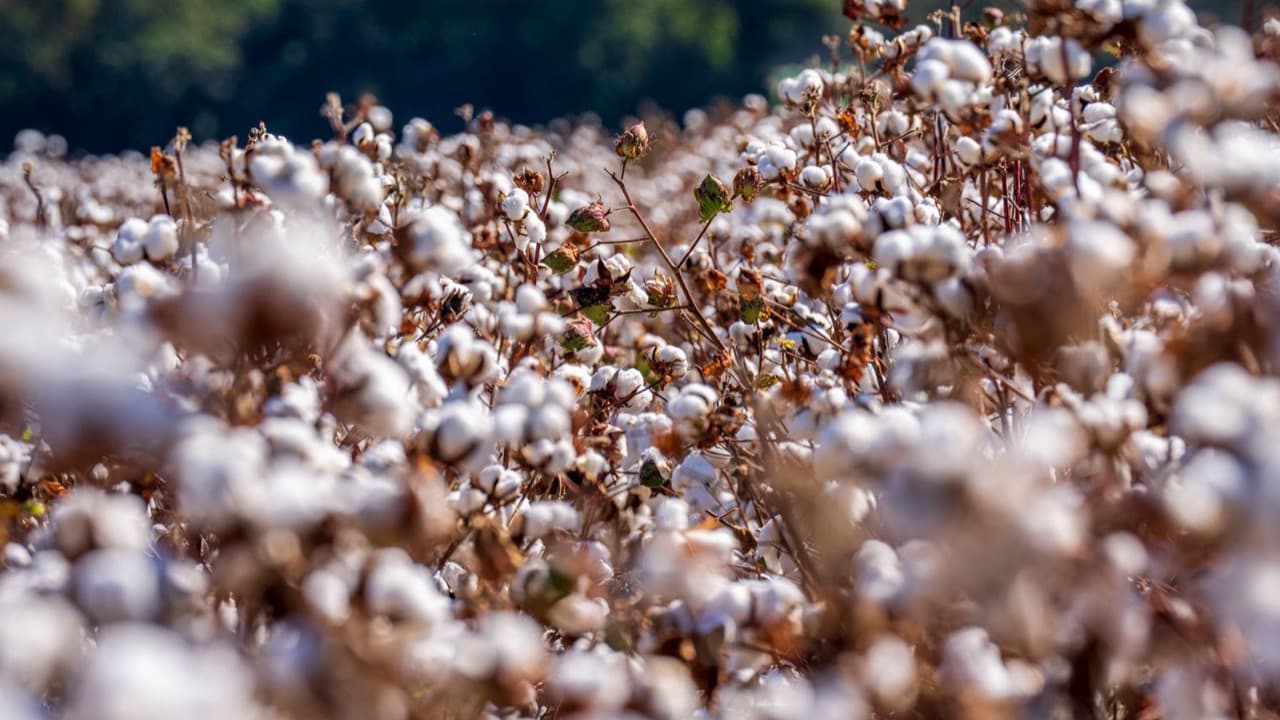
Cotton has recorded the steepest acreage fall among major crops, with coverage at 29.66 lh against 45.36 lh a year ago — a 35% decline. Soybean planting has been even more dramatic in proportional terms, collapsing to 6.92 lh from 19.97 lh, while groundnut area has shrunk to 8.87 lh from 15.29 lh. Total oilseed acreage stands at 16.99 lh, down from 36.41 lh last year.
The pulse sector is equally stressed. Arhar (pigeon pea) sowing, at 3.56 lh, is less than half the 8.45 lh logged a year ago. Urad (black gram) has fallen to 1.07 lh from 2.51 lh, while moong (green gram) is broadly flat at 8.37 lh versus 8.63 lh. Total pulses acreage reached 14.92 lh against 21.46 lh.
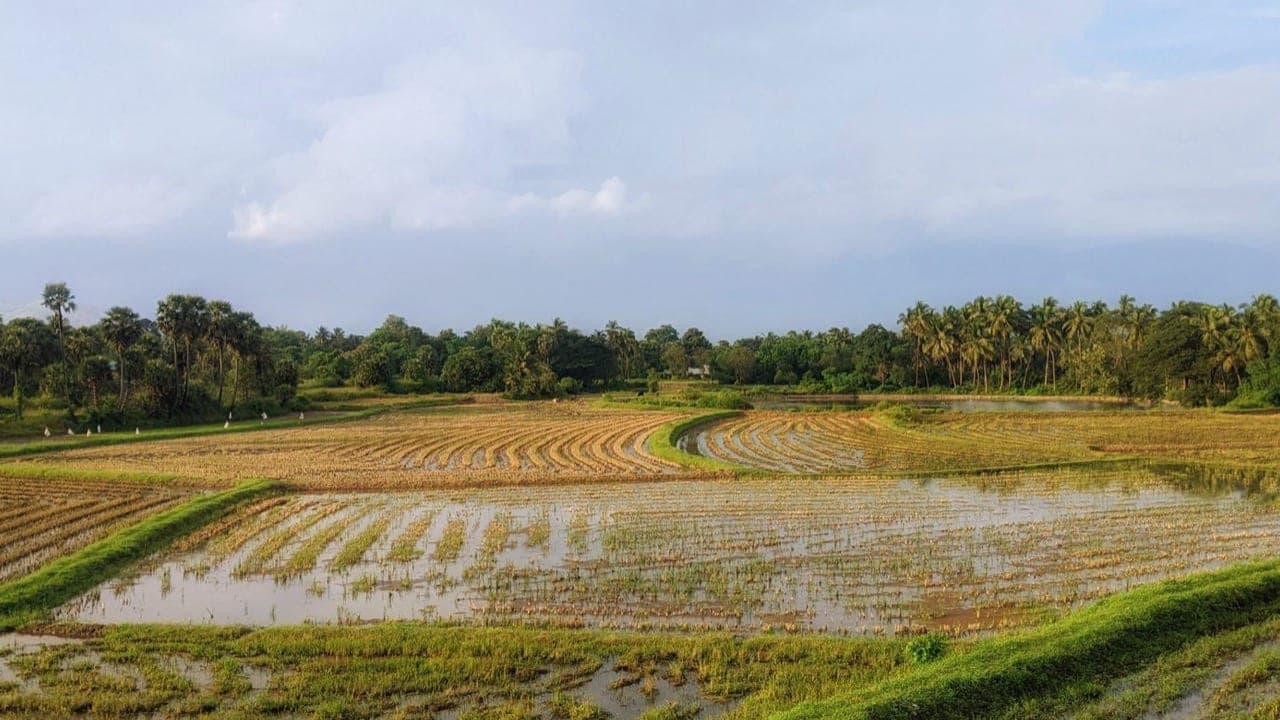
Paddy transplanting — the kharif season's principal cereal — stands at 25.75 lh, down from 34.41 lh. Among coarse and nutri cereals, bajra dropped to 11.34 lh from 13.06 lh and maize to 15.71 lh from 18.61 lh, though jowar showed a rare gain, rising to 3.38 lh from 2.70 lh. Sugarcane is the only major crop to show a net positive, given it was planted earlier in the calendar year.
Monsoon watch
IMD Eyes Gradual Advance, But July Remains the Decisive Test
The India Meteorological Department (IMD) has characterised monsoon progress so far as erratic since the June 4 Kerala onset. On June 29, IMD said conditions are favourable for further advance into parts of Gujarat, Madhya Pradesh, Chhattisgarh, Jharkhand, Bihar, Uttar Pradesh, and Uttarakhand over the following two days. A subsequent advance into parts of Madhya Pradesh, Himachal Pradesh, Jammu and Kashmir, Ladakh, south-east Rajasthan, and the remaining parts of Gujarat was also indicated for the two-to-three days thereafter.
Agricultural officials are watching the IMD outlook closely, given that July is the most critical month for kharif sowing across the majority of crops. A sustained revival over the next fortnight could partially offset the current acreage deficit. However, with a Super El Niño forecast in the background, the risk of continued erratic distribution remains elevated, making confidence in a complete turnaround premature.
The India read
What the Numbers Mean for Production Outlook and Market Signals
The 23% acreage shortfall is being read by officials and market participants as the first concrete signal of possible lower kharif production in the 2026 season. The comparison with 2025 is inherently unflattering — last year India recorded a well-distributed monsoon that drove strong sowing pace — but the absolute levels of acreage are nonetheless concerning.
For commodity traders, the crop-specific data points carry immediate pricing implications:
- Cotton and oilseeds are facing the largest absolute and proportional acreage reductions, which could tighten domestic supply if the trend holds.
- Pulses, already a politically sensitive category, are tracking well below year-ago sowing pace, with arhar coverage less than half of last year's level.
- Paddy is behind schedule, though its sowing window extends deeper into July, leaving some room for recovery if rainfall normalises.
The season's normal acreage of 1,104.46 lh provides the benchmark — and with only 16.5% of that covered so far, the bulk of the season's sowing outcome will hinge on July's monsoon behaviour.
Why it matters
A sustained 23% acreage shortfall, if it persists through July, raises the real prospect of lower kharif output across India's most strategic crops — from paddy and pulses to cotton and oilseeds — which would feed into food inflation, raw-material costs for agri-industry, and commodity import decisions. July is the make-or-break month for kharif sowing, and the IMD's forecast of gradual monsoon advance into Madhya Pradesh, Gujarat, and parts of northern India will be the single most important variable for traders and policymakers to track. The looming Super El Niño backdrop adds a further layer of downside risk that the sector cannot afford to ignore.
Frequently asked
How much has India's kharif sowing area fallen this year?
As of June 25, 2026, total kharif acreage stood at 182.72 lakh hectares, down 23% from 236.46 lakh hectares in the same period last year.
Which kharif crops have seen the biggest acreage declines?
Cotton has recorded a 35% drop to 29.66 lakh hectares, soybean has fallen to 6.92 lakh hectares from 19.97 lakh hectares, and arhar (pigeon pea) sowing is at 3.56 lakh hectares against 8.45 lakh hectares a year ago. Sugarcane is the only major crop to show a year-on-year rise in area.
What is the current state of the monsoon and what does IMD forecast?
India's monsoon was 42% deficient as of June 29, 2026. IMD has said conditions are favourable for further advance into parts of Gujarat, Madhya Pradesh, Chhattisgarh, Jharkhand, Bihar, Uttar Pradesh, and Uttarakhand, with subsequent progress expected towards Himachal Pradesh, Jammu and Kashmir, Ladakh, and south-east Rajasthan.
Can the kharif sowing shortfall still be recovered this season?
Officials have said that if the monsoon revival continues for a fortnight, sowing activity could see meaningful progress, though it is unlikely to match last year's pace given that 2025 had a well-distributed monsoon. July is described as the most crucial period for sowing most kharif crops.
Source
This report summarises and analyses coverage from The Hindu BusinessLine — Agri Business. The analysis and India context are IndianAgri's own.