A Failed Carbon Project Is a Footnote. A Failed Farm Transition Is a Family in Debt.
Regenerative farming and carbon markets promise the biggest rural income unlock in a generation, and the promise is real. The risk of getting there, though, sits almost entirely with the smallholder — and no verification dashboard records a family going into debt.

Expert insights
Mukesh Chandra Madhukar · Chief Agriculture Officer, OmniActive
Chief Agriculture Officer at OmniActive, working on origin-to-consumer supply chains for food and nutrition ingredients, with a focus on organic and regenerative agriculture, certification and carbon.
The short answer
Regenerative agriculture and carbon markets could raise rural incomes meaningfully, but the risk of a failed transition currently sits with the farmer alone. A carbon project that underperforms is written off in a quarterly report; a transition that fails puts a household in debt for years, and no MRV system is built to record it. Until risk-sharing is designed in — transition-year insurance, blended finance, first-loss guarantees — the sector will keep producing pilots rather than scale.
The asymmetry
The risk that never reaches the dashboard
Regenerative agriculture and carbon markets are pitched, with some justification, as the largest income unlock rural India has seen in a generation: better soil, a genuine premium, and money that does not arrive on a subsidy cycle. That is not fantasy. The practices work, the buyers exist, and the demand is growing.
What the pitch decks leave out is who absorbs the cost when a transition fails, and the asymmetry there is stark. A carbon project that underperforms becomes a footnote in next quarter's report, written off against a portfolio of others. A farm transition that fails puts a household into debt it may carry for years — and that failure appears on no monitoring, reporting and verification dashboard anywhere, because MRV is built to record what was measured in the field, not what the change cost the person who was measured.
That gap is not an argument against regenerative agriculture. It is the most likely reason the sector keeps producing credible pilots that never become an industry.
The DSR trap
Direct-seeded rice: real credits, real agronomic risk
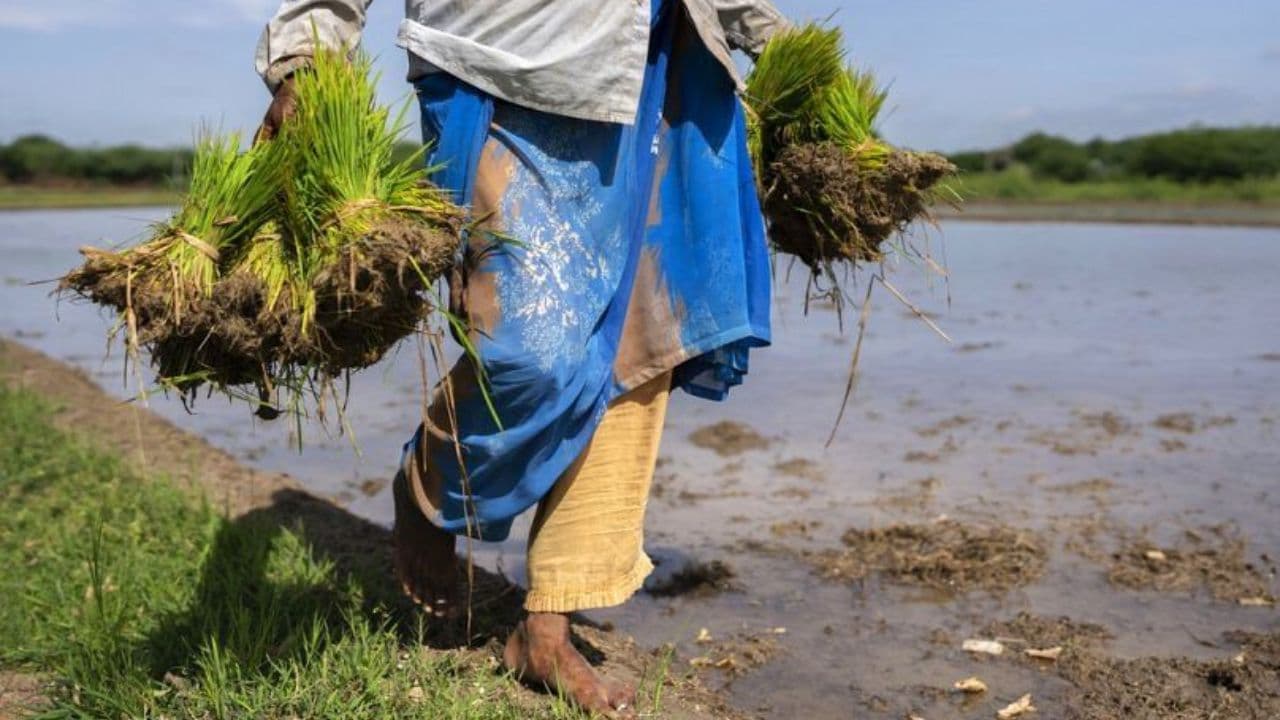
Direct-seeded rice is the clearest illustration, precisely because the climate case is sound. Replacing puddled transplanting with direct seeding removes the standing water that generates methane, and those emission reductions convert into credits a buyer will genuinely pay for. Several Indian states now actively promote the method.
The agronomy is less forgiving than the carbon arithmetic. In a flooded rice field the water is not only a growing medium — it is the weed barrier. Remove the flooding and the barrier goes with it. A weed flush that nobody is resourced to manage can take half the yield within days, and it does so in the same season the practice changed, long before a credit is issued or paid.
The farmer is therefore carrying a new agronomic risk on behalf of a carbon buyer, usually without the working capital, labour or agronomic advice that managing that risk actually requires.
The input cliff
Cutting inputs without a floor beneath them
Potato and organic fruit transitions run a different version of the same problem. Both demand a sharp reduction in purchased inputs, and both are exposed to a single bad fortnight. Withdraw the chemical buffer faster than the replacement system is ready and one Late Blight outbreak ends the season outright.
What is offered as the fix deserves more scrutiny than it usually gets. In practice it is frequently another product from the same global agrochemical catalogue the transition was meant to move away from — a substitution of supplier, not a change of system. Genuine biological controls do exist and do work, but they are expensive and they act slowly. Neither quality helps a grower who needs this season solved rather than the next three.
So the loss is absorbed quietly at the farm. The MRV log stays clean, because nothing in it is designed to capture a household's write-off. The credit is issued. The real story never enters the system that is meant to be verifying it.
Built for audit
A verification system designed for scale, not for two acres
Underneath the individual failures sits a structural mismatch. MRV and certification systems were designed for scale and for audit trails — for evidence that will satisfy a buyer, a registry and an assurance provider. They were not designed around the operating reality of a two-acre farm, where the documentation burden is close to fixed but the area it is spread across is very small.
The economics compound the mismatch. A premium that looks substantial at project level passes through aggregators, verifiers and intermediaries, and what reaches the person who actually changed their practice is often close to negligible. IndianAgri has covered the data-discipline side of this from the other direction: the records a credit requires are not the records most Indian farms currently keep.
An audit trail can prove that a practice was recorded. It cannot, by itself, prove the practice paid — and it is the second question that decides whether anyone repeats it next year.
What done right needs
Risk-sharing, not better paperwork
None of this makes the work fake; the intent across the sector is genuinely good. But intent is not infrastructure, and better paperwork will not close a gap that is fundamentally financial.
What is missing is risk-sharing designed into the programme rather than bolted on afterwards. Blended finance, crop insurance written for transition years, first-loss guarantees, transition incentive funds — instruments that put someone other than the smallholder on the hook when a changed practice fails. Alongside them, shared standards and field-level verification that does not rest entirely on documentation, built by people who have stood in the field and not only in the term sheet.
The organising principle is simpler than most frameworks admit. Farmers do not adopt practices because those practices are climate-smart. They adopt them because they are livelihood-smart. Any regenerative business model that cannot survive that sentence will keep generating good pilots and no scale.
Why it matters
India is being positioned as one of the largest supply-side opportunities in voluntary carbon markets, and almost all of that supply sits on smallholdings. If transition risk stays where it is now, the sector will keep generating credible pilots that never become an industry, because every failure removes a household from the pool for good. The instruments that would fix it are not exotic — blended finance, transition-year insurance and first-loss guarantees all work in other sectors. What to watch is whether any Indian programme writes them in before the next round of projects is signed.
Frequently asked
What is MRV in carbon farming?
MRV stands for monitoring, reporting and verification — the evidence chain that proves a farming practice actually changed and that the resulting emission reduction is real. It is what a carbon buyer, registry and auditor rely on. Its limitation is that it records what was measured in the field, not what the change cost the household that made it.
Why is direct-seeded rice risky for farmers?
Because the standing water it removes is also the field's weed barrier. Direct seeding cuts the methane that flooded paddy generates, which is what makes it creditable, but without flooding an unmanaged weed flush can take half the yield within days — in the same season the practice changed, and long before any carbon credit is paid.
Do farmers actually receive the carbon premium?
Often only a small part of it. A premium that looks substantial at project level passes through aggregators, verifiers and intermediaries, and what reaches the grower who changed practice can be close to negligible. That gap, rather than the underlying science, is the main reason adoption stalls after the pilot stage.
What would make regenerative agriculture work for smallholders?
Risk-sharing designed into the programme rather than added later: blended finance, crop insurance written for transition years, first-loss guarantees and transition incentive funds, so the farmer is not the only party exposed when a changed practice fails. Field-level verification that does not rest entirely on paperwork is the other half.
This is an original IndianAgri report, developed from expert insights shared with us. The analysis and India context are IndianAgri's own.