Chhattisgarh Bets on Direct Seeded Rice to Beat El Niño and Labour Crunch
Facing an El Niño-weakened monsoon, a labour shortage, and falling groundwater, Chhattisgarh has urged its 25.24 lakh registered farmers to shift from transplanting to Direct Seeded Rice — but adoption hurdles remain formidable.
The short answer
On July 3, 2026, the Chhattisgarh government issued an advisory strongly recommending Direct Seeded Rice (DSR) over conventional transplanting, citing water savings of 20%, a cost reduction of roughly ₹5,000 per acre, and earlier crop maturity of 12–15 days. The push comes as El Niño threatens the South Asian monsoon and the State grapples with acute agricultural labour shortages. However, low equipment availability, small landholdings, and the advisory's late timing mean widespread adoption this Kharif season remains unlikely.
The advisory
Why Chhattisgarh Is Pushing DSR Now
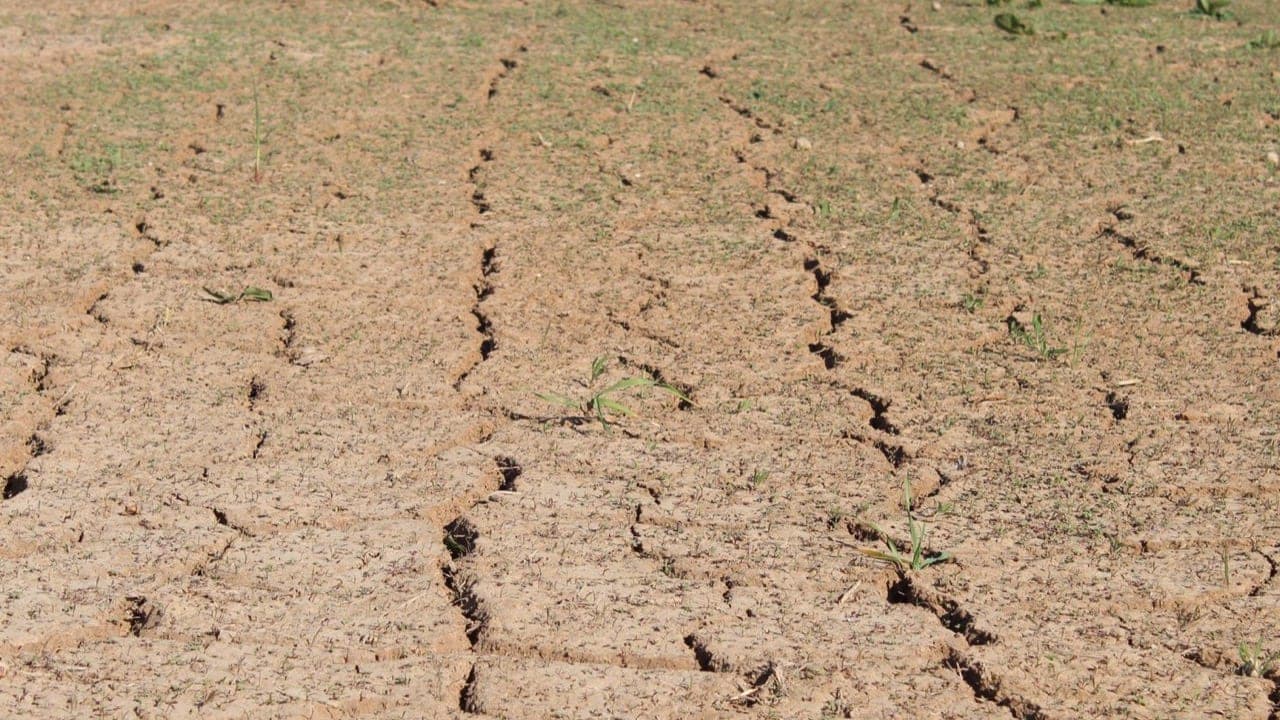
On July 3, 2026, the Chhattisgarh government issued a formal advisory urging farmers to adopt Direct Seeded Rice (DSR) in place of the conventional transplanting method for this Kharif season. The trigger is El Niño — a climate phenomenon known to weaken the South Asian monsoon — which has introduced significant rainfall uncertainty across the region.
The State's vulnerability is structural: nearly 75% of its cultivated paddy area is rainfed, with irrigation infrastructure failing to reach vast swathes of farmland, particularly in the Mahanadi basin of central Chhattisgarh. Against this backdrop, a method that demands considerably less water than transplanting holds obvious appeal. The advisory underscores three headline benefits of DSR: a 20% saving in water use, a reduction in cultivation costs of approximately ₹5,000 per acre, and crop maturity arriving 12–15 days earlier than with transplanted rice.
The numbers
What the official figures actually say
Chhattisgarh produced 9.91 million tonnes of rice in 2025-26 on the 3rd Advance Estimates, about 6.4% of the national crop and the 8th-largest of 20 reporting states.
That works out at 10.8 quintals an acre. It is an average across every grower; what one acre gives depends on variety, season, irrigation and soil.
| Measure | Chhattisgarh | Period |
|---|---|---|
| Production | 9.91 million tonnes | 2025-26 (3rd Advance Estimates) |
| Area | 3.7 million hectares | 2025-26 |
| Yield per acre | 10.8 quintals (2,680 kg/ha) | 2025-26 |
Compiled by IndianAgri from Directorate of Economics & Statistics, Department of Agriculture & Farmers Welfare, Ministry of Agriculture & Farmers Welfare, Government of India. Every figure on this page carries its originating department, its estimate round and the date we took it — see the full rice series, six years deep, by state.
Earlier, mechanisation was not available and it was manual sowing through bullocks or by hand or broadcasting method.
The technique
DSR vs Transplanting: What Farmers Need to Know
In the transplanting method, seedlings grown in a nursery for about 25 days are moved to flooded fields. Maintaining three to four inches of standing water for the first 15–20 days after transplanting suppresses weeds through anaerobic conditions — an effective but water-intensive approach. Producing one kilogram of rice this way requires 2,500 to 3,000 litres of water, making paddy one of agriculture's thirstiest crops.
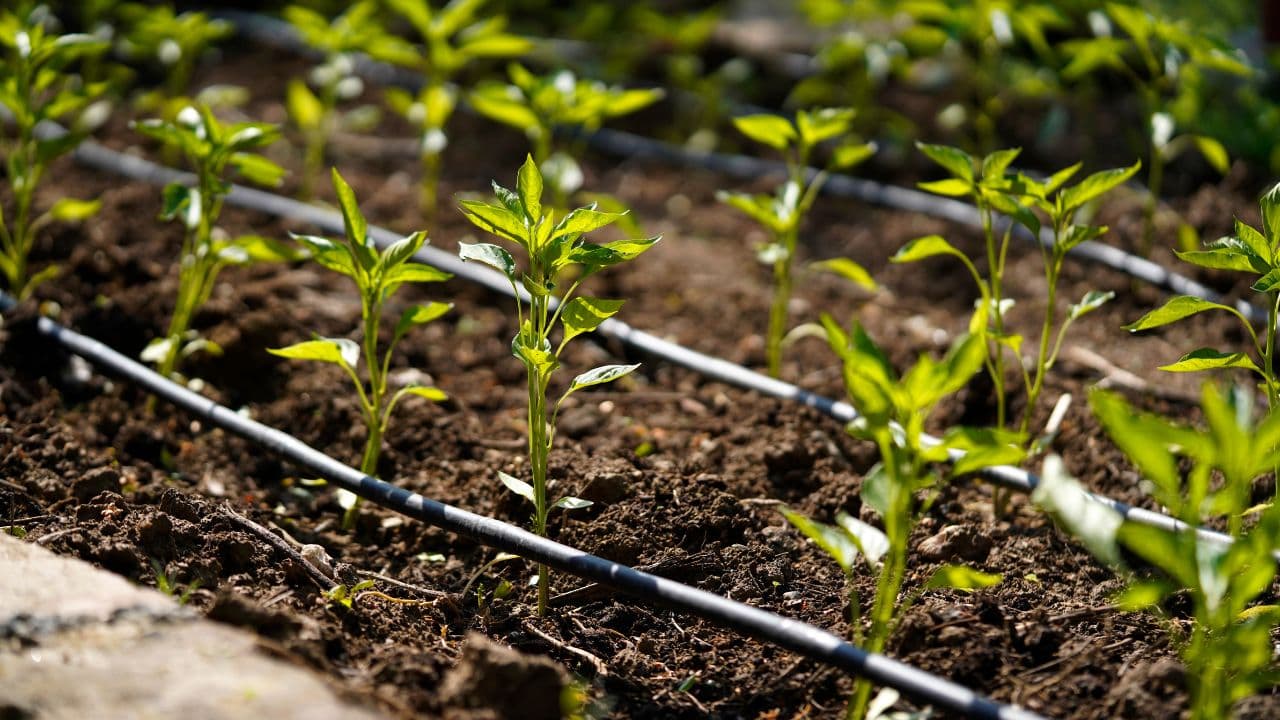
DSR, by contrast, places seeds directly into the soil — either manually or by machine — eliminating the nursery stage entirely. Weed management, historically DSR's biggest drawback, has improved sharply thanks to new-generation herbicides and the development of herbicide-tolerant rice varieties.
Ashok Kumar Singh, former director of the Indian Agricultural Research Institute (IARI), notes that mechanisation has transformed DSR's viability. "Earlier, mechanisation was not available and it was manual sowing through bullocks or by hand," he observed, adding that modern seed drills and tractors now enable farmers to maintain the precise plant-to-plant and row-to-row spacing the method demands.
The stakes
Paddy Is Central to Chhattisgarh's Economy and Ecology
Chhattisgarh is a significant paddy-producing State, having procured 141 lakh metric tonnes during the last Kharif marketing year. With 25.24 lakh registered farmers, agriculture — and paddy in particular — underpins the livelihoods of well over half the State's population, directly or indirectly.
The political salience of rice farming is visible in the government's support price of ₹3,100 per quintal. Yet the crop carries an environmental cost that is increasingly difficult to ignore: flooded paddy fields create anaerobic conditions that activate methanogenic bacteria, and India's paddy fields collectively release 3.7 million tonnes of methane annually — a significant share of agriculture's greenhouse gas footprint.
Groundwater stress compounds the problem. Even in rural Chhattisgarh, rising domestic use of groundwater for activities beyond farming has caused a steady decline in aquifer levels, making water-efficient cultivation methods an urgent priority rather than an optional upgrade.
Adoption gaps
Equipment Shortages and Small Holdings Limit DSR Uptake
Unlike Punjab and Haryana — where depleting groundwater and the tight window between paddy harvest and wheat sowing have driven rapid DSR adoption — Chhattisgarh remains at an early stage. Super seed drills are scarce in the State's rental market, though some operators from Rajasthan and other States have begun offering services.
The high purchase price of around ₹1.5 lakh per machine is a significant deterrent for the small and marginal farmers who dominate Chhattisgarh's agricultural landscape. Laser levelling equipment — essential for preparing fields for DSR and widely available in northern States — is similarly hard to find locally.
Labour shortage cuts both ways
Paddy transplanting is labour-intensive, and Chhattisgarh already faces an acute shortage of agricultural workers even when farmers are willing to pay prevailing wages. This makes the case for DSR compelling in the medium term. However, farmers who want to switch this season note that the July 3 advisory arrived too late: field levelling before DSR requires time and resources that were no longer available at that point in the cropping calendar.
The outlook
Long-Term Case for DSR Is Clear, But 2026 Season Is Already Constrained
Farmers across Chhattisgarh broadly acknowledge the logic of moving to DSR — particularly given the labour crunch, the water stress, and the recurring threat of erratic monsoons. The concern is less about the technology and more about the ecosystem required to support it: affordable equipment rental, timely government guidance, and land preparation infrastructure.
For this Kharif season, widespread adoption is unlikely given the late advisory and the absence of field-ready support infrastructure. The more realistic policy window is the 2027 Kharif season, provided the government acts now to expand laser levelling availability, subsidise seed drill rental networks, and issue DSR advisories well before the sowing calendar opens. The experience of Punjab and Haryana suggests that once the economics click — and in Chhattisgarh, labour scarcity alone may force the issue — adoption can accelerate rapidly.
Why it matters
With Chhattisgarh procuring 141 lakh metric tonnes of paddy in the last Kharif marketing year and nearly 75% of its cultivated area lacking irrigation, any monsoon disruption carries serious food-security and income implications for millions of farm households. A successful DSR transition could reduce water stress, cut methane emissions — paddy fields already release 3.7 million tonnes annually across India — and lower cultivation costs, benefiting both farmers and the State's procurement machinery. Policymakers will need to act on the structural gaps — laser levelling equipment, affordable seed drills, and timely advisories — before next season if DSR is to move from suggestion to mainstream practice.
Frequently asked
What are the main advantages of DSR over transplanted paddy according to Chhattisgarh's advisory?
According to the government advisory, DSR saves 20% water compared to transplanting, reduces cultivation costs by approximately ₹5,000 per acre, and allows the crop to mature 12–15 days earlier.
How much water does conventional transplanted rice require to produce one kilogram of grain?
The transplanting method requires between 2,500 and 3,000 litres of water to produce one kilogram of rice, making it one of the most water-intensive crops in agriculture.
Why is DSR adoption still low in Chhattisgarh compared to Punjab and Haryana?
Equipment such as super seed drills is not widely available for rent in Chhattisgarh, and the high purchase cost of around ₹1.5 lakh discourages small farmers. Laser levelling machinery, essential for field preparation, is also scarce in the State, unlike in Punjab and Haryana.
What is Chhattisgarh's scale of paddy production and farmer population?
Chhattisgarh procured 141 lakh metric tonnes of paddy during the last Kharif marketing year and has approximately 25.24 lakh registered farmers, with well over half the State's population directly or indirectly dependent on agriculture.
Source
This report summarises and analyses coverage from The Hindu — Agriculture. The analysis and India context are IndianAgri's own.
Edited by Devendra Kumar Jha. How we report, source and correct: editorial policy. Spotted an error? Tell us.