Wheat
Triticum aestivum · Poaceae (grasses)
India's principal rabi (winter) cereal and, after rice, the second pillar of the country's food security.
Production · Wheat
113.3 MT
1,132.92 lakh tonnes — record, 2023–24 Final Estimates
Source: DA&FW Final Estimates 2023–24 (PIB)
2023–24
In the IndianAgri Data Atlas
India's wheat production, 2025-26 — with the state-by-state series behind it, every figure dated and sourced.
121 million tonnes
Top producing states
All wheat data, by state and year →Key figures
About wheat
Wheat is India's principal rabi cereal — sown as the monsoon retreats in autumn and harvested in spring. Alongside rice, it anchors the country's foodgrain security and the public distribution system.
The bulk of India's wheat is grown across the Indo-Gangetic plains of the north, where cool winters and assured irrigation suit the crop. Yields are sensitive to late-season heat, so the timing of the spring harvest matters greatly.
India is the world's second-largest wheat producer after China. The 2023–24 crop was a record, and a large share is procured into the central pool that supplies ration shops and national buffer stocks.
Where it’s grown
Leading producing states
- 1Uttar Pradesh38.07 MT
- 2Madhya Pradesh34.98 MT
- 3Punjab16.57 MT
- 4Rajasthan11.32 MT
- 5Haryana11.06 MT
Uttar Pradesh and Madhya Pradesh dominate India's wheat, together over 70 MT. These are DES crop-database (APY) state figures for 2022–23 and are not reconciled to the national Final Estimate.
DES crop APY database · 2022–23
How it’s grown
- Season
- Rabi (winter)
- Sowing
- October–December
- Harvest
- March–April
- Climate
- Cool, dry growing season; sensitive to late-season heat
- Water
- Moderate; largely irrigated
Major varieties
HD 2967
Long the most widely grown Indian wheat — high-yielding and disease-resistant.
HD 3086
A popular IARI bread-wheat variety; with HD 2967 has covered a large share of the wheat area.
DBW 187 (Karan Vandana)
A high-yielding variety popular across the north-eastern plains.
PBW 343
A widely grown variety of the north-western plains.
Lok 1
A long-popular variety in central India.
Widely grown released varieties (not an area-ranked list). HD 2967 and HD 3086 together have covered a large share of India's wheat area in recent years. ICAR — released/landmark varieties.
Economics & trade
Wheat is priced each rabi season through a Minimum Support Price announced by the government on the advice of the Commission for Agricultural Costs and Prices (CACP). For the 2026–27 marketing season the MSP is ₹2,585 per quintal, ₹160 above the ₹2,425 of 2025–26.
Yield per acre. India's average wheat yield is 3,559 kg per hectare, which works out to roughly 1,440 kg — about 14.4 quintals — per acre. That is a national average across irrigated and rainfed land: the north-western plains of Punjab and Haryana routinely beat it, while rainfed central and eastern districts fall below it. Treat it as the midpoint of a wide range, not a target.
What an acre costs to grow. CACP puts the all-India cost of producing wheat at ₹1,239 per quintal for 2026–27. Applied to an average acre's 14.4 quintals, that is roughly ₹17,800 per acre. Read the cost definition carefully: the figure covers paid-out expenses — hired labour, machine hire, seed, fertiliser, irrigation, interest on working capital — plus the imputed value of family labour. It is the A2+FL concept.
What an acre returns. At the ₹2,585 MSP, an average acre yielding 14.4 quintals grosses about ₹37,200, leaving roughly ₹19,400 an acre over that cost. The government states the MSP carries a 109% margin over the cost of production — the widest of any rabi crop this season.
The margin is over A2+FL, not full economic cost. CACP also computes a comprehensive C2 cost that adds the rental value of owned land and interest on owned capital — the two largest items a farmer never writes a cheque for. The 109% headline is not calculated on that basis, which is precisely why farm unions campaign for MSP at C2 plus 50% rather than the present formula. The per-acre figures above are IndianAgri's arithmetic on the cited national averages; a specific farm's cost turns on its own land, water and labour.
A significant share of the crop is procured by government agencies into the central pool, which supplies the public distribution system and maintains strategic buffer stocks. Procurement is concentrated in the northern surplus states.
Uses
- Milled into atta and maida for rotis, breads, and a wide range of processed foods.
- A staple of the public distribution system and national food-security programmes.
- By-products such as bran and straw are used as cattle feed and fodder.
Notable facts
- Almost all of India's wheat is bread wheat (Triticum aestivum); durum (pasta) wheat is a smaller share.
- The Green Revolution of the 1960s, built on high-yielding dwarf wheat, turned India from a wheat importer into a self-sufficient producer.
- Uttar Pradesh alone grows roughly a third of the national wheat crop.
- Wheat is a rabi crop: its yield hinges on a cool winter and a timely spring harvest before the heat sets in.
Frequently asked
- In which season is wheat grown in India?
- Wheat is a rabi (winter) crop — sown from October to December and harvested in March–April.
- What is the MSP of wheat?
- The Minimum Support Price for wheat is ₹2,585 per quintal for the Rabi Marketing Season 2026–27, approved by the CCEA on 1 October 2025. That is ₹160 above the ₹2,425 of the previous season.
- What is the wheat yield per acre in India?
- India's average wheat yield is about 14.4 quintals per acre — roughly 1,440 kg, derived from a national average of about 3,560 kg per hectare. Irrigated farms in Punjab and Haryana commonly exceed this, while rainfed districts in central and eastern India fall well below it, so treat it as a midpoint rather than a target.
- What is the cost of cultivation of wheat per acre?
- Roughly ₹17,800 per acre, applying CACP's all-India cost of ₹1,239 per quintal for 2026–27 to an average acre's 14.4 quintals. That cost covers paid-out expenses — hired labour, machine hire, seed, fertiliser, irrigation and interest on working capital — plus the imputed value of family labour, but not the rental value of owned land.
- How much profit is there in wheat farming per acre?
- About ₹19,400 per acre at the ₹2,585 MSP, from a gross of roughly ₹37,200 on 14.4 quintals against a cost of about ₹17,800. The government puts the MSP margin at 109% over the cost of production, the widest of any rabi crop this season — but that margin is measured against A2+FL cost, not the comprehensive C2 cost that includes land rent.
- Which is the largest wheat-producing state in India?
- Uttar Pradesh is the largest wheat-producing state, followed by Madhya Pradesh, Punjab, Rajasthan and Haryana (DES crop data, 2022–23).
- How much wheat does India produce?
- India produced a record 113.3 million tonnes of wheat in 2023–24 (Final Estimates) and is the world's second-largest producer after China.
- Which wheat varieties are most widely grown?
- HD 2967 and HD 3086 have been among the most widely grown; newer high-yielding varieties such as DBW 187 (Karan Vandana) are expanding across the plains.
Latest wheat coverage
Updated automatically as new wheat coverage is published.
Global Wheat Output Set to Fall 23 Million Tonnes in 2026-27 as El Niño, Iran Conflict Bite
1 August 2026
El Niño and Delayed Kharif Harvest Cast Shadow Over India's Wheat Crop Year 2026-27
16 July 2026
USDA July Crop Report: Global Grain Output Trimmed, India Holds Record Wheat at 121 MT
11 July 2026
Rabi Harvest Blues: Wheat, Chana, Barley Sell Below MSP as Maize Plunges 24%
11 July 2026
ICAR to Cap Rice and Wheat Acreage, Sets 52 Task Teams for India's 2047 Agriculture Roadmap
29 July 2026
India's OMSS Rice SOP: Ethanol Ambition Meets Export Trade-Off
24 July 2026
India Moves to Ban Paraquat: Draft Order Targets Herbicide Linked to Fatal Poisoning and Parkinson's Disease
15 July 2026
Chhattisgarh Bets on Direct Seeded Rice to Beat El Niño and Labour Crunch
10 July 2026
India Slashes Broken Grain Limit in PDS Rice Under New Milling Scheme
8 July 2026
APCNF Wins 2026 Food Planet Prize: Can India's Natural Farming Revolution Go National?
5 July 2026
OMSS 2026-27: Centre Fixes Rice at ₹2,320/Qtl for Ethanol, Wheat at ₹2,585–2,600/Qtl for Millers
3 July 2026
Madhya Pradesh Brings Paddy Under Bhavantar Scheme, Boosts Millet Push
2 July 2026
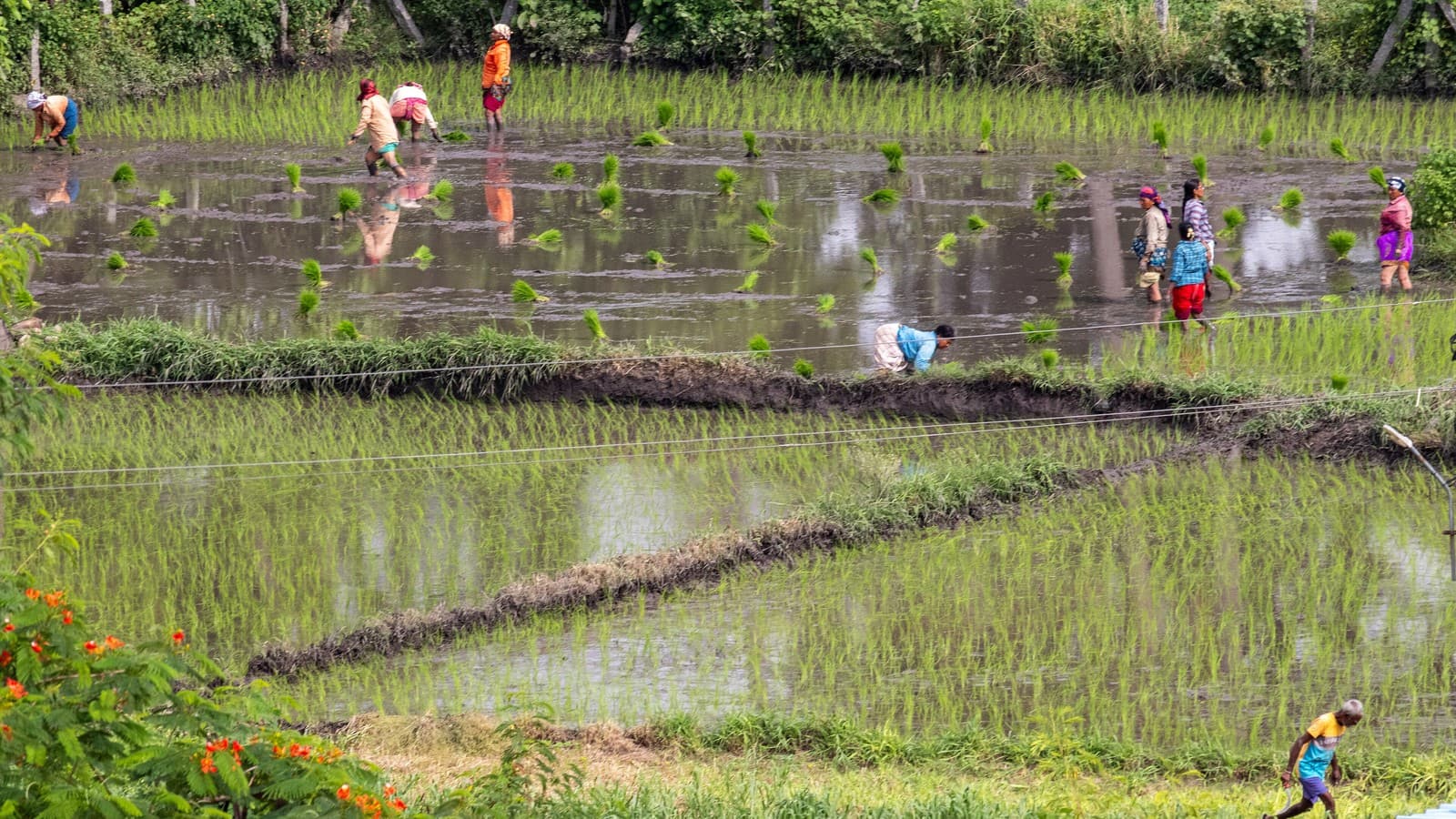
Machines That Are Transforming Direct-Seeded Rice
22 August 2026
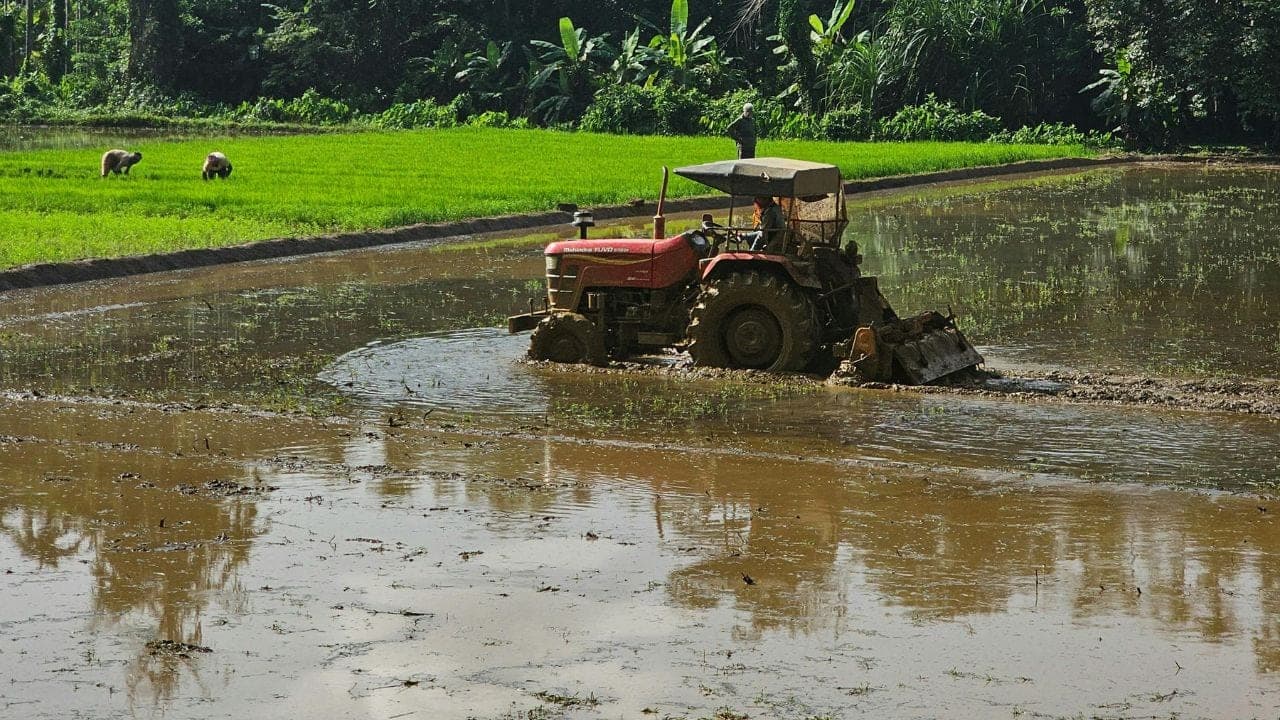
Why Wheat Yields Fall After Paddy: The Hardpan Under India's Rice Fields
20 August 2026
IRRI Pushes Mechanical Rice Transplanting in Eastern Uttar Pradesh to Tackle Labour Crunch
11 July 2026
DGFT Orders Wheat Export Quota Review, Sets August 31 Deadline for Utilisation Data
11 August 2026
India Under the Microscope: Tariffs, MSP, and QCOs Draw Fire at WTO Trade Policy Review
24 July 2026
Unjha Cumin and Fennel Earn GI Tag, Opening Door to Premium Pricing and Stronger Exports
14 July 2026
India's Wheat Consumption to Outpace Production by 2035, Ethanol Output to More Than Double: OECD-FAO
1 July 2026
Rainfall Deficit Narrows to 12% as July Monsoon Surges; Centre Reviews El Niño Preparedness
8 July 2026