Kharif Sowing Gap Narrows Sharply Even as Rainfall Deficit Deepens to 23.8%
India's total kharif acreage reached 658.19 lakh ha by July 17, cutting the year-on-year shortfall from 101.4 lakh ha to 42.28 lakh ha in a single week — even as the cumulative rainfall deficit widened to 23.8%.
The short answer
India's kharif sowing has recovered at a faster pace than the monsoon's retreat would suggest, with the acreage gap against last year more than halving in a week to 42.28 lakh hectares as of July 17. Rice has nearly closed its deficit, while pulses, oilseeds, and coarse cereals are all catching up, supported by residual soil moisture. However, El Niño conditions are strengthening over the equatorial Pacific, casting a shadow over the remainder of the monsoon season.
The headline numbers
Sowing Momentum Defies a Widening Rain Deficit
India's kharif season has staged a notable recovery in sowing coverage even as the monsoon has underperformed. According to a Dolat Capital report released on July 21, the cumulative rainfall deficit worsened progressively — from 15% as of July 8, to 17.8% on July 12, and further to 23.8% by July 19. Yet, rather than stalling, field sowing activity accelerated over the same period.
Total kharif acreage stood at 658.19 lakh hectares as of July 17, per data cited in the report. While this still represents a shortfall of 42.28 lakh hectares compared with the corresponding week in 2025, the gap has closed dramatically — down from a 101.4 lakh ha shortfall recorded just the week before. Analysts at Dolat Capital attribute the continued sowing progress to accumulated soil moisture providing a buffer even where fresh rains have been inadequate.
Crop-by-crop picture
Rice Leads Recovery; Pulses and Oilseeds Still Catching Up
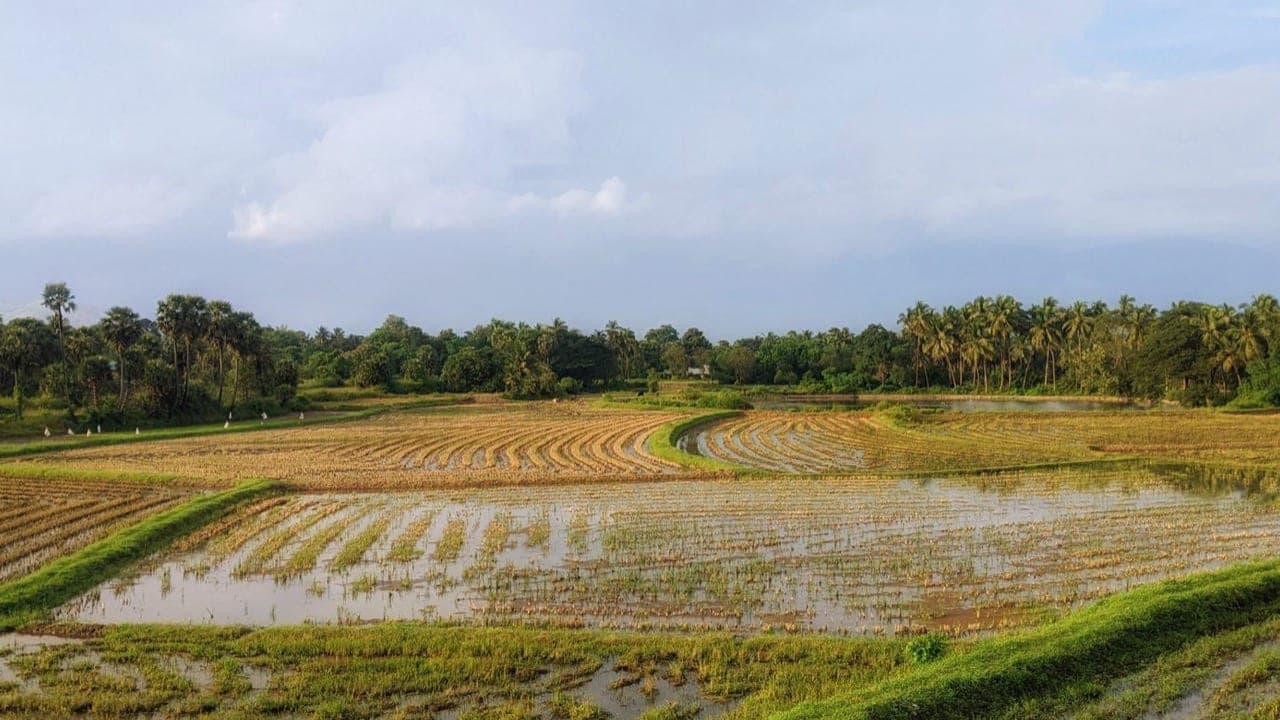
Rice has been the standout performer in the sowing revival. Acreage reached 166.41 lakh hectares — just marginally below the 167.83 lakh hectares recorded at the same point last year. The shortfall collapsed from 10.8 lakh hectares to just 1.41 lakh hectares in a single week.
Pulses acreage rose to 69.23 lakh hectares against 81.52 lakh hectares a year ago, with the deficit trimming to 12.29 lakh ha from 17.22 lakh ha, aided by improved Arhar and Urdbean sowing.
Coarse cereals acreage grew to 119.03 lakh ha against 134.09 lakh ha last year, reducing the shortfall to 15.06 lakh ha from 28.6 lakh ha the prior week.
Oilseeds recorded the largest absolute narrowing in the gap among major crop groups, reaching 147.09 lakh hectares against 155.72 lakh hectares a year ago — a recovery led by a sharp increase in Bajra sowing, though the category continues to lag significantly.
Sugarcane remains the only crop running ahead of last year's coverage.
El Niño conditions now persist over the equatorial Pacific and are expected to strengthen further through the remainder of the monsoon season.
Weather outlook
El Niño Strengthens Even as IMD Sees Relief Ahead for Parts of India
Near-term weather prospects offer mixed signals. The India Meteorological Department expects near-normal to above-normal rainfall in parts of East and Central India over the coming week, underpinned by an upper-air cyclonic circulation likely to develop over the north Bay of Bengal. Most other regions, however, may see below-normal precipitation — offering limited relief to the broader deficit.
The more pressing concern for the rest of the season is the El Niño signal. As the Dolat Capital report notes, El Niño conditions now persist over the equatorial Pacific and are expected to strengthen further through the remainder of the monsoon season. Historically, a strengthening El Niño mid-season raises the probability of below-average cumulative rainfall, with the most acute risk for crops still in early vegetative stages, particularly pulses and oilseeds that are already running behind on acreage coverage.
What it means
Soil Moisture Is the Unsung Hero — But It Has Limits
The rapid narrowing of the sowing gap despite a worsening rainfall deficit points to one critical factor: stored soil moisture from early-season rains has allowed farmers to continue planting even during dry spells. This is a positive sign of agronomic resilience, but it is not indefinitely sustainable.
For commodity traders and agri-businesses, the data suggests that headline acreage numbers should be watched alongside rainfall distribution in the weeks ahead. A prolonged dry period — particularly given the El Niño backdrop — could affect crop establishment and eventual yields even where sowing has been completed. The pulse and oilseeds segments, which still carry material acreage deficits, are the most vulnerable to a further deterioration in monsoon performance.
Why it matters
The sharp week-on-week narrowing of the sowing gap is encouraging for crop supply prospects, but farmers and traders should not read it as an all-clear. With the cumulative rainfall deficit at 23.8% and El Niño forecast to intensify through the rest of the season, crop yields — particularly for pulses and oilseeds that are still significantly behind last year's coverage — remain vulnerable. Policymakers and commodity markets should watch IMD's weekly rainfall updates closely, especially for East and Central India where above-normal rains could provide critical relief.
Frequently asked
What is the total kharif acreage sown in India as of July 17, 2026?
Total kharif acreage stood at 658.19 lakh hectares as of July 17, 2026, according to a Dolat Capital report. This represents a shortfall of 42.28 lakh hectares compared with the same week in 2025.
How has the kharif sowing gap changed compared to the previous week?
The year-on-year acreage shortfall narrowed sharply from 101.4 lakh hectares the previous week to 42.28 lakh hectares as of July 17 — more than halving in a single week.
What is the current cumulative rainfall deficit in India?
India's cumulative rainfall deficit widened to 23.8% as of July 19, 2026, up from 17.8% on July 12 and 15% on July 8, according to the Dolat Capital report.
Which crop is the only one running ahead of last year's sowing levels?
Sugarcane is the only major kharif crop currently running ahead of last year's acreage levels. All other major categories — rice, pulses, coarse cereals, and oilseeds — continue to trail 2025 levels, though their deficits are narrowing.
Source
This report summarises and analyses coverage from The Hindu BusinessLine — Agri Business. The analysis and India context are IndianAgri's own.
Edited by Devendra Kumar Jha. How we report, source and correct: editorial policy. Spotted an error? Tell us.